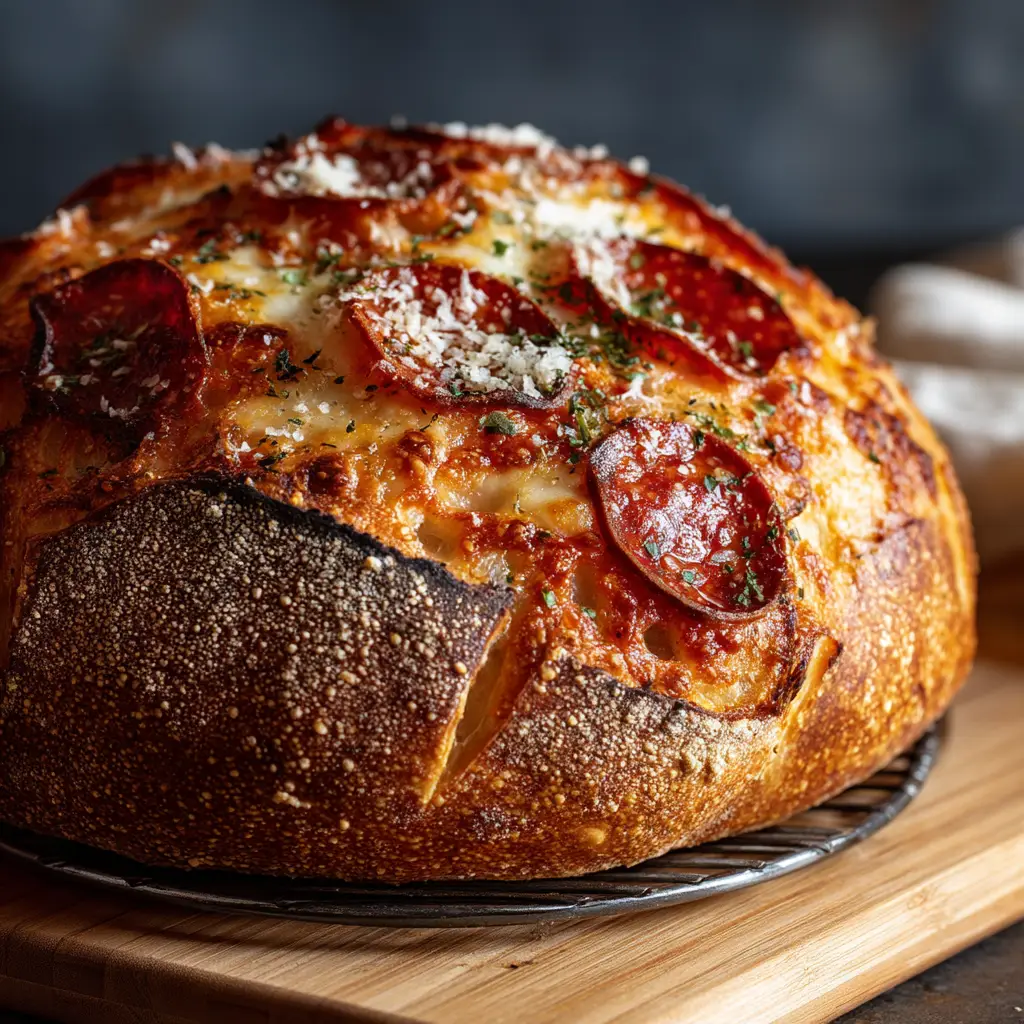
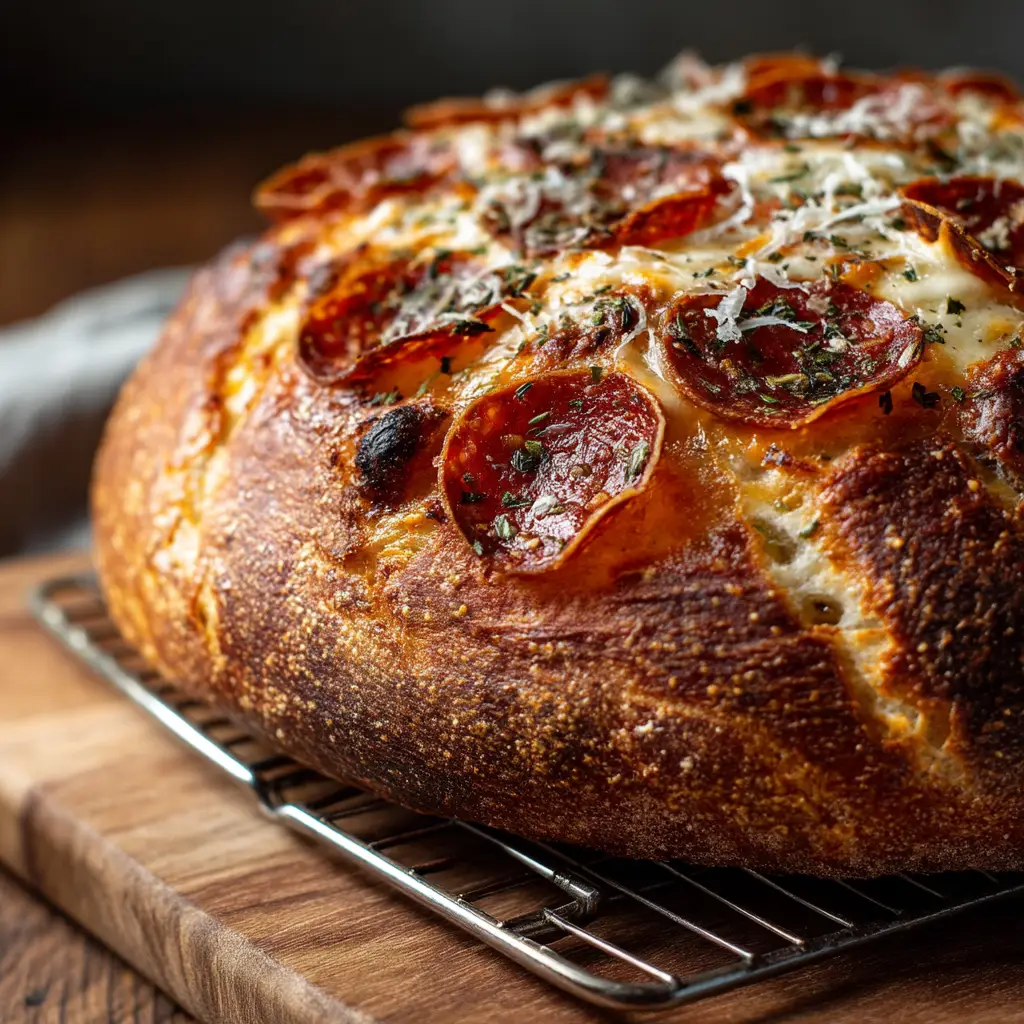
Imagine the crispy, tangy crust of artisan sourdough combined with the irresistible, savory flavors of your favorite pepperoni pizza. That dream is a reality with this incredible Pepperoni Pizza Sourdough Bread recipe. This loaf is packed with spicy pepperoni and gooey, melted mozzarella cheese, creating a masterpiece with an open, airy crumb and a flavor explosion in every bite. It’s the ultimate savory bake that will have everyone reaching for another slice.
Whether you’re a seasoned sourdough baker or looking for an exciting new challenge, this recipe guides you through every step. We’ll focus on simple techniques to ensure your cheese and pepperoni are perfectly distributed, creating that picture-perfect, cheesy pull you crave. Get ready to transform your home kitchen into an artisan pizzeria bakery!
Why You’ll Love This Pepperoni Pizza Sourdough Bread Recipe
This isn’t just another savory bread; it’s an experience. The robust flavor of the sourdough fermentation process perfectly complements the rich, spicy notes of pepperoni and the creamy, mildness of mozzarella. The crust bakes to a deep golden brown, offering a satisfying crunch that gives way to a soft, chewy interior. It’s a versatile loaf that works as a hearty snack, an impressive appetizer, or even the base for an epic sandwich.
If you enjoy savory breads with bold flavors, this recipe will become a new favorite. It’s a creative twist on classic sourdough that feels both comforting and gourmet. Plus, the aroma that fills your house while it bakes is simply unbeatable.
The Key to Perfect Sourdough: Understanding Your Starter
Before we dive in, let’s talk about the heart of any sourdough bread: the starter. For this recipe to achieve its signature rise and texture, you need an active, bubbly sourdough starter. This means feeding your starter 4-8 hours before you plan to mix your dough. A healthy starter should be visibly active, full of bubbles, and at least double in size after feeding. This activity is crucial for leavening the bread properly.
Ingredients You’ll Need
Simplicity is key, and high-quality ingredients make all the difference. Here’s what you’ll need:
- Bread Flour: Provides the high protein content necessary for a strong gluten network, resulting in a chewy, structured crumb.
- Water: Filtered or dechlorinated water is best to keep your starter’s yeast and bacteria healthy.
- Active Sourdough Starter: The star of the show, providing both leavening and that classic tangy flavor.
- Salt: Fine sea salt works best. It controls fermentation and strengthens the dough.
- Low-Moisture Mozzarella Cheese: Cube it small for the best melt and to avoid excess moisture.
- Pepperoni: Choose a quality brand and chop it into small, even pieces for uniform distribution.
Essential Equipment for Artisan Bread
You don’t need a professional bakery, but a few key tools will make the process much smoother:
- Dutch Oven: A heavy, lidded pot is the secret to achieving that perfect, crackly crust by trapping steam.
- Large Mixing Bowl: For mixing the dough and for bulk fermentation.
- Kitchen Scale: For accurate measurements, which are critical in baking.
- Bench Scraper: Invaluable for shaping the dough and cleaning your work surface.
- Banneton Basket (or a bowl lined with a tea towel): To help the dough hold its shape during the final proof.
How to Make Pepperoni Pizza Sourdough Bread: A Step-by-Step Guide
This recipe breaks down the process into simple, manageable stages. Don’t be intimidated by the timeline; most of it is hands-off resting time for the dough to work its magic.
Step 1: Mixing the Dough (Autolyse and Mixing)
In your large mixing bowl, combine the flour and water. Mix until no dry bits remain. Cover the bowl and let the dough rest for about 30-60 minutes. This step, known as the autolyse, allows the flour to hydrate fully and makes the dough easier to work with. After the autolyse, add your active sourdough starter and salt. Use wet hands to squish and fold the ingredients into the dough until they are fully incorporated.
Step 2: Bulk Fermentation & Stretches
Cover the bowl and let the dough rest in a warm spot. Over the next 2-3 hours, perform a series of four “stretch and folds” every 30 minutes. To do this, grab a section of the dough with a wet hand, stretch it upwards, and fold it over the rest of the dough. Rotate the bowl and repeat three more times. This process builds strength and structure in your dough.
Step 3: Lamination & Adding Inclusions
After the final stretch and fold, let the dough rest for another 30 minutes. Lightly flour your work surface and turn the dough out. Gently stretch the dough into a large, thin rectangle. Sprinkle your chopped pepperoni and cubed mozzarella evenly over the surface. Fold the dough into thirds, like a letter. Then, fold it into thirds again from the other direction, creating a neat package. This lamination technique is the secret to even distribution without tearing the dough.
Step 4: Shaping Your Loaf
After lamination, gently tuck the edges of the dough underneath itself to form a round ball (a boule). Let it rest on the counter, seam-side down, for 20-30 minutes. This allows the gluten to relax. After the rest, perform a final shape by gently pulling the dough towards you on the counter to create surface tension. Place the shaped loaf seam-side up in a floured banneton or towel-lined bowl.
Step 5: The Cold Proof (Developing Flavor)
Cover the banneton and place it in the refrigerator for a long, cold proof—anywhere from 12 to 24 hours. This step is crucial for developing the deep, complex flavors that make sourdough so special. It also makes the dough easier to score before baking.
Step 6: Scoring and Baking to Perfection
When you’re ready to bake, place your Dutch oven in the oven and preheat it to 450°F (232°C). Once preheated, carefully remove the hot Dutch oven. Turn your cold dough out onto a piece of parchment paper, and use a sharp blade or lame to score the top. A simple “X” or a single slash works well. Lower the dough into the Dutch oven, cover it, and bake for 25 minutes. Then, remove the lid and bake for another 15-20 minutes, or until the crust is deep golden brown.
Pro Tips for the Best Pizza Sourdough
Creating the perfect loaf is an art, and these tips will help you master it. Firstly, ensure your cheese and pepperoni are cut into small, roughly 1/2-inch pieces to prevent them from weighing down the dough. Secondly, resist the urge to add too many fillings, as this can hinder the oven spring. Finally, allow the bread to cool completely (at least 2 hours!) before slicing. This is crucial for the internal structure to set properly.
Flavor Variations & Add-Ins
Want to customize your Pepperoni Pizza Sourdough Bread? The possibilities are endless! Consider adding a sprinkle of dried oregano or red pepper flakes along with the pepperoni and cheese. Other delicious additions include chopped black olives, sun-dried tomatoes, or even sautéed mushrooms and onions. If you love savory sourdough variations, you should also try our pesto parmesan sourdough next!
How to Store and Reheat Your Bread
Store your cooled loaf in a bread box or a paper bag at room temperature for up to 3 days. Avoid the refrigerator, as it can cause the bread to go stale faster. To bring back that fresh-from-the-oven crust, simply reheat slices in a toaster or in a 350°F (175°C) oven for a few minutes. This bread also freezes wonderfully. Slice it first, then store it in a freezer-safe bag for up to 3 months.
Frequently Asked Questions
This recipe is designed for an active, bubbly sourdough starter to achieve the proper rise and classic sourdough tang. While some recipes use discard for flavor, it won’t provide the leavening needed for this airy, artisan-style loaf.
Along with the lamination technique, be sure to chop your pepperoni and cheese into small, uniform pieces (about 1/2 inch). This prevents large, heavy chunks from sinking to the bottom and ensures you get flavor in every single bite.
The best method is lamination. During bulk fermentation, after the stretch and folds are complete, gently stretch the dough into a large rectangle, sprinkle your fillings evenly, then fold it up like a letter. This incorporates the ingredients without compromising the dough’s structure.
Low-moisture mozzarella is ideal because it melts beautifully without releasing too much water, which can make the bread soggy. You can use pre-shredded for convenience, but shredding or cubing a block yourself often results in a better melt and texture.
This bread is fantastic on its own, but it’s also perfect for dipping. Serve it with a side of warm marinara sauce or a creamy white garlic pizza sauce. It also makes an incredible base for a hearty sandwich.
The Perfect Recipe for Pepperoni Pizza Sourdough Bread
Pepperoni Pizza Sourdough Bread: The Ultimate Cheesy Loaf
Ingredients
Equipment
Instructions
- In a large bowl, mix the bread flour and water until no dry bits remain. Cover and let it rest for 30-60 minutes.
- Add the active sourdough starter and salt to the bowl. Use wet hands to squish and fold the dough until everything is fully incorporated.
- Cover the dough and let it rest in a warm place. Perform four sets of stretch and folds, spaced 30 minutes apart, over the first 2 hours of fermentation. Let the dough continue to rise until it's airy and has grown by about 50%.
- Turn the dough onto a lightly floured surface and gently stretch it into a large rectangle. Evenly sprinkle the cubed mozzarella and chopped pepperoni over the surface. Fold the dough like a letter in thirds, then fold it in thirds again to create a neat package.
- Gently form the dough into a round ball (boule). Let it rest for 20-30 minutes on the counter, then perform a final shaping to create surface tension. Place the loaf seam-side up into a well-floured banneton.
- Cover the banneton and refrigerate for 12-24 hours to develop flavor.
- Place a Dutch oven in your oven and preheat to 450°F (232°C). Turn the cold dough out onto parchment paper, score the top, and carefully lower it into the hot Dutch oven.
- Bake covered for 25 minutes. Remove the lid and bake for another 15-20 minutes, until the crust is a deep, golden brown and the internal temperature reaches at least 205°F (96°C).
- Let the bread cool completely on a wire rack for at least 2 hours before slicing. This is crucial for the crumb to set.
Notes
Don't be afraid to get a deep, dark color on the crust—that's where the flavor is!
Cutting the cheese and pepperoni small is key to even distribution.
Share Your Creations!
We are confident this Pepperoni Pizza Sourdough Bread will become a staple in your baking rotation. It’s a truly special loaf that combines artisan techniques with the comforting flavors of pizza. The result is so much more rewarding than a simple loaf; it’s a culinary masterpiece, similar in spirit to our popular easy Italian stromboli. For dipping, you can’t go wrong with classic marinara or a delicious side of white garlic pizza sauce.
We would love to see your beautiful bread! If you try this recipe, please leave a comment below or share a photo of your creation on Pinterest. Happy baking!