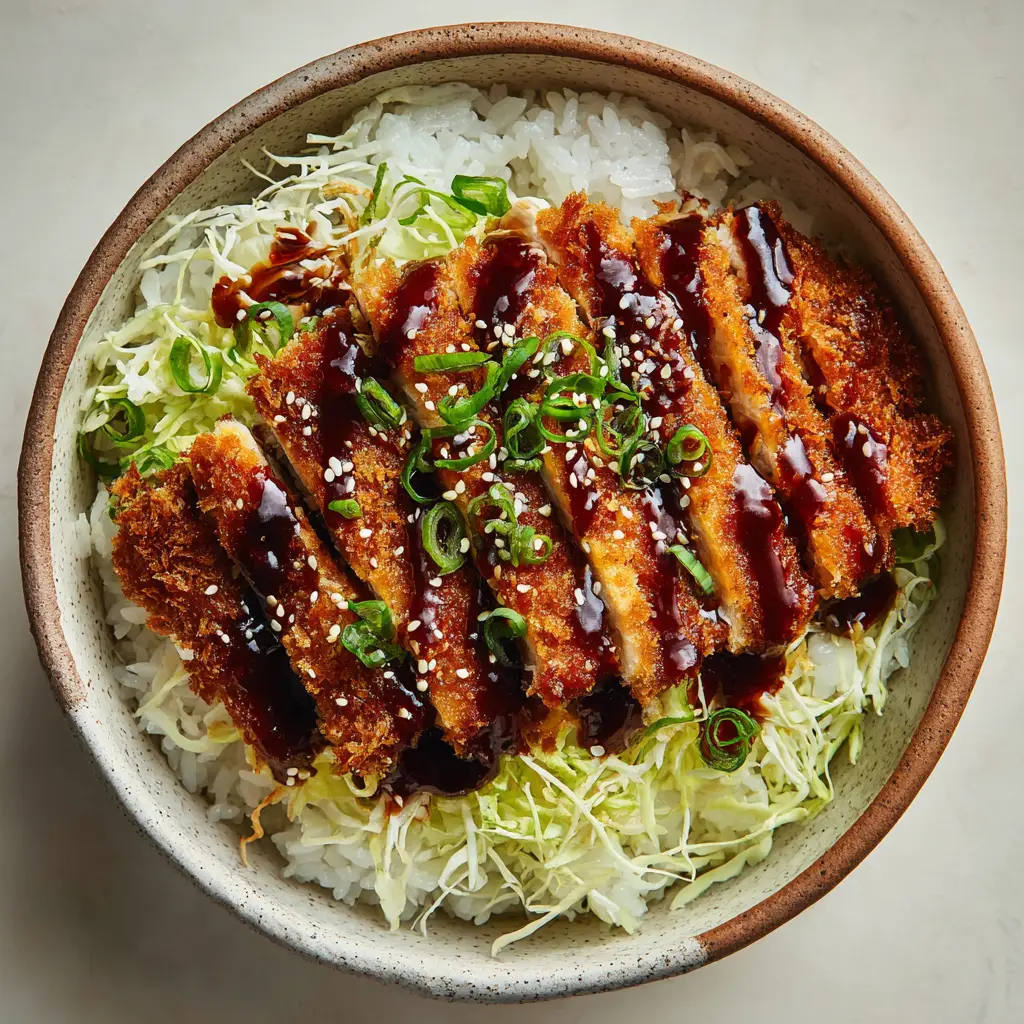
Experience the soul-satisfying crunch of a perfectly executed Japanese Katsu Bowl, a dish that defines Japanese comfort food with its symphony of textures. This recipe brings the authentic “Tonkatsu” experience directly to your kitchen, featuring a golden-brown, panko-crusted pork cutlet served over a cloud of steaming white rice. It is the visual embodiment of culinary precision, where the heat of the meat meets the refreshing chill of thinly shredded fresh green cabbage.
Our journey today focuses on achieving that elusive handheld smartphone photo aesthetic: a meticulous ceramic bowl filled with vibrant colors and sharp contrasts. From the thick, dark brown tonkatsu sauce zigzagging across the meat to the delicate sprinkle of toasted white sesame seeds, every element is designed for maximum flavor and visual impact. Whether you are a seasoned home cook or looking for a new weeknight favorite, this bowl offers a professional-grade result with accessible techniques.
Why This Authentic Japanese Katsu Bowl Recipe Works
- Unrivaled Texture: The contrast between the shattering crunch of the panko-breaded pork and the soft, pillowy texture of the steaming white rice is a sensory masterpiece.
- Balanced Flavor Profile: The savory, umami-rich pork is perfectly cut by the sharp, fresh bite of finely sliced green scallions and the tangy sweetness of the thick tonkatsu sauce.
- Professional Visuals: Following the “shred-soak-spin” method for the cabbage ensures that “thinly shredded fresh green cabbage” look found in the finest Tokyo eateries.
- Culinary Science: We utilize a specific dredging technique to ensure the breading never slides off the meat, maintaining structural integrity from the first slice to the last bite.
The Essential Components for a Professional Katsu Experience
To recreate the exact visual blueprint of this dish, we must select high-quality ingredients and prepare them with care. Each component serves a specific purpose in the architecture of the bowl.
Boneless Pork Loin Chops: 4 pieces (approx. 5oz (140g) each). Choose center-cut chops with a slight fat cap for moisture, pounded to an even 1/2-inch thickness for consistent frying.
Short-Grain Japanese Rice: 2 cups (400g) dry rice. This variety provides the necessary starchiness to create the “steaming white rice” base that holds its shape under the cutlet.
Fresh Green Cabbage: 1/2 head (approx. 400g). When thinly shredded, it provides a cooling, crunchy buffer that elevates the dish from a simple meal to a balanced feast.
Panko Breadcrumbs: 2 cups (120g). These Japanese-style flakes are larger and airier than standard breadcrumbs, essential for that “crispy golden” visual result.
Tonkatsu Sauce: 1/2 cup (120ml). Look for a thick, dark brown variety (like Bulldog brand) to achieve the perfect zigzag drizzle that won’t soak into the breading too quickly.
All-Purpose Flour: 1/2 cup (65g). This acts as the “glue” during the dredging process, ensuring the egg wash adheres to the pork fibers.
Large Eggs: 2 pieces. Beaten thoroughly, these create the protein bridge between the flour and the panko flakes.
Neutral Frying Oil: 2 cups (480ml). Use vegetable or canola oil to achieve a clean fry without altering the flavor of the pork cutlet.
Garnish Duo: 2 tbsp (12g) finely sliced green scallions and 1 tsp (3g) toasted white sesame seeds for that final aromatic and visual flourish.
Must-Have Tools for the Perfect Fry
Achieving a professional-grade Japanese Katsu Bowl requires more than just ingredients; it requires the right tools for heat management and precision. You will need a heavy-bottomed skillet or Dutch oven to maintain a steady oil temperature of 340°F (170°C). A meat mallet is crucial for thinning the pork, while a sharp mandoline or chef’s knife is required for that paper-thin cabbage shred. Finally, use a wire cooling rack rather than paper towels to let the cutlets rest; this prevents the bottom from becoming soggy as steam escapes.
Mastering the Art of the Golden Pork Cutlet
Step 1: Preparing the Rice and Cabbage Base
Begin by rinsing your short-grain rice under cold water until the water runs clear. Cook according to package instructions or in a rice cooker to ensure the grains are tender yet distinct. While the rice steams, shred the green cabbage as thinly as possible. Soak the shredded cabbage in a bowl of ice water for 10 minutes, then spin dry in a salad spinner; this technique results in the ultra-crispy, vibrant green texture seen in our visual blueprint.
Step 2: The Three-Stage Dredging Station
Season your pounded pork chops generously with salt and pepper. Set up three shallow bowls: one with flour, one with beaten eggs, and one with panko breadcrumbs. Dredge each chop in flour (shaking off the excess), dip into the egg wash, and finally press firmly into the panko. Ensure every nook and cranny is covered in “crispy golden panko” to guarantee a uniform crust.
Step 3: Precision Frying and Slicing
Heat your oil to 340°F (170°C). Carefully lower the pork into the oil, frying for 3-4 minutes per side. You are looking for a deep, golden-brown hue and an internal temperature of 145°F (63°C). Once fried, let the pork rest on a wire rack for 3 minutes. Using a very sharp knife, slice the cutlet into thick, even strips. You should hear a distinct “crunch” with every movement of the blade.
Step 4: Assembling the Handheld-Ready Bowl
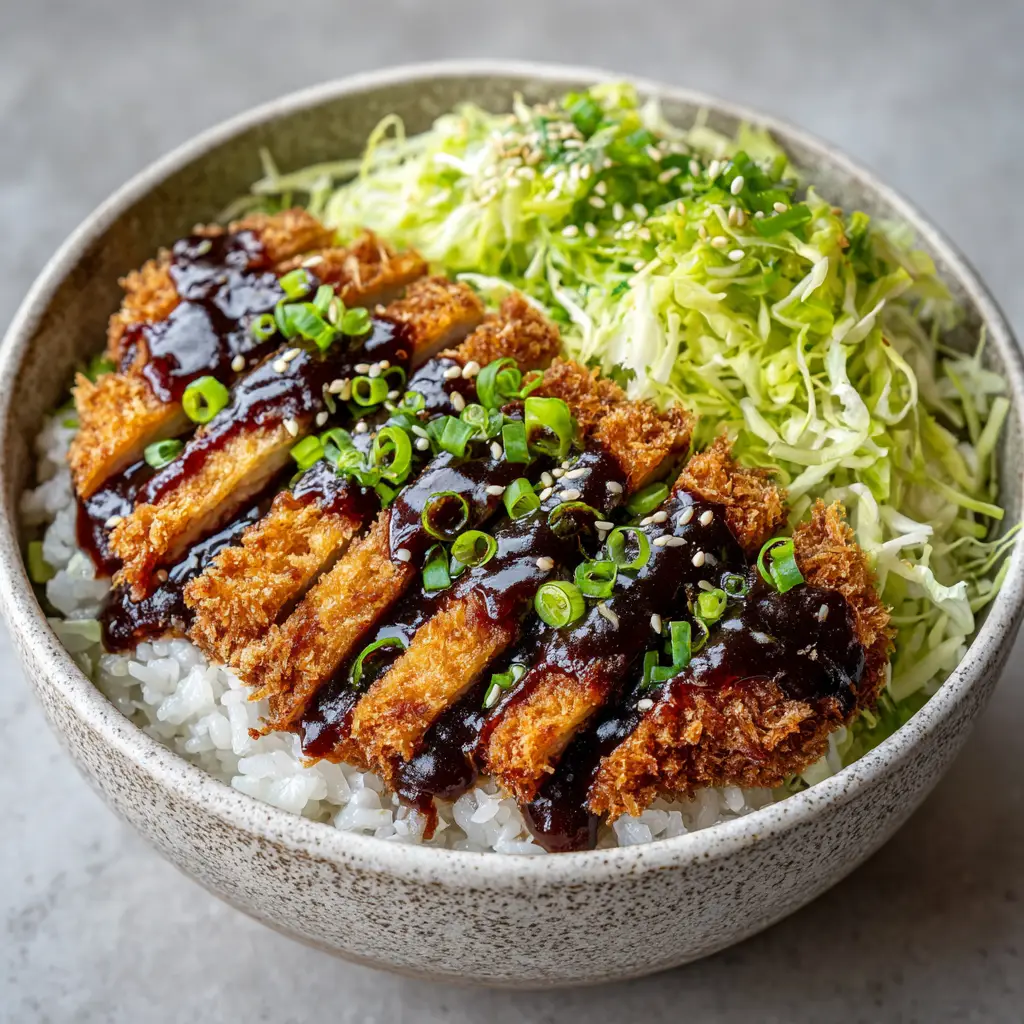
To assemble, fill a ceramic bowl with a generous mound of steaming white rice. Top with a pillowy bed of the prepared thinly shredded cabbage. Lay the sliced pork cutlet over the cabbage, maintaining the strip alignment. Take your tonkatsu sauce and drizzle it in a confident zigzag pattern across the meat. Finish by scattering the sliced scallions and toasted sesame seeds over the top for a result that looks exactly like a meticulous professional photo.
Expert Tips for a Flawless Katsu Result
- The Flour Shake: Always tap off excess flour before the egg wash; too much flour creates a “skin” that will cause the breading to peel away from the meat.
- Oil Temperature Control: If the oil is too cool, the panko will absorb grease and become heavy; if it’s too hot, the outside will burn before the pork is cooked through.
- The Ice Bath: Don’t skip the ice water soak for the cabbage! It transforms the vegetable from limp to incredibly refreshing and structurally sound.
- Resting is Vital: Giving the meat 3 minutes to rest allows the juices to redistribute, ensuring the pork is succulent rather than dry.
Maintaining Freshness: Storage and Reheating
While the Japanese Katsu Bowl is best enjoyed immediately for maximum crunch, you can store leftovers. Keep the fried pork cutlet in an airtight container for up to 2 days. To reheat, avoid the microwave, which will make the panko soggy. Instead, use an air fryer at 350°F (175°C) for 3-5 minutes or a toaster oven until the exterior sizzles again. The rice and cabbage should be stored separately to maintain their individual textures.
What to Serve with Your Katsu Masterpiece
This bowl is a complete meal on its own, but you can elevate the experience with a few side pairings. A warm bowl of French onion soup provides a deep, savory contrast to the fried pork. If you’re looking for something lighter, a side of Italian grinder salad (minus the bread) offers a zesty vinegar-based crunch. For a unique fusion twist, you might even consider serving a small portion of coconut chicken rice bowl for guests who prefer a different protein profile.
Frequently Asked Questions
While you can, regular breadcrumbs are denser and will not achieve the light, airy, and ‘shattering’ crunch that is characteristic of an authentic Japanese Katsu Bowl.
Ensure you pat the meat dry before flouring, and shake off any excess flour. The egg wash needs a thin, even layer of flour to act as a proper adhesive for the panko.
Not exactly. While both are thick and tangy, tonkatsu sauce is made with a base of fruits, vegetables, and soy sauce, giving it a unique Japanese umami profile that is less smoky than American BBQ sauce.
Boneless pork loin chops are the standard choice. They have the right balance of lean meat and a small fat cap to stay juicy during the high-heat frying process.
Soaking thinly shredded cabbage in ice water removes the bitter edge and makes the fibers extremely crisp and refreshing, providing the perfect contrast to the fried pork.
The Ultimate Japanese Katsu Bowl Recipe Card
Japanese Katsu Bowl: The Ultimate Guide to Crispy Tonkatsu and Steaming Rice
Ingredients
Equipment
Instructions
- Rinse the rice until clear and cook in a rice cooker or stovetop until tender and steaming.
- Finely shred the cabbage and soak in ice water for 10 minutes, then spin dry.
- Dredge seasoned pork in flour, dip in egg, and coat thoroughly with panko breadcrumbs.
- Fry pork in 340°F (170°C) oil for 3-4 minutes per side until golden brown and crispy.
- Slice the pork into thick strips. Place rice in a bowl, top with cabbage and pork, then drizzle with tonkatsu sauce, scallions, and sesame seeds.
Notes
Ensure the oil is exactly at 340°F (170°C) for the best color.
Bring the Flavors of Japan Home
There is nothing quite like the satisfaction of slicing through a freshly fried, panko-crusted cutlet. This Japanese Katsu Bowl is more than just a recipe; it’s a technique-driven approach to creating restaurant-quality food at home. If you enjoyed this culinary deep dive, please leave a comment below and share your results! Don’t forget to follow DaisyMeals on Pinterest for more visual recipe inspiration and weeknight dinner wins.