There is something fundamentally transformative about a bowl of Thai Coconut Chicken Soup. It is a masterpiece of contrasts: the rich, opaque silkiness of coconut milk met by the sharp, citrusy sting of lime and the delicate heat of red curry oil.
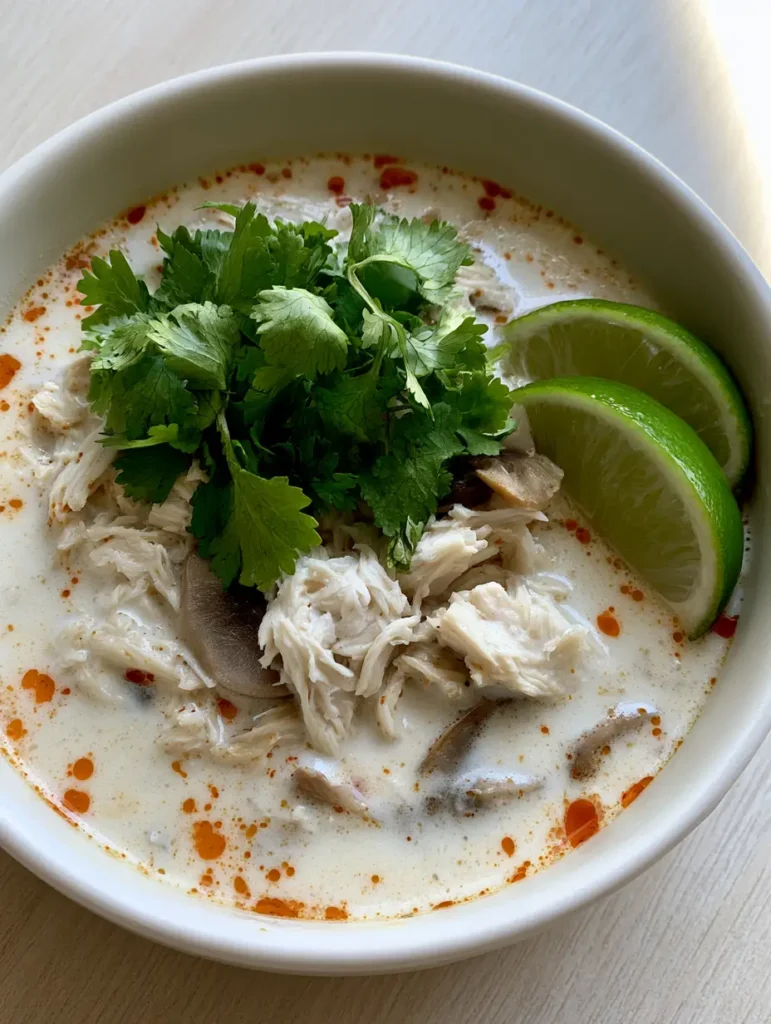
This isn’t just a meal; it’s a sensory experience designed to mimic the vibrant street food stalls of Bangkok right in your own kitchen. When you look into the bowl, you should see a snowy white landscape dotted with shimmering orange-red curry oil droplets, promising depth in every spoonful.
Whether you are seeking comfort on a rainy evening or a high-protein dinner that feels like a luxury, this recipe delivers. We’ve meticulously balanced the savory shredded chicken with the earthy, soft texture of thinly sliced brown mushrooms to ensure every bite is perfectly composed.
The Secret to that Velvety Thai Coconut Chicken Soup Texture
- Visual Contrast: The stark white broth provides a stunning backdrop for the bright green cilantro and the vivid red curry oil.
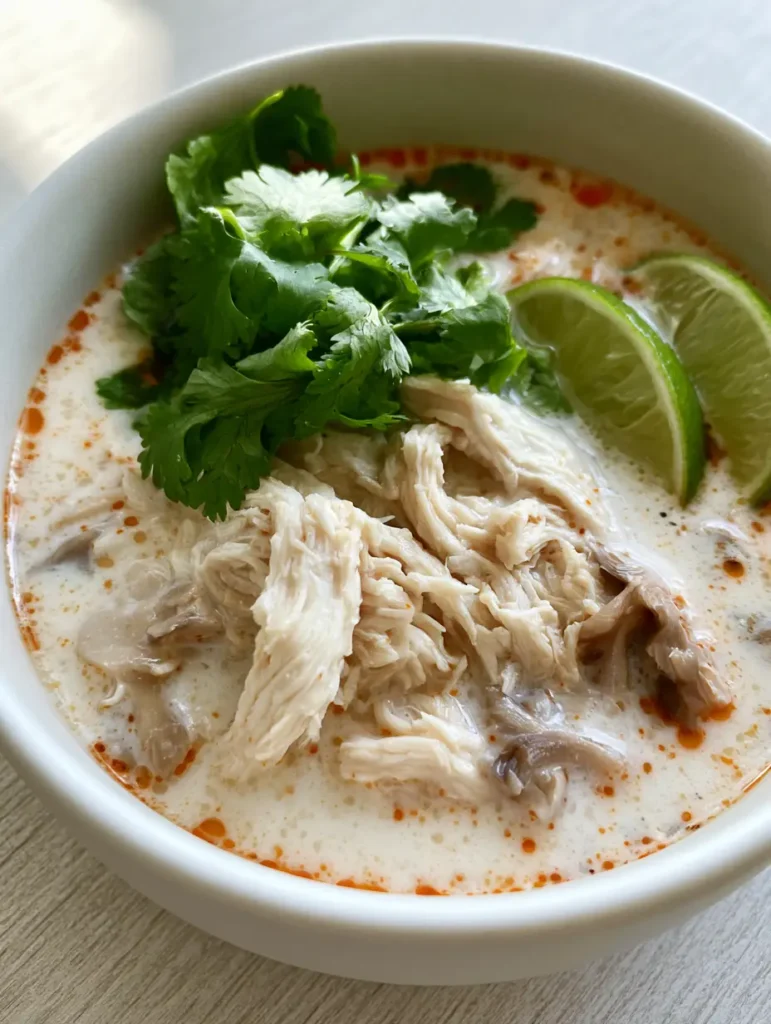
- Tender Protein: By poaching the chicken directly in the aromatic liquid, we achieve moist, tender shredded white meat that absorbs the broth’s flavor.
- Aromatic Depth: Using a combination of ginger, lemongrass, and fish sauce creates a “forensic” match for authentic restaurant-quality soup.
- Umami Balance: Thinly sliced brown mushrooms add a soft, earthy bite that complements the creamy coconut base without overpowering it.
Essential Ingredients for the Perfect Aromatic Base
Full-Fat Coconut Milk: 2 cans (800ml) of high-quality coconut milk are essential. This provides the opaque white color and the rich mouthfeel that defines the Thai Coconut Chicken Soup experience.
Chicken Breast: 1.5 lbs (680g) of boneless, skinless chicken breast. We poach this whole and then shred it to ensure the meat stays moist and holds onto the soup in its crevices.
Brown Mushrooms: 8 oz (225g) of cremini or baby bella mushrooms, sliced thin. These provide a much better visual and textural contrast than white button mushrooms when softened in the broth.
Red Curry Paste: 2 tbsp (30g) of Thai red curry paste. This is the source of those beautiful orange-red oil droplets that float on the surface, adding both spice and visual flair.
Chicken Stock: 3 cups (720ml) of low-sodium chicken broth. This thins the coconut milk just enough to make it a drinkable soup while maintaining a rich flavor profile.
Aromatics: A 2-inch (5cm) piece of ginger (or galangal) and 2 stalks of lemongrass. These “invisible” ingredients are strained out or left at the bottom, providing the essential fragrance.
Lime Juice & Fish Sauce: 3 tbsp (45ml) of each. These are the twin pillars of Thai seasoning, providing the necessary acidity and salty funk that balances the fatty coconut.
Fresh Cilantro & Lime Wedges: These are your visual anchors. The bright green cilantro leaves and raw lime wedges provide a fresh, vibrant finish to the cooked elements.
Must-Have Kitchen Tools for Soup Perfection
To achieve the precise textures seen in our visual blueprint, you will need a heavy-bottomed Dutch oven or a large stockpot. This ensures even heat distribution so the coconut milk doesn’t scorch or separate aggressively.
A sharp chef’s knife is non-negotiable for achieving those “thinly sliced” brown mushrooms. You will also need two forks for the shredding process, which allows you to control the thickness of the chicken strands for maximum broth absorption.
How to Master the Art of the Perfect Simmer
Searing the Aromatics and Blooming the Paste
Start by heating 1 tbsp (15ml) of neutral oil in your pot over medium heat. Add your smashed lemongrass, sliced ginger, and the red curry paste, stirring constantly for 2 minutes.
You are looking for the “bloom”—when the curry paste releases its oils and the kitchen smells intensely fragrant. This step is what creates those signature red oil droplets that will later float on your Thai Coconut Chicken Soup.
Building the Opaque Coconut Broth
Slowly pour in the chicken stock and the full-fat coconut milk. Whisk gently to combine the curry paste into the liquid until it becomes a uniform, creamy pale orange-white.
Bring the mixture to a gentle simmer. Do not let it reach a rolling boil, as high heat can cause the coconut milk to break and lose its creamy, opaque visual appeal.
Poaching and Shredding the Chicken
Gently submerge the whole chicken breasts into the simmering liquid. Cover and poach for 12-15 minutes, or until the internal temperature reaches 165°F (74°C).
Remove the chicken to a cutting board and use two forks to shred it into bite-sized pieces. Return the shredded meat to the pot along with the thinly sliced brown mushrooms.
The Final Flavor Calibration
Simmer for another 5 minutes until the mushrooms are soft and tender. Stir in the fish sauce and fresh lime juice, tasting as you go.
The soup is ready when the broth is rich and the shredded chicken is fully coated in the creamy liquid. Look for those small orange-red curry oil droplets dancing on the surface.
How to Store and Reheat Your Coconut Broth
This soup stores beautifully in the refrigerator for up to 3 days. In fact, the flavors of the ginger and lemongrass often deepen overnight, making the leftovers even more vibrant.
When reheating, do so over low heat on the stovetop. Avoid the microwave if possible, as it can heat the soup unevenly and cause the coconut fat to separate, ruining the opaque white appearance.
If the soup thickens too much in the fridge, simply splash in a little extra chicken broth or a bit of citrus-infused stock to loosen the consistency while maintaining the flavor profile.
What to Pair with Your Homemade Thai Feast
While this Thai Coconut Chicken Soup is a complete meal on its own, it pairs beautifully with other Asian-inspired textures. For a fusion twist, try serving it alongside some Thai peanut chicken noodles (coming soon) for a double dose of peanut and coconut goodness.
If you prefer a lighter side, a crisp zesty salad can provide a sharp contrast to the creamy broth. For those who love mushrooms, this soup offers a more aromatic alternative to a traditional vegan mushroom soup.
Your Frequently Asked Questions Answered
Absolutely. Chicken thighs are very forgiving and will remain tender, though they may take 2-3 minutes longer to poach than breasts.
Yes! While galangal is traditional for Tom Kha Gai, fresh ginger is a widely accepted and delicious substitute that provides a similar aromatic warmth.
The red droplets come from ‘blooming’ the red curry paste in a little oil or the thick coconut cream at the start of cooking before adding the rest of the broth.
For the visual and textural results shown, full-fat canned coconut milk is highly recommended. Low-fat versions often lack the opaque white color and creamy mouthfeel.
Coconut milk can separate if it reaches a vigorous, rolling boil. To keep it smooth and creamy, maintain a gentle simmer and stir occasionally.
The Full Printable Thai Coconut Chicken Soup Recipe
[Image-Pin]
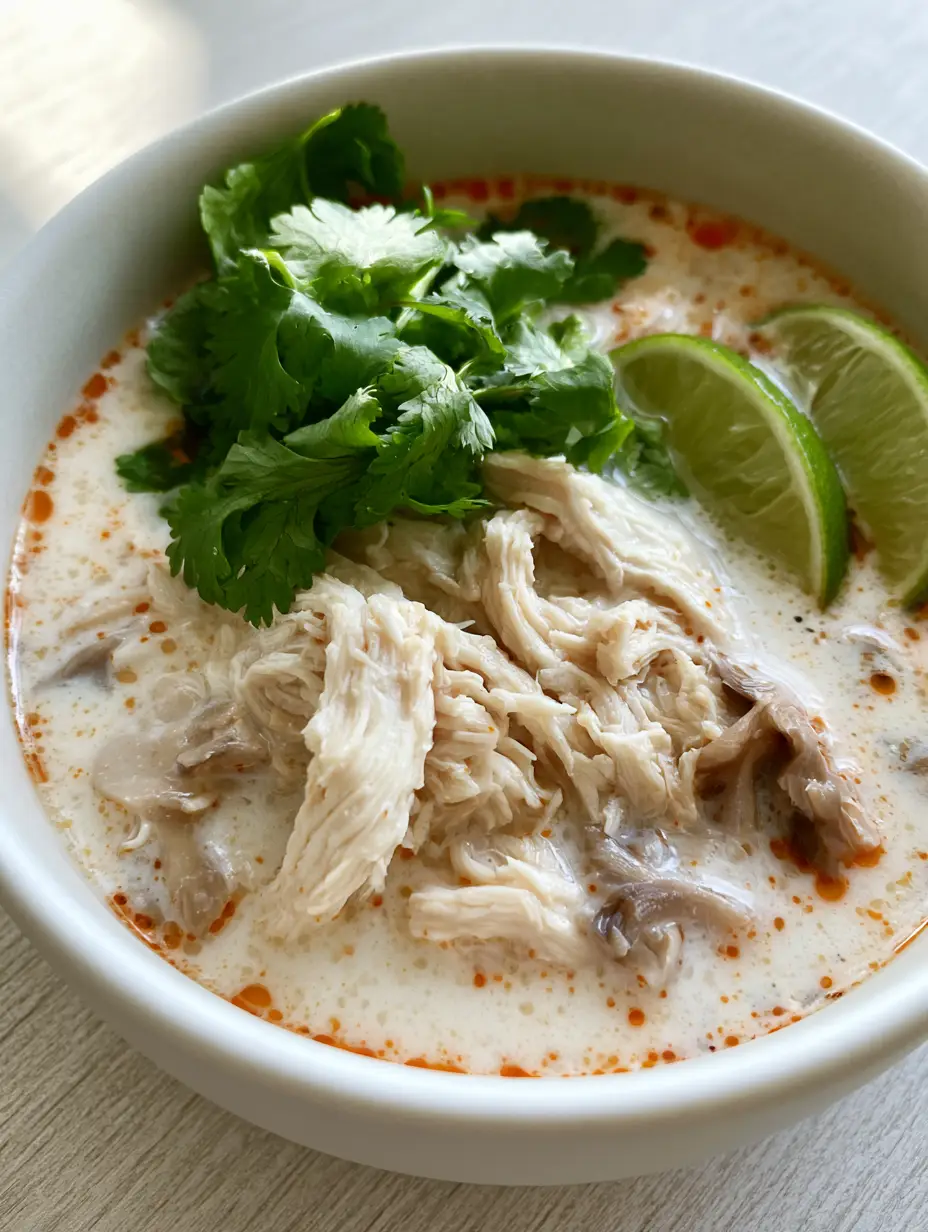
Thai Coconut Chicken Soup: The Ultimate Creamy 30-Minute Bowl
Ingredients
Equipment
Instructions
- Heat oil in a Dutch oven over medium heat. Sauté lemongrass, ginger, and red curry paste for 2 minutes until fragrant and oil droplets form.
- Stir in coconut milk and chicken stock. Bring to a gentle simmer, avoiding a rolling boil.
- Add whole chicken breasts. Cover and simmer for 12-15 minutes until cooked through (165°F).
- Remove chicken and shred with two forks. Return to pot with sliced mushrooms and simmer 5 minutes until mushrooms are soft.
- Stir in fish sauce and lime juice. Serve in bowls topped with fresh cilantro and raw lime wedges.
Notes
Do not boil the soup rapidly or the coconut milk may separate.
[Image-Pin-2]
Bring the Flavors of Thailand to Your Table
This Thai Coconut Chicken Soup is more than just a recipe; it is a reliable staple for any home cook looking to expand their culinary repertoire. The combination of silky coconut milk, tender shredded chicken, and those iconic red curry droplets creates a restaurant-quality dish in under an hour.
If you enjoyed this deep dive into Thai flavors, please leave a comment below and let us know how your broth turned out! Don’t forget to share your creations with us on Pinterest so we can see your beautiful bowls.
[Image-Pin-3]