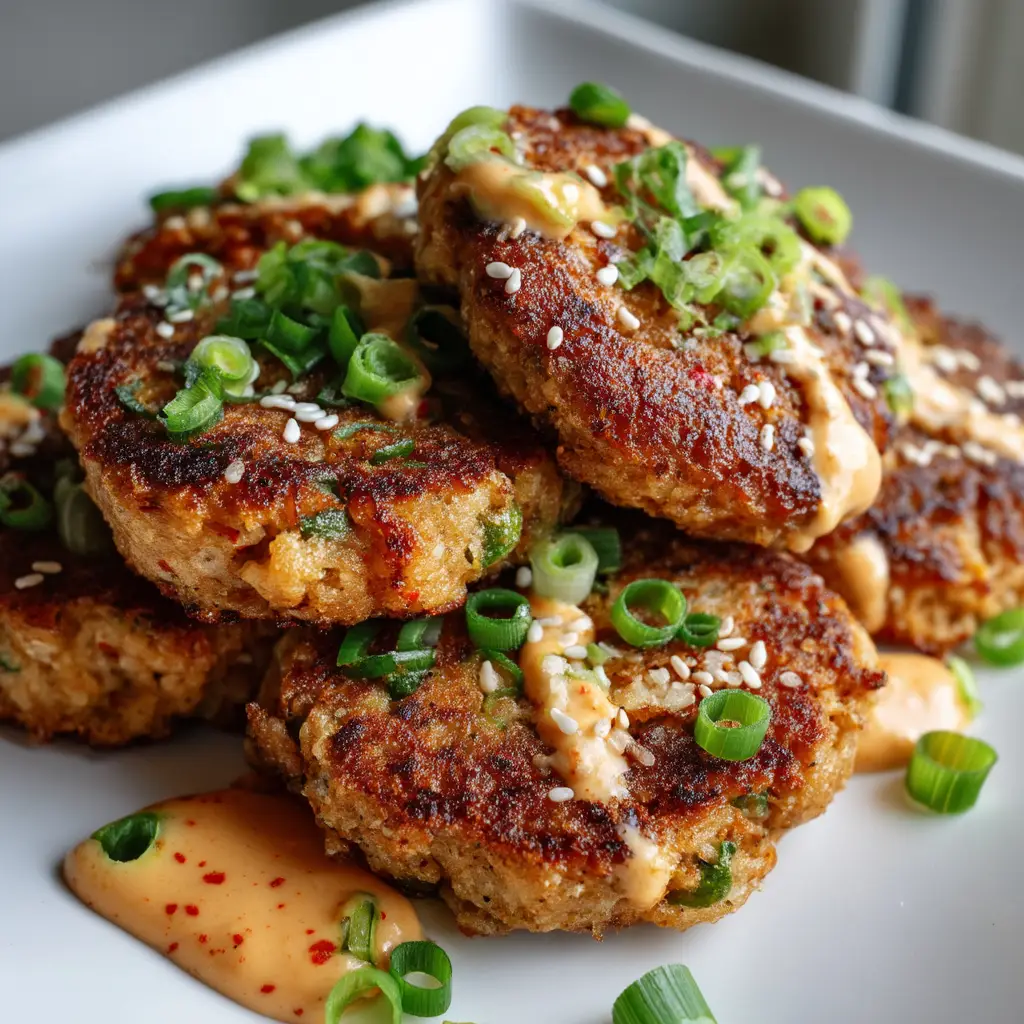
Asian Tuna Cakes are the ultimate fusion of pantry staples and vibrant, fresh aromatics. If you are looking for a quick, high-protein meal that delivers a stunning visual and sensory experience, this recipe is your answer. These patties fry up beautifully, yielding a golden-brown and crispy exterior that gives way to a highly textured, flaky interior.
When plated properly, Asian Tuna Cakes piled on a white ceramic plate look like a dish from a high-end modern bistro. The close-up appeal is undeniable. A creamy, light-orange spicy mayo is generously drizzled over the top cake, adding both moisture and a subtle, creeping heat.
Every bite is perfectly balanced by a generous garnish of finely chopped green scallions and a satisfying sprinkle of white sesame seeds. Fans of bold, umami-forward seafood like our sriracha honey salmon bowls will instantly fall in love with these crispy patties.
Why You Will Love These Asian Tuna Cakes
These Asian Tuna Cakes are incredibly versatile. They can serve as a protein-packed lunch, a light dinner, or an elegant appetizer. The preparation requires minimal active time, relying on clever culinary techniques to maximize flavor.
You will appreciate the structural integrity of this recipe. Unlike many seafood cakes that fall apart in the pan, our precise binder ratio ensures your Asian Tuna Cakes hold their shape perfectly. The resulting patties boast a glorious golden-brown and crispy crust every single time.
Furthermore, the ingredient list leans heavily on affordable pantry staples. Canned tuna transforms into a gourmet meal with the simple addition of soy sauce, toasted sesame oil, and fresh ginger. This accessibility makes Asian Tuna Cakes a reliable weeknight savior.
The Culinary Forensics of the Perfect Texture
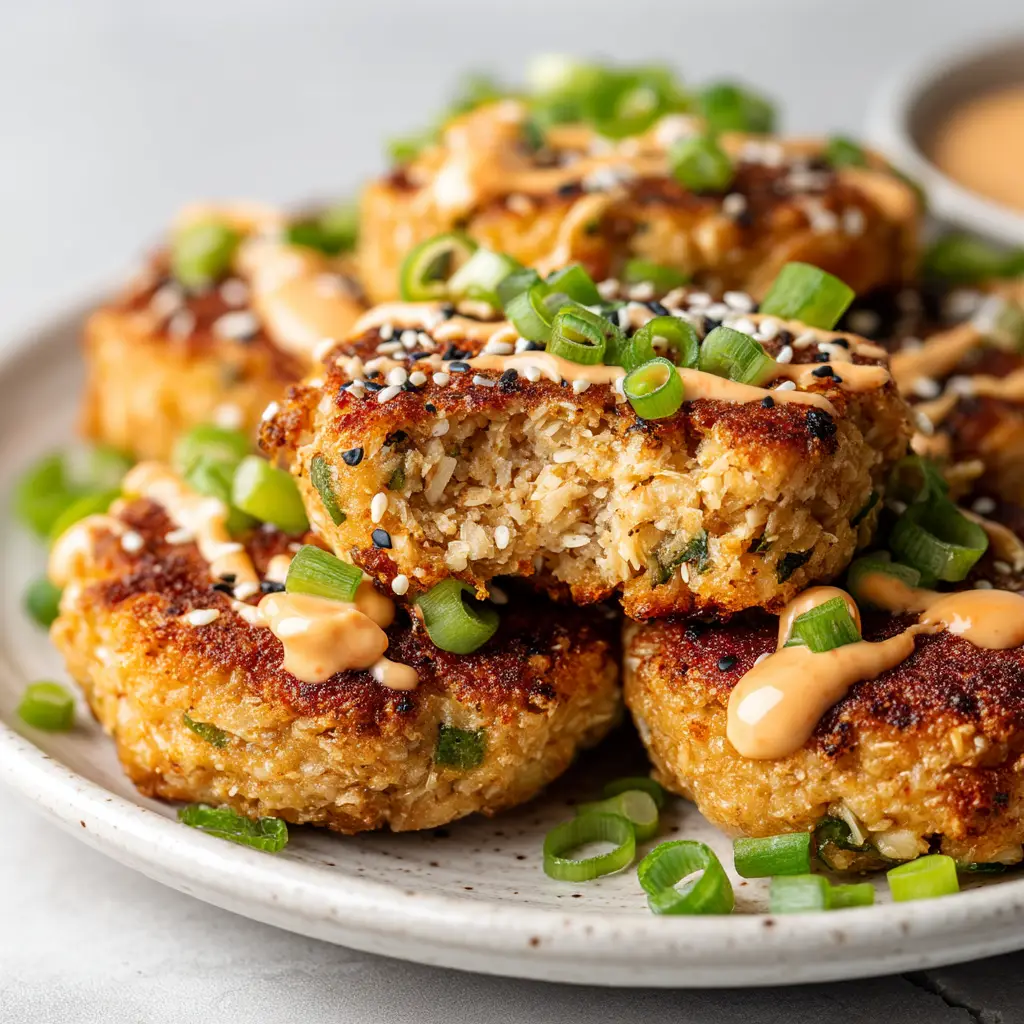
Achieving a textured, flaky interior in your Asian Tuna Cakes requires a specific approach to handling the protein. We do not want a dense, pulverized paste. Instead, we want distinct flakes of fish that mimic fresh seafood.
To achieve this, you must gently fold the ingredients rather than aggressively mixing them. We rely on chunk light or solid white albacore tuna packed in water. You must drain the tuna completely to remove excess moisture, which is the primary enemy of a crispy crust.
Moisture control dictates the success of your Asian Tuna Cakes. If the mixture is too wet, the interior steams rather than binds. If you want to explore more about moisture control in pan-frying, review our techniques used in crispy tofu fried chicken.
Essential Ingredients for the Tuna Base
The foundation of these Asian Tuna Cakes begins with high-quality canned tuna. You will need 12 oz (340g) of drained tuna to yield approximately four to five well-sized cakes. Drain the cans thoroughly using a fine-mesh sieve.
Next is the binder. We use 1/2 cup (30g) of panko breadcrumbs and 2 large eggs (100g). Panko is critical because its large, airy flakes absorb less oil and provide a significantly crispier crust than standard breadcrumbs.
For the aromatics, you need 1/4 cup (40g) of finely diced red onion, 1 tsp (5g) of freshly grated ginger, and 1 clove of minced garlic. These elements infuse the Asian Tuna Cakes with sharp, savory base notes.
Flavoring the Asian Tuna Cakes
To give the Asian Tuna Cakes their distinct regional flavor profile, we utilize liquid umami agents. You will need 2 tbsp (30ml) of low-sodium soy sauce. This provides the necessary salt content and deepens the savory profile.
We also add 1 tbsp (15ml) of toasted sesame oil. Toasted sesame oil is highly aromatic and adds a nutty, rich background note that pairs flawlessly with seafood. A pinch of white pepper completes the internal seasoning.
Because the liquid ingredients add moisture back into the drained tuna, the panko breadcrumbs act as an internal sponge. This delicate balance ensures the Asian Tuna Cakes remain moist inside without compromising their golden-brown and crispy exterior.
Mastering the Light-Orange Spicy Mayo
No serving of Asian Tuna Cakes is complete without the signature sauce. A creamy, light-orange spicy mayo provides essential fat and acidity to balance the lean tuna. The visual contrast of the sauce against the crust is stunning.
To create this emulsion, whisk together 1/4 cup (60g) of high-quality mayonnaise with 1 tbsp (15ml) of sriracha sauce. If you prefer mastering your own base mayonnaise, you can adapt our garlic aioli recipe for an artisan touch.
Add 1 tsp (5ml) of fresh lime juice to the spicy mayo. The acid in the lime juice cuts through the richness of the frying oil and elevates the overall flavor profile of the Asian Tuna Cakes.
Step-by-Step Shaping and Pan-Frying
Once your mixture is folded together, it is time to shape the Asian Tuna Cakes. Divide the mixture into equal portions, about 1/3 cup (80ml) each. Press them firmly between your palms to form compact patties.
Structural tip: Place the shaped patties on a plate and refrigerate them for 15 minutes before cooking. This resting period allows the panko to fully hydrate and the egg proteins to relax, ensuring the Asian Tuna Cakes do not crumble.
Heat a large non-stick skillet over medium-high heat. Add 2 tbsp (30ml) of a neutral cooking oil, such as canola or avocado oil. Wait until the oil shimmers; temperature control is paramount for achieving the golden-brown and crispy crust.
The Maillard Reaction in Action
Carefully place the chilled Asian Tuna Cakes into the hot oil. You should immediately hear a robust sizzling sound. This auditory cue confirms the pan is hot enough to trigger the Maillard reaction.
Cook the patties undisturbed for 3 to 4 minutes on the first side. Resist the urge to press down on them with a spatula, as this forces out flavorful juices and compromises the textured, flaky interior.
Gently flip the Asian Tuna Cakes and cook for another 3 minutes until both sides are deeply golden-brown. Transfer the finished cakes to a wire rack. A wire rack, rather than paper towels, prevents the bottoms from becoming soggy.
Garnishing and Final Presentation
The visual appeal of these Asian Tuna Cakes relies heavily on the garnish. Once the cakes have rested for a minute, arrange them carefully. Pile the Asian Tuna Cakes on a white ceramic plate to create height and contrast.
Take your prepared spicy mayo and drizzle it elegantly over the top cake. The creamy, light-orange spicy mayo should cascade slightly down the sides, highlighting the textures of the food.
Finally, generously garnish the dish with 2 tbsp (12g) of finely chopped green scallions and a 1 tbsp (9g) sprinkle of white sesame seeds. The bright green and white accents against the golden-brown crust make the Asian Tuna Cakes look photorealistic and highly detailed.
What to Serve with Asian Tuna Cakes
These savory patties pair wonderfully with a variety of side dishes. For a light, refreshing contrast, serve them alongside our crisp cucumber mozzarella salad. The acidity of the salad cleanses the palate.
If you are serving the Asian Tuna Cakes as a hearty dinner main, consider pairing them with a starch. Steamed jasmine rice or our savory chicken teriyaki noodles make excellent, filling accompaniments.
You can also serve them atop a bed of mixed greens dressed with a simple ginger-sesame vinaigrette. The versatility of Asian Tuna Cakes allows them to adapt seamlessly to your meal planning needs.
Storage and Reheating Guidelines
If you have leftover Asian Tuna Cakes, allow them to cool completely to room temperature. Store them in an airtight container in the refrigerator for up to 3 days. Keep the spicy mayo stored in a separate container.
To reheat, avoid the microwave, as it will destroy the golden-brown and crispy exterior. Instead, preheat your oven or air fryer to 350°F (175°C) and warm the Asian Tuna Cakes for 5 to 7 minutes until heated through.
This reheating method restores the exterior crunch while maintaining the textured, flaky interior. Garnish with fresh chopped scallions and white sesame seeds immediately before serving to revive the dish’s visual vibrancy.
Troubleshooting Common Issues
If your Asian Tuna Cakes are falling apart in the pan, the mixture likely lacked sufficient binding power or resting time. Ensure you use the precise measurements of egg and panko, and never skip the 15-minute chilling step.
If your crust is burning before the center is warm, your skillet is too hot. Lower the heat to medium and allow the Asian Tuna Cakes to cook gently. If the crust is pale and greasy, the oil was not hot enough when the patties were added.
Always listen for the sizzle when placing the food in the pan. The sensory cues of cooking are just as important as the ingredient list when perfecting Asian Tuna Cakes.
Frequently Asked Questions
Yes, you can bake them. Preheat your oven to 400°F (200°C), generously spray the shaped patties with cooking oil, and bake for 15-20 minutes, flipping halfway. However, pan-frying yields a much crispier, golden-brown crust.
While this recipe is optimized for the convenience and specific moisture content of canned tuna, you can finely dice fresh sushi-grade tuna. If using fresh tuna, reduce the liquid ingredients slightly to maintain the correct binder ratio.
Store cooled leftover tuna cakes in an airtight container in the refrigerator for up to 3 days. Keep the spicy mayo stored separately to preserve the crust’s texture.
If you do not have panko, you can use crushed Ritz crackers or standard plain breadcrumbs. Be aware that regular breadcrumbs may result in a denser patty that absorbs slightly more frying oil.
The most common reasons are excess moisture or skipping the chilling step. Make sure you drain the canned tuna completely until it is dry, and always rest the formed patties in the refrigerator for at least 15 minutes before frying.
Asian Tuna Cakes Recipe
Asian Tuna Cakes
Ingredients
Equipment
Instructions
- Place the canned tuna into a fine-mesh sieve and press firmly to drain all excess liquid. The tuna must be completely dry to ensure the cakes form a crispy crust.
- In a large bowl, combine the drained tuna, panko breadcrumbs, beaten eggs, diced red onion, grated ginger, minced garlic, soy sauce, and toasted sesame oil. Gently fold the mixture to maintain a textured, flaky interior.
- Divide the mixture into 4 or 5 equal portions. Firmly press them between your palms to form compact patties. Place the shaped patties on a plate and refrigerate for 15 minutes to set the binders.
- While the patties chill, whisk together the mayonnaise, sriracha, and lime juice in a small bowl until a smooth, creamy, light-orange sauce forms. Set aside.
- Heat the neutral cooking oil in a large non-stick skillet over medium-high heat. Once the oil shimmers, carefully add the chilled patties. Cook undisturbed for 3 to 4 minutes until the bottom is golden-brown and crispy.
- Gently flip the Asian Tuna Cakes with a thin spatula. Cook for an additional 3 minutes on the second side until deeply golden. Transfer to a wire cooling rack.
- Pile the Asian Tuna Cakes on a white ceramic plate. Drizzle the top cake generously with the spicy mayo. Garnish with the finely chopped green scallions and a sprinkle of white sesame seeds before serving.
Notes
Tip 2: Do not skip the 15-minute chilling step; this allows the panko to absorb moisture and bind the patties tightly.

Conclusion
These Asian Tuna Cakes are a testament to how simple ingredients can be elevated through proper culinary technique. From the golden-brown and crispy crust to the creamy, light-orange spicy mayo, every element works in harmony.
By following these exact steps, you guarantee a textured, flaky interior and a stunning presentation. Pile them high on a white ceramic plate, generously garnish with finely chopped green scallions, and enjoy.
If you loved this recipe, please leave a comment below and share your photos! Don’t forget to save this recipe to your favorite boards on Pinterest for quick weeknight inspiration.