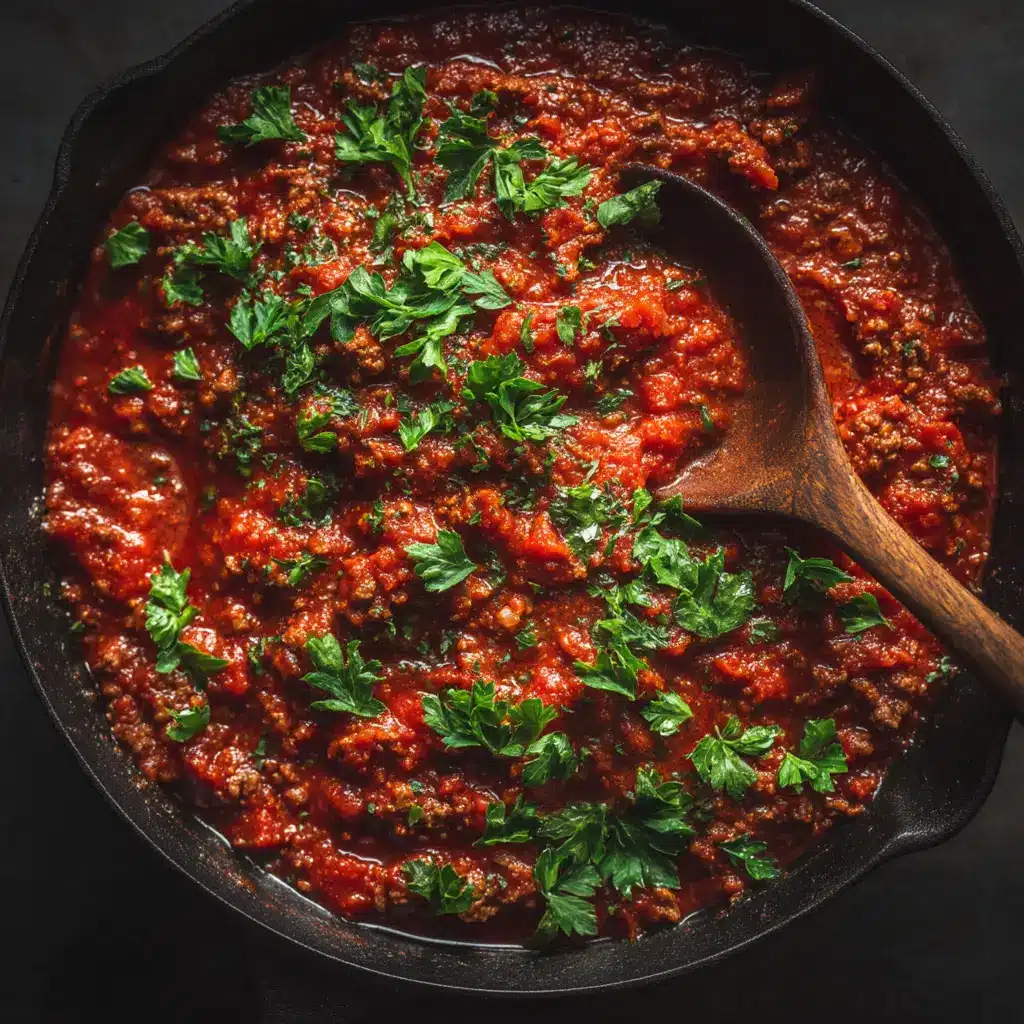
Welcome to the heart of the Italian-American kitchen. This Authentic Italian Gravy Recipe is more than just a sauce; it’s a tradition, a slow-simmered masterpiece packed with rich, complex flavors that have been the centerpiece of family dinners for generations. Forget the quick weeknight spaghetti sauce; this is Sunday gravy, a labor of love that rewards you with the most incredibly deep and satisfying flavor imaginable. Get ready to create a truly memorable meal that will have everyone asking for seconds.

What’s the Difference Between Italian Gravy and Sauce?
The great “sauce vs. gravy” debate is a hallmark of Italian-American cooking. Generally, the distinction comes down to two things: cook time and ingredients. A “sauce,” like a marinara, is often a lighter, quicker-cooking creation, typically made with just tomatoes and aromatics. An Authentic Italian Gravy Recipe, on the other hand, is a rich, slow-cooked affair that always includes meat. The meat is simmered for hours, its flavors melting into the tomatoes to create a thick, intensely savory “gravy” that’s in a league of its own. While some might use a different kind of sauce for pizza, like a creamy white garlic sauce, gravy is the go-to for pasta feasts.
Why You’ll Love This Authentic Italian Gravy Recipe
- Unbelievably Rich Flavor: Slow simmering multiple types of meat creates a depth of flavor that you simply can’t achieve in a quick sauce. It’s savory, complex, and deeply satisfying.
- Feeds a Crowd: This recipe makes a generous batch, perfect for large family dinners, celebrations, or meal-prepping for the week ahead.
- Authentic Tradition: This isn’t a shortcut recipe. It’s the real deal—the kind of Sunday gravy that grandmothers are famous for, made with love and time.
- Versatile Use: While perfect for spaghetti or rigatoni, this gravy is also the ultimate base for dishes like a classic homemade lasagna or served over creamy polenta.
The Key to Authentic Flavor: Ingredients You’ll Need
The secret to a truly great gravy lies in the quality of its ingredients. There are no shortcuts here. We’re building layers of flavor from the ground up, starting with the right combination of meats, aromatics, and, of course, tomatoes.
The Trinity of Meats
For the richest flavor, we use a combination of beef, pork, and sausage. Each one brings a unique character to the pot.
- Beef Short Ribs or Chuck Roast: Provides a deep, beefy foundation. The bones in the short ribs add extra collagen and richness.
- Pork Shoulder or Country-Style Ribs: Pork adds a distinct sweetness and tenderness that balances the beef.
- Sweet or Hot Italian Sausage: This is a non-negotiable for flavor. It infuses the gravy with fennel, garlic, and other spices. For an extra layer, consider making your own homemade meatballs to add as well.
The Aromatics and Liquids
- Onions and Garlic: The essential flavor base for any great Italian dish.
- Red Wine: A dry red wine like Chianti or Merlot deglazes the pan and adds a crucial layer of acidity and complexity.
- Tomato Paste: This concentrated tomato product adds an intense, umami-rich backbone. Frying it with the aromatics deepens its flavor.
- San Marzano Tomatoes: These are the gold standard. They are less acidic and have a sweeter, richer flavor than other canned tomatoes. Use whole, peeled tomatoes and crush them by hand.
- Herbs: Fresh basil and dried oregano are classic choices that perfume the gravy beautifully. A bay leaf adds a subtle, earthy note.
Step-by-Step Instructions for Making Italian Gravy
Patience is the most important ingredient in this recipe. Follow these steps closely, and you’ll be rewarded with a pot of liquid gold.
- Sear the Meats: Pat your beef and pork dry and season generously with salt and pepper. In a large, heavy-bottomed pot or Dutch oven, heat olive oil over medium-high heat. Sear the meats in batches until deeply browned on all sides. Do not crowd the pan. Remove the meat and set it aside.
- Brown the Sausage: Add the Italian sausage to the same pot and brown on all sides. The rendered fat is pure flavor. Remove and set aside with the other meats.
- Sauté Aromatics: Lower the heat to medium. Add the chopped onion to the pot and cook, stirring frequently, until softened and translucent, about 8-10 minutes. Add the minced garlic and cook for another minute until fragrant.
- Bloom the Tomato Paste: Add the tomato paste to the pot. Cook, stirring constantly, for 3-4 minutes, until it darkens to a brick-red color. This step is crucial for developing a deep, rich tomato flavor.
- Deglaze the Pan: Pour in the red wine, scraping up all the browned bits (the fond) from the bottom of the pot with a wooden spoon. Let the wine simmer and reduce by about half.
- Combine and Simmer: Add the hand-crushed San Marzano tomatoes, water or stock, bay leaf, and dried oregano to the pot. Stir everything together. Return the seared meats (beef, pork, and sausage) to the pot, nestling them into the sauce.
- The Slow Simmer: Bring the gravy to a gentle simmer. Once simmering, reduce the heat to the lowest possible setting, cover the pot with the lid slightly ajar, and let it cook for at least 4-6 hours. Stir occasionally to prevent sticking. The gravy is done when it’s thick, dark red, and the meat is fall-apart tender.
- Finish the Gravy: Carefully remove the meat from the gravy. You can shred it and add it back to the sauce or serve it on the side. Remove the bay leaf. Stir in the fresh, torn basil leaves. Taste and adjust seasoning with salt and pepper as needed.
Tips for the Best Sunday Gravy
- Low and Slow is Key: Do not rush the process. The long, slow simmer is what transforms good ingredients into an unforgettable gravy.
- Don’t Skip the Sear: Searing the meat is essential for developing the deep, roasted flavors that form the foundation of the gravy.
- Use Quality Tomatoes: Certified San Marzano tomatoes truly make a difference in the final taste. They are worth seeking out.
- Make it a Day Ahead: Like many stews and braises, Italian gravy tastes even better the next day after the flavors have had more time to meld.
How to Store and Reheat Your Gravy
This Authentic Italian Gravy Recipe is perfect for making in large batches. Allow the gravy to cool completely before storing. It can be refrigerated in an airtight container for up to 5 days or frozen for up to 3 months. To reheat, gently warm it on the stovetop over low heat, stirring occasionally until heated through. You may need to add a splash of water to thin it out if it has thickened too much.
Frequently Asked Questions About Italian Gravy
It’s very difficult to overcook a slow-simmered gravy. As long as the heat is very low and you stir it occasionally to prevent scorching at the bottom, a longer cook time will only make the meat more tender and the flavors deeper and more developed. The real risk is cooking it on too high a heat, which can cause it to burn.
For authentic flavor, Italian gravy should be simmered low and slow for a minimum of 4 hours, but 6 to 8 hours is even better. This long cooking time allows the meat to become incredibly tender and for all the flavors to meld together into a rich, cohesive sauce.
The main difference is the inclusion of meat and a much longer cooking time. Italian ‘gravy’ is a rich, slow-simmered sauce where meats like pork, beef, and sausage cook for hours, creating a deep, complex flavor. A ‘sauce’ is often a lighter, quicker, meatless tomato sauce like marinara.
A combination of meats is best for the most flavorful gravy. We recommend using beef (like short ribs or chuck roast), pork (like shoulder or country-style ribs), and high-quality Italian sausage. Each type of meat adds a unique layer of flavor to the finished dish.
The term ‘gravy’ for a tomato-based meat sauce is primarily an Italian-American tradition, particularly in East Coast communities. It’s believed to have originated from early immigrants translating the Italian word ‘sugo’ (juice/sauce) to ‘gravy,’ a familiar English term for a sauce made with meat drippings.
Authentic Italian Gravy Recipe
Authentic Italian Gravy Recipe (The Only One You'll Ever Need)
Ingredients
Equipment
Instructions
- Pat the beef and pork dry and season generously with salt and pepper. In a large Dutch oven, heat olive oil over medium-high heat. Sear the meats in batches until deeply browned on all sides. Remove and set aside.
- Add the Italian sausage to the same pot and brown well on all sides. Remove and set aside with the other seared meats.
- Lower the heat to medium, add the chopped onions, and cook until softened, about 8-10 minutes. Add the minced garlic and cook for 1 minute more until fragrant.
- Stir in the tomato paste and cook for 3-4 minutes, stirring constantly, until it darkens in color. Pour in the red wine to deglaze, scraping all the browned bits from the bottom of the pot. Let it simmer and reduce by half.
- Add the hand-crushed tomatoes, water (or broth), dried oregano, and the bay leaf. Stir to combine, then return all the browned meat to the pot.
- Bring to a gentle simmer, then reduce heat to the lowest setting. Cover with the lid slightly ajar and let it cook for a minimum of 4 hours, but preferably 6 hours, stirring occasionally. The gravy is ready when it is thick, dark red, and the meat is exceptionally tender.
- Remove the meat and bay leaf from the pot. Stir in the fresh basil. Season the gravy with salt and pepper to taste. Serve the meat on the side or shred it and return it to the gravy. Serve hot over your favorite pasta.
Notes
Don't be afraid to let the meat get very brown during the searing step; this fond is the foundation of the gravy's flavor.
Always use high-quality canned tomatoes, preferably D.O.P. San Marzano, for a less acidic, sweeter final product.
Share Your Creation!
We know you’ll love this taste of tradition. There’s nothing better than gathering around the table to share a meal made with love. If you make this Authentic Italian Gravy Recipe, be sure to leave a comment below and share your masterpiece on Pinterest!