There is something inherently comforting about a steaming bowl of seafood, yet this Crab Stew Recipe transcends the ordinary. Imagine a rustic white ceramic bowl, captured in the soft glow of natural daylight, resting on a weathered wooden table. Inside, a thick, velvety pale-orange broth cradles generous, tender chunks of white and pink crab claw meat.
This isn’t just a meal; it is a sensory experience designed for the enthusiastic home cook who appreciates the finer details of coastal cuisine. Every spoonful offers a balance of oceanic sweetness and decadent creaminess, finished with the vibrant colors of fresh parsley and a delicate dusting of paprika.
The visual appeal is striking—the surface is punctuated by a golden pool of melted yellow butter that swirls into the orange-tinted base. Whether you are hosting a seaside-themed dinner or simply craving a high-end comfort meal, this recipe delivers professional results with the approachability of a handheld smartphone photo.
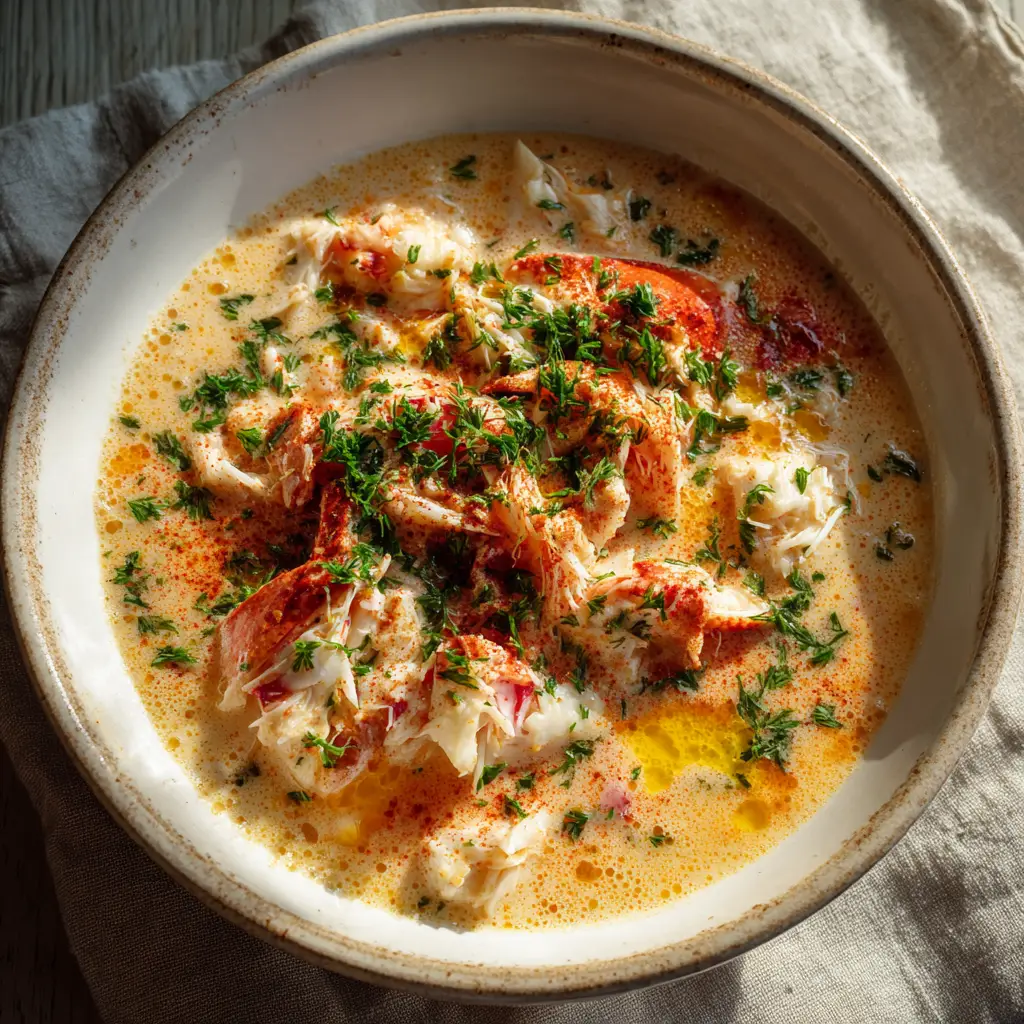
The Visual Allure of This Gourmet Crab Stew Recipe
- The Pale-Orange Hue: Achieved through a precise sauté of aromatics and a hint of concentrated tomato, creating a base that glows under natural light.
- Textural Contrast: Large, recognizable chunks of crab claw meat provide a satisfying bite against the silkiness of the heavy cream.
- The Garnish Hierarchy: Finely chopped parsley adds a burst of green, while red paprika provides a smoky, earthy finish that pops against the rustic white bowl.
- The Golden Finish: A final addition of high-quality melted butter creates that signature “restaurant-style” shimmer on the surface.
The Anatomy of Flavor: Hand-Selected Ingredients
To achieve the specific depth of flavor required for a world-class Crab Stew Recipe, we must focus on the quality of our seafood and the stability of our dairy emulsion. Every ingredient serves a structural and aesthetic purpose in this bowl.
Fresh Crab Claw Meat: 1 lb (454g) of crab claw meat is preferred over lump meat for this stew. The claw meat is sturdier, maintaining those beautiful white and pink chunks throughout the simmering process without shredding.
High-Fat Heavy Cream: 1 cup (240ml) of heavy cream is the engine of our “pale-orange” visual. It provides the necessary viscosity to support the heavy crab chunks and creates a luxurious mouthfeel.
Unsalted European-Style Butter: 4 tbsp (60g) of butter is used in two stages. Half is used to sauté the aromatics, and the other half is melted into that iconic central pool just before serving.
Seafood or Shellfish Stock: 4 cups (960ml) of high-quality stock provides the oceanic foundation. If you have the time, simmering the discarded crab shells with a bit of French Onion Soup logic (slow-cooked depth) can elevate the base further.
The “Orange” Catalyst: 1 tbsp (15g) of tomato paste. This is the secret to the color. When whisked into the roux, it transforms the white cream into that perfect pale-orange sunset hue described in our visual blueprint.
Aromatic Trinity: A blend of 1 small yellow onion (150g), 2 ribs of celery (100g), and 3 cloves of minced garlic (15g). These provide the “invisible” flavor layers that make the stew taste professional.
Foundational Seasonings: 1 tsp (2g) of smoked paprika for the dusting and 1/2 tsp (3g) of sea salt. The paprika adds both the red visual accent and a subtle hint of the coast.
Essential Culinary Hardware for the Perfect Simmer
While this recipe looks like a casual smartphone-captured masterpiece, it requires the right tools to ensure the cream doesn’t break and the crab stays intact. Using a heavy-bottomed Dutch oven is non-negotiable for even heat distribution.
You will also need a fine-mesh strainer if you choose to make your own stock, and a sharp chef’s knife for achieving that “finely chopped” green parsley garnish. A flat-bottomed wooden spoon is essential for scraping the flavorful “fond” off the bottom of the pot during the initial sauté.
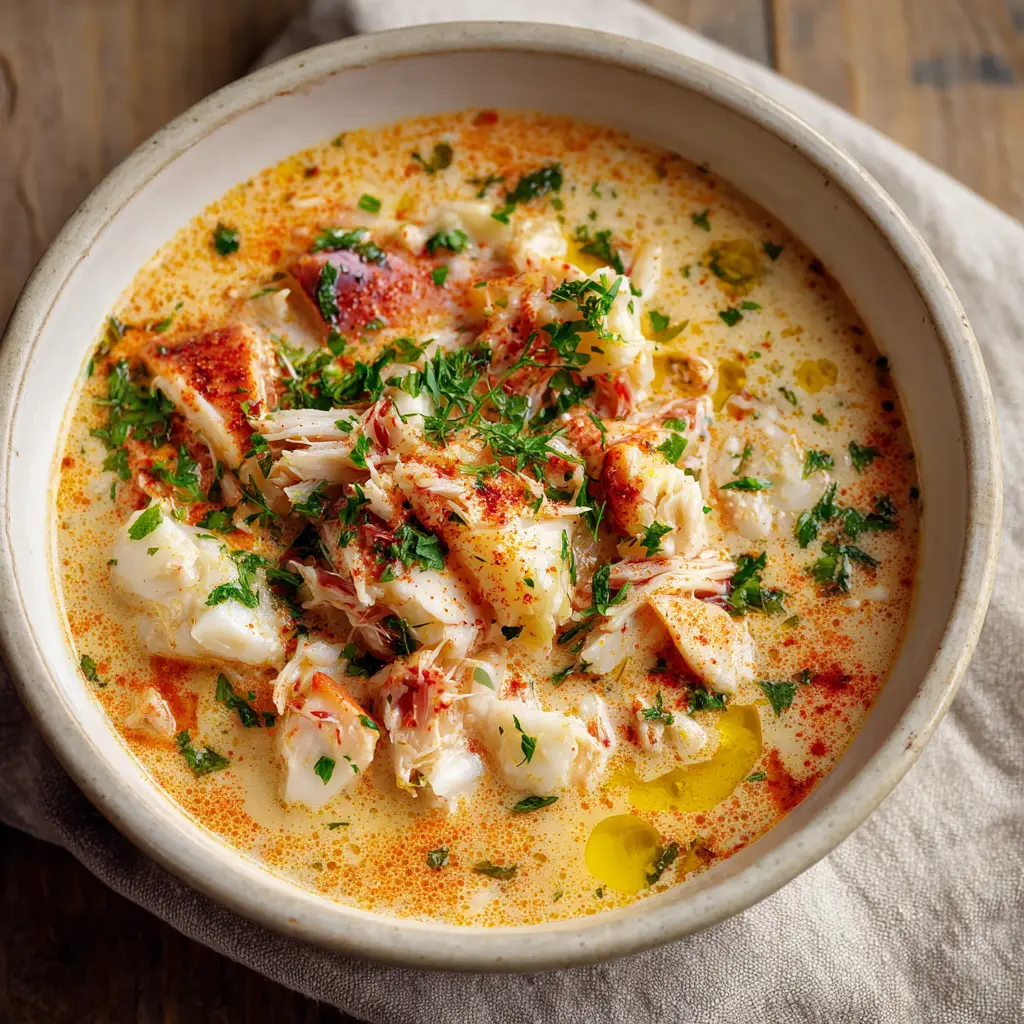
Forging the Flavor: Step-by-Step Culinary Guide
1. Building the Aromatic Foundation
In your heavy pot, melt 2 tbsp (30g) of the butter over medium heat. Listen for the sizzle to stop—this indicates the water has evaporated and you are ready to sauté. Add the finely diced onion and celery.
Cook until the onions are translucent and the celery is soft, about 6-8 minutes. Add the minced garlic and sauté for only 60 seconds until fragrant; you want to avoid browning the garlic, which can introduce bitterness to the delicate Crab Stew Recipe.
2. Creating the Pale-Orange Roux
Stir in 2 tbsp (15g) of all-purpose flour and the 1 tbsp (15g) of tomato paste. Use your wooden spoon to cook the flour for 2 minutes. This “blonde roux” will thicken the stew while the tomato paste begins to tint the fat.
Slowly whisk in the 4 cups (960ml) of seafood stock. Pour in a thin stream, whisking constantly to ensure no lumps form. This is the same technique used in a creamy roasted garlic lemon pasta sauce to ensure a smooth, professional texture.
3. The Creamy Transformation
Bring the liquid to a gentle simmer. Lower the heat and pour in the 1 cup (240ml) of heavy cream. You will see the broth transform into that stunning pale-orange color instantly.
Let the base simmer gently for 10 minutes. It should thicken enough to lightly coat the back of a spoon. Do not let it reach a rolling boil, as this can cause the dairy to separate, ruining the visual integrity of the stew.
4. Incorporating the Crab Claw Meat
Gently fold in the 1 lb (454g) of white and pink crab claw meat. Because claw meat is precooked, we are only heating it through. Use a gentle folding motion to keep the chunks large and recognizable.
Simmer for an additional 3-5 minutes. The crab will release its natural juices into the broth, deepening the flavor profile. Season with sea salt and black pepper to taste.
5. The Visual Finishing Touches
Ladle the stew into rustic white ceramic bowls. Now, we execute the “Forensic Visual” details. Place a small pat of the remaining yellow butter in the center of each bowl, allowing it to melt into a vibrant pool.
Finely chop your fresh green parsley and sprinkle it generously over the surface. Finish with a light, controlled dusting of red paprika. The contrast of the green herbs and red spice against the orange broth is what defines this Crab Stew Recipe.
Expert Tips for Coastal Success
- The Butter Trick: For a more intense “yellow pool,” use grass-fed butter which has a higher beta-carotene content and a deeper golden hue.
- Crab Temperature: Ensure your crab meat is at room temperature before adding it to the stew to prevent the broth temperature from dropping too rapidly.
- The Paprika Dusting: Use a small sieve to apply the paprika. This ensures a fine “dusting” rather than clumps, maintaining the elegant aesthetic.
- Managing Consistency: If the stew is too thick, add stock 1/4 cup (60ml) at a time. If too thin, continue simmering before adding the crab.
What to Serve With Your Creamy Crab Stew
A dish this rich deserves a side that can handle the creaminess. A warm, crusty sourdough baguette is the traditional choice for soaking up the pale-orange broth. For an extra touch of indulgence, serve with rolls brushed with Texas Roadhouse cinnamon honey butter-inspired honey butter (minus the cinnamon) for a sweet-and-salty contrast.
If you are looking for a lighter accompaniment, an Italian grinder salad (minus the bread) provides a crisp, acidic bite that cuts through the fat of the heavy cream and butter. For a seafood-centric feast, consider a side of Marry Me Salmon to keep the ocean themes flowing.
Frequently Asked Questions
Yes, but ensure it is fully thawed and patted dry. Excess water from frozen crab can thin out the rich, thick consistency of the stew.
While technically possible, imitation crab will not provide the same sweetness or the specific white and pink ‘chunk’ texture seen in the visual blueprint. For best results, use real claw meat.
Keep the heat at a low simmer. Never allow the stew to reach a rolling boil once the heavy cream has been added, as high heat breaks the fat emulsion.
Reheat slowly on the stovetop over low heat, stirring occasionally. Avoid the microwave, which can rubberize the delicate crab meat and break the cream sauce.
The pale-orange hue is a signature of this recipe, achieved by combining a small amount of tomato paste and paprika with the heavy cream base. It signifies a deeper, more complex flavor profile.
The Ultimate Creamy Crab Stew Recipe
Crab Stew Recipe: A Creamy Coastal Masterpiece with Rich Claw Meat
Ingredients
Equipment
Instructions
- In a Dutch oven, melt 2 tbsp (30g) butter. Sauté onion and celery for 8 minutes until translucent. Add garlic for 1 minute until fragrant.
- Stir in flour and tomato paste. Cook for 2 minutes to remove raw flour taste and develop the orange color catalyst.
- Slowly whisk in seafood stock to ensure a smooth base. Add heavy cream and bring to a very low simmer for 10 minutes.
- Gently fold in the crab claw meat chunks. Simmer for 3-5 minutes until heated through. Do not boil.
- Ladle into bowls. Top with a pat of butter, a dusting of paprika, and fresh parsley.
Notes
Do not over-stir once crab is added to keep chunks intact.

This Crab Stew Recipe represents the pinnacle of home-cooked luxury. By following these forensic visual steps—from the specific pale-orange broth to the final dusting of paprika—you are creating a dish that looks like it belongs on the front page of a culinary magazine.
We invite you to share your results! If you enjoyed this coastal journey, please leave a comment below or sign up for our newsletter for more elite recipes. Don’t forget to pin this recipe to your favorite boards on Pinterest so you can find it the next time you crave a bowl of pure comfort.


