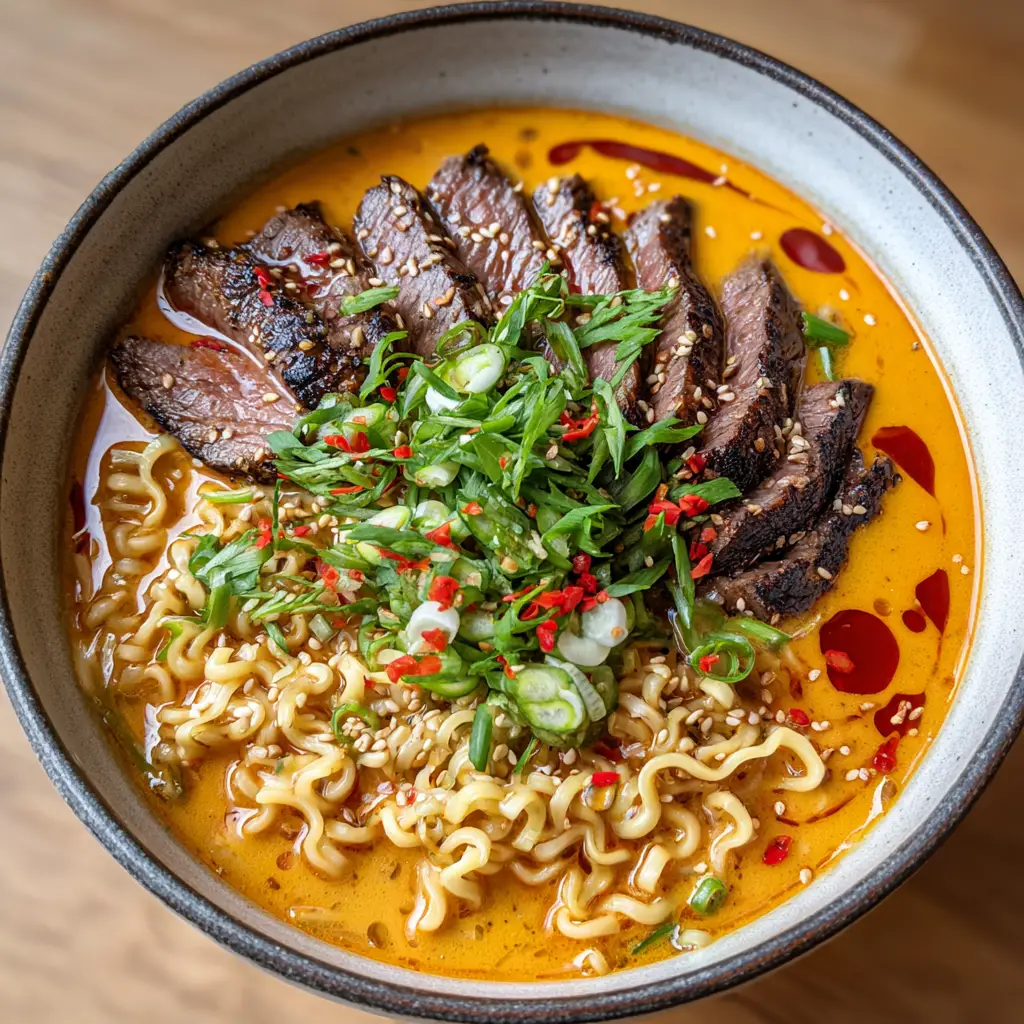
There is a specific kind of magic that happens when high-heat culinary techniques meet the soul-warming comfort of a noodle bowl. This Creamy Spicy Korean Ramen isn’t just another quick dinner; it is a masterclass in texture and flavor contrast. Imagine springy, alkaline noodles swimming in a pool of velvet-thick, orange-red broth that carries a creeping heat, balanced perfectly by a cooling, pale savory drizzle.
Every element of this dish has been architected to satisfy both the eyes and the palate. From the deep, smokey notes of the seared charred grilled beef slices to the bright, sharp pop of fresh green onions, this recipe bridges the gap between gourmet restaurant fare and home-cooked soul food. It is the ultimate answer for anyone seeking a bold, spicy, and luxurious meal that feels as good as it looks.
Whether you are a seasoned heat-seeker or a fan of rich, creamy pastas like this creamy roasted garlic lemon pasta, this ramen will redefine your expectations of what a bowl of noodles can be. Let’s dive into the forensic details of how to build this visual and culinary masterpiece from the ground up.
Why You Will Crave This Spicy Korean Fusion
- The Broth Texture: Unlike thin, watery soups, this broth is thick, opaque, and clings to every curl of the ramen noodle for a full-flavor experience in every bite.
- The Maillard Reaction: We use high-heat searing to create charred, darkened edges on the beef, providing a smoky depth that cuts through the richness of the cream.
- Layered Heat: By combining fermented Gochujang with bright red chili oil droplets, we create a multidimensional spiciness that glows at the edges of the bowl.
- Visual Sophistication: The contrast of the orange-red base against the thick pale creamy savory sauce drizzle makes this a centerpiece-worthy dish.
The Anatomy of Flavor: Essential Ingredients
The Foundation: Noodles and Protein
Curly Ramen Noodles (2 portions): Look for high-quality, air-dried, or fresh alkaline noodles that provide that signature “springy” snap and hold their shape in heavy sauces.
Beef Slices (12 oz / 340g): Use a well-marbled cut like ribeye or flank steak, sliced thin against the grain to ensure the meat remains tender after a hard, fast sear.
Neutral High-Smoke Point Oil (2 tbsp / 30ml): Essential for achieving the charred edges on the beef without burning the fat or filling your kitchen with acrid smoke.
The Heart: The Creamy Spicy Broth
Gochujang / Korean Chili Paste (3 tbsp / 45g): This fermented powerhouse provides the “orange-red” hue and a complex, funky sweetness that defines the base.
Heavy Cream or Full-Fat Coconut Milk (1/2 cup / 120ml): This is the secret to the opaque, rich texture that transforms a standard soup into a luxurious, creamy elixir.
Chicken or Beef Stock (2 cups / 480ml): Use a low-sodium variety to maintain total control over the seasoning profile while building a savory foundation.
Fresh Garlic and Ginger (1 tbsp each, minced): These aromatic “invisibles” provide the aromatic backbone that makes the spicy notes sing.
The Finish: Garnishes and Drizzles
Pale Creamy Savory Sauce (1/4 cup / 60ml): A blend of Kewpie mayo and a splash of rice vinegar creates that thick, pale drizzle that offsets the heat visually and physically.
Green Onions (3 stalks, finely chopped): These provide a necessary fresh, herbaceous “crunch” and a vibrant green visual contrast to the orange broth.
Toasted White Sesame Seeds (1 tsp / 5g): Beyond the visual appeal, these add a subtle nutty aroma that complements the charred beef.
Chili Oil (1-2 tbsp / 15-30ml): High-quality chili oil creates those bright red droplets that pool at the edges, indicating the spice level to the diner.
Professional Tools for the Perfect Bowl
To achieve the “charred grilled” look described in our visual blueprint, a Cast Iron Skillet is your best friend. Its superior heat retention allows for the rapid Maillard reaction needed to darken the edges of the beef without overcooking the center. You will also need a Heavy-Bottomed Saucepan for the broth to prevent the cream from scorching at the base.
Finally, a Fine-Mesh Sieve is useful if you prefer an ultra-smooth broth, though many home cooks enjoy the rustic texture of the minced aromatics. For the drizzle, a small squeeze bottle or a steady hand with a teaspoon will help you achieve those “generous” pale streaks seen in professional food photography.
Step-by-Step Evolution of the Creamy Spicy Korean Ramen
1. Achieving the Perfect Char on the Beef
Pat your beef slices completely dry with a paper towel; moisture is the enemy of a good sear. Heat your cast iron skillet over medium-high heat until the oil begins to shimmer and barely smoke. Lay the beef slices in a single, non-overlapping layer and leave them undisturbed for 90 seconds.
You are looking for the “visual cue” of darkened, slightly curled edges and a glossy sheen on the surface. Flip once, sear for another 30 seconds, and remove immediately. The residual heat will finish the cooking while you prepare the noodles.
2. Building the Opaque Spicy Base
In your saucepan, sauté the minced garlic and ginger in a teaspoon of oil until fragrant, about 1 minute. Whisk in the Gochujang, letting it “toast” in the pan for 30 seconds to deepen its color to a rich, dark red. Slowly pour in the stock while whisking constantly to ensure no clumps of paste remain.
Bring the mixture to a gentle simmer, then pour in the heavy cream. Watch as the broth transforms into a thick, opaque orange-red hue. Lower the heat to maintain a bare simmer; boiling the broth after adding cream can cause the fats to separate, ruining the velvet-smooth texture.
3. Cooking the Springy Ramen Noodles
Boil your ramen noodles in a separate pot of unsalted water, according to the package directions, but reduce the time by 1 minute. We want “al dente” noodles because they will continue to soften slightly once they hit the hot, creamy broth. Drain them thoroughly—extra water will dilute our meticulously crafted sauce.
4. The Art of the Assemble and Garnish
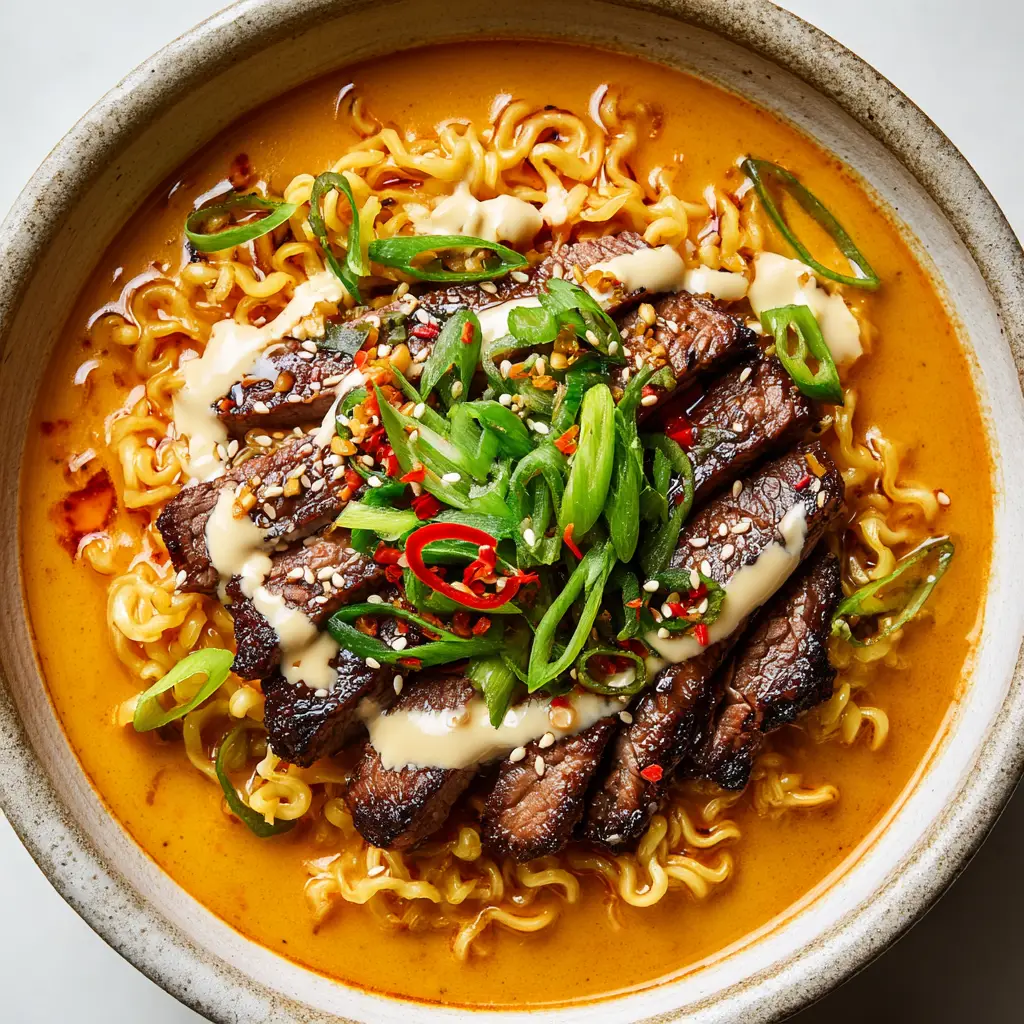
Place a nest of curly noodles into a deep ceramic bowl. Pour the thick broth over the noodles until they are partially submerged but still visible. Top with the overlapping slices of charred beef. Use a spoon or squeeze bottle to apply the pale creamy savory sauce in a zig-zag pattern across the meat.
Finish with a heavy dusting of finely chopped green onions and a sprinkle of toasted sesame seeds. Finally, carefully dot the edges of the broth with bright red chili oil. Look for the “sensory cue” of the oil pooling and shimmering against the opaque cream base.
Expert Tips for Ramen Excellence
- Control the Heat: Gochujang brands vary in spiciness. Start with 2 tablespoons and taste your broth before adding the third to ensure it matches your preference.
- Emulsify the Drizzle: If your pale savory sauce is too thick, whisk in a teaspoon of warm water or lime juice to reach a “drizzlable” consistency.
- Noodle Prep: Never cook the noodles directly in the creamy broth. The starch from the noodles will make the broth gummy rather than creamy.
- The Beef Cut: If using a tougher cut like flank steak, marinate it in a teaspoon of baking soda and soy sauce for 15 minutes before searing to “velvet” the meat.
Optimal Storage and Reheating Guidelines
This Creamy Spicy Korean Ramen is best enjoyed immediately to preserve the springy texture of the noodles. However, if you have leftovers, store the broth and the noodles in separate airtight containers for up to 2 days. The beef should be stored with the broth to keep it moist.
To reheat, warm the broth in a small saucepan over low heat, stirring occasionally to keep the cream emulsified. Add the noodles only at the very last second just to warm them through. Do not microwave the noodles in the broth, as they will absorb the liquid and become mushy. Freezing is not recommended for this dish due to the dairy content in the broth.
What to Serve with Your Korean Ramen
To balance the intense richness and spice of this dish, consider serving it alongside something crisp or acidic. A side of pickled radishes or a fresh cucumber salad provides a cooling palate cleanser between bites. If you are looking for more beef-heavy comfort, our French onion beef short rib soup offers a different but equally deep flavor profile.
For those who love fusion appetizers, try pairing this with crispy pizza chips for a fun, textural contrast. If you’re hosting a larger dinner, this ramen serves as a fantastic main course followed by light, airy snacks like cottage cheese cloud bread to keep the meal from feeling overly heavy.
Frequently Asked Questions
Yes! Substitute the beef with seared king oyster mushrooms or firm tofu, and use vegetable stock and a plant-based cream or coconut milk for the broth.
You can, but for the best ‘springy’ texture shown in the photos, we recommend using air-dried or fresh ramen noodles found in the refrigerated section of Asian grocery stores.
To reduce the heat, use only 1 tablespoon of Gochujang and omit the finishing chili oil droplets. The heavy cream will also help mellow the spice naturally.
Ribeye or flank steak are ideal because they have enough fat to stay tender during a high-heat sear. Ensure you slice them very thin against the grain.
The broth usually separates if it is boiled too vigorously after adding the heavy cream. Always keep the heat on a low simmer once the dairy is incorporated.
The Ultimate Creamy Spicy Korean Ramen Recipe
Creamy Spicy Korean Ramen with Seared Charred Beef
Ingredients
Equipment
Instructions
- Heat oil in a cast iron skillet over high heat. Sear beef slices until charred and darkened at the edges (about 90 seconds per side). Set aside.
- In a saucepan, sauté garlic and ginger for 1 minute. Add Gochujang and cook for 30 seconds until darkened.
- Whisk in stock and bring to a simmer. Stir in heavy cream to create an opaque orange-red broth. Keep warm on low heat.
- Boil ramen noodles separately until al dente. Drain and place in bowls.
- Pour broth over noodles. Top with beef, a drizzle of pale savory sauce, green onions, sesame seeds, and droplets of chili oil.
Notes
If the broth gets too thick, thin it with a tablespoon of water or extra stock.

Join the DaisyMeals Culinary Community!
We hope this Creamy Spicy Korean Ramen brings a burst of bold flavor and restaurant-quality aesthetics to your kitchen table. There is nothing we love more than seeing your creations! If you made this dish, did the beef get that perfect char? Did the chili oil droplets pool just right? Let us know in the comments below.
Don’t forget to follow us on Pinterest for more visually stunning recipe inspiration. If you enjoyed this creamy fusion, be sure to sign up for our newsletter to get the latest recipes delivered straight to your inbox. Happy cooking!