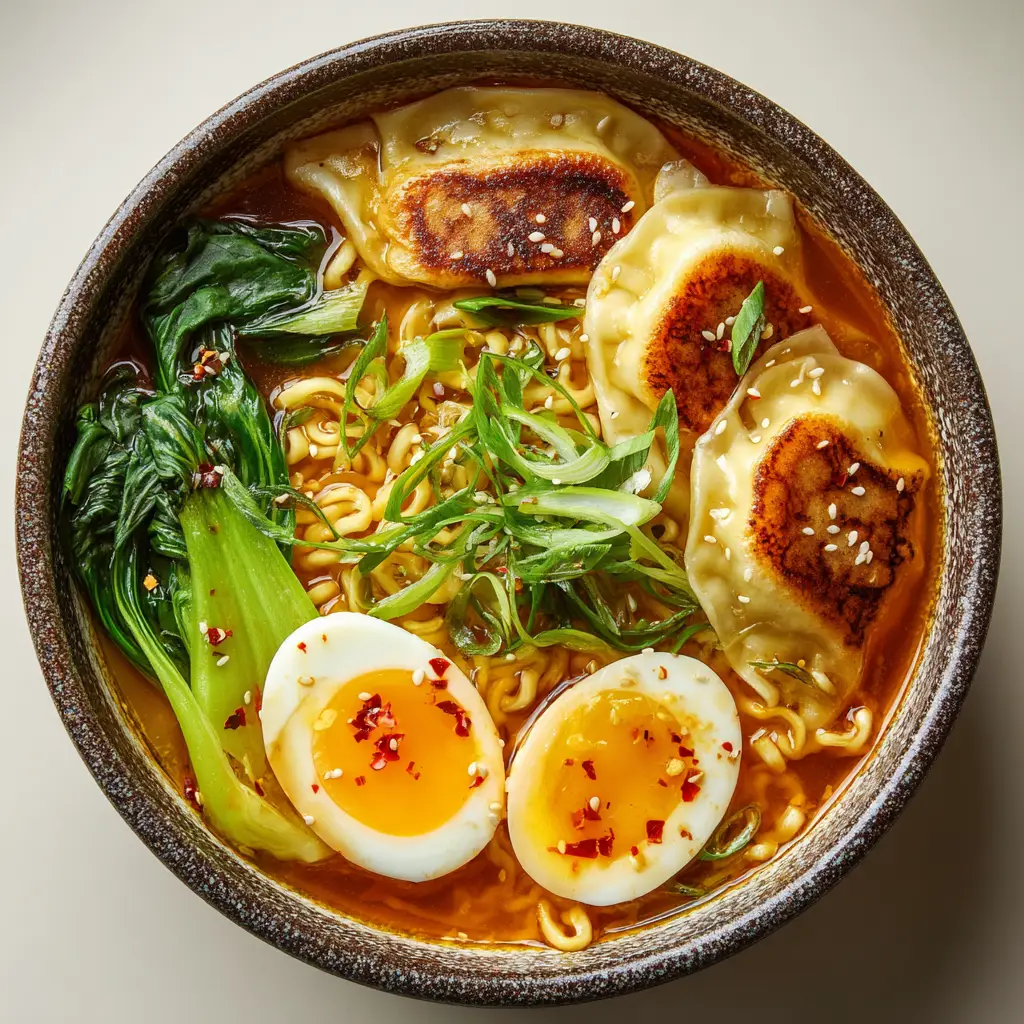
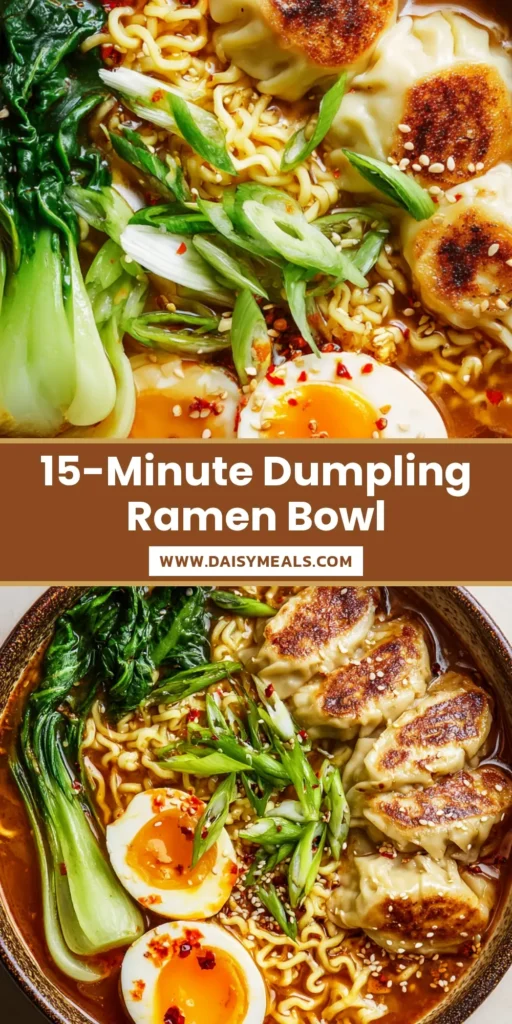
The Dumpling Ramen Bowl is the ultimate fusion of two comfort food titans: the soul-warming depth of a Japanese-style noodle soup and the satisfying crunch of pan-fried potstickers. Imagine a steaming ceramic bowl filled with springy, wavy yellow ramen noodles swimming in a rich amber-brown savory broth that carries the perfect balance of salt and umami. This isn’t just a quick lunch; it is a sensory experience designed to mimic the best ramen shops in the world, right from your own kitchen.
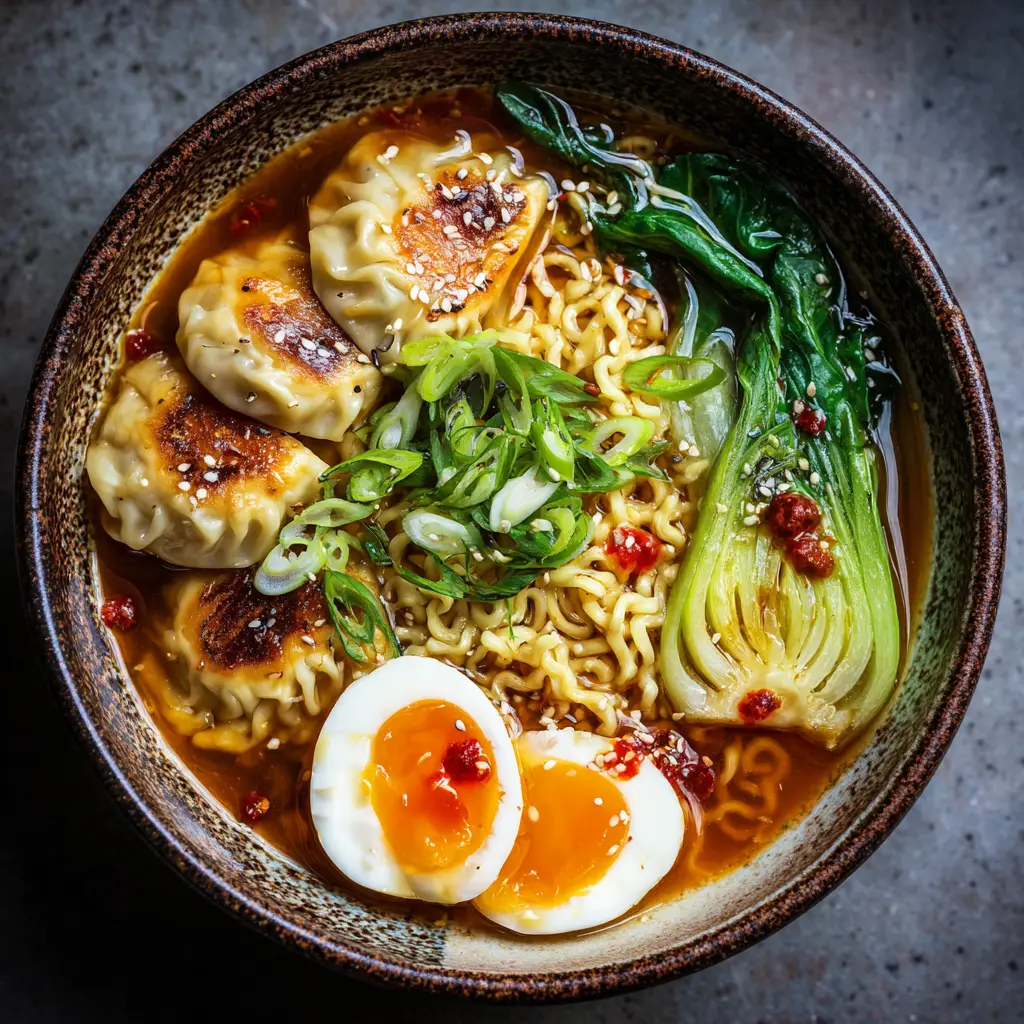
What sets this particular Dumpling Ramen Bowl apart is the attention to visual and textural detail. From the vibrant red droplets of chili oil dancing on the surface to the halved soft-boiled egg showcasing a perfectly gooey orange yolk, every component serves a purpose. Whether you are looking for a cozy weeknight dinner or a restaurant-quality meal to impress guests, this recipe delivers on every promise of flavor and aesthetic appeal.
Why This Specific Dumpling Ramen Bowl Recipe Works Every Single Time
- The Texture Contrast: By pan-frying the dumplings until they reach a deep golden-brown on the bottom before adding them to the soup, you get a delightful crunch against the tender, wilted bok choy.
- Scientifically Perfect Eggs: We utilize a precision-timed boiling method to ensure that signature gooey orange yolk that bleeds slightly into the rich amber-brown savory broth.
- Aromatic Depth: The base foundation isn’t just stock; it is an infused broth layered with ginger, garlic, and toasted sesame that provides a professional-level “sip factor.”
- Visually Stunning Presentation: Following our forensic visual blueprint ensures your bowl looks exactly like the high-end photography seen in professional culinary magazines.
The Anatomy of an Authentic Dumpling Ramen Bowl: Essential Ingredients
Wavy Yellow Ramen Noodles: These are the backbone of the dish. Their alkaline composition gives them a specific “snap” and yellow hue that holds up beautifully under the heat of the rich amber-brown savory broth.
Frozen or Fresh Dumplings: You can use pork, chicken, or vegetable dumplings here. The key is the pan-frying step, which creates those essential golden-brown crisped bottoms for structural integrity.
Low-Sodium Chicken or Vegetable Stock: This acts as our canvas. We will be “fortifying” this liquid with soy sauce, mirin, and aromatics to achieve that deep amber-brown savory broth visual and flavor profile.
Baby Bok Choy: These bright green leaves provide a fresh, peppery bite. We wilt them just enough to be tender while maintaining a neat pile appearance in the final bowl.
Eggs (Room Temperature): To achieve the vibrant gooey orange yolk, starting with room temperature eggs prevents cracking and ensures even heat distribution during the 6.5-minute boil.
Aromatic Trinity (Ginger, Garlic, Scallions): These provide the “invisible” flavor layers. Freshly grated ginger and minced garlic are sauteed in a small amount of neutral oil to release their essential oils before the liquid is added.
The Finishing Touches: Toasted white sesame seeds, thinly sliced fresh green scallions, and red chili oil droplets provide the final “pop” of color and heat that defines the visual prompt.
Must-Have Kitchen Tools for a Professional Noodle Presentation
To achieve the professional look of this Dumpling Ramen Bowl, you will need a few specific tools. A heavy-bottomed non-stick skillet is essential for getting those dumplings perfectly golden-brown without sticking or tearing the delicate skins.
A deep rustic speckled ceramic bowl is recommended for serving, as it retains heat better than thin porcelain and provides the “neutral background” aesthetic. You will also want a fine-mesh spider strainer to gently lift the wavy yellow ramen noodles from the water to prevent them from breaking.
The Master Blueprint: Crafting Your Dumpling Ramen Bowl Step-by-Step
Achieving the Perfect Golden-Brown Dumpling Crust
Heat 1 tbsp (15ml) of neutral oil in your skillet over medium-high heat. Place your dumplings flat-side down and sear for 2-3 minutes until you see a distinct, perfectly golden-brown crisped bottom through the side of the wrapper.
Carefully add 2 tbsp (30ml) of water to the pan and immediately cover with a lid. The steam will cook the tops and the filling while the bottoms maintain their crunch; once the water evaporates, remove the lid for 30 seconds to re-crisp the base.
Building the Rich Amber-Brown Savory Broth
In a medium pot, sauté minced garlic and grated ginger in a splash of sesame oil until fragrant, which usually takes about 60 seconds. Pour in 4 cups (950ml) of stock, 2 tbsp (30ml) of soy sauce, and 1 tbsp (15ml) of mirin to create that signature amber color.
Bring the liquid to a gentle simmer. Do not let it reach a rolling boil, as this can cloud the broth; we want a clear, rich amber-brown savory broth that allows the wavy yellow ramen noodles to remain visible beneath the surface.
The 6.5-Minute Science of the Gooey Orange Yolk
Bring a small pot of water to a boil, then lower to a simmer. Gently lower your eggs into the water and set a timer for exactly 6 minutes and 30 seconds. Prepare an ice bath while you wait.
Immediately move the eggs to the ice bath once the timer sounds. This stops the cooking process instantly, ensuring the yolk stays in that vibrant, gooey orange state rather than turning powdery and yellow.
Assembling the Final Masterpiece
Cook your wavy yellow ramen noodles in a separate pot of boiling water according to package directions, then drain. Place the noodles at the bottom of your deep rustic speckled ceramic bowl and pour the hot broth over them.
Arrange a neat pile of lightly wilted bok choy on one side, followed by four plump pan-fried dumplings. Carefully peel and halve your egg, placing it so the gooey orange yolk faces upward, then garnish with scallions, sesame seeds, and droplets of red chili oil.
Expert Tips for Success from a Professional Kitchen
- Noodle Timing: Always cook your ramen noodles 30 seconds less than the package says. They will continue to soften once they hit the hot broth in your bowl.
- The Chili Oil Drop: To get those perfect vibrant red droplets, use a small spoon or a dropper. Don’t stir the oil in; let it rest on the surface for the best visual impact.
- Bok Choy Texture: If you prefer more crunch, only submerge the stems of the bok choy in the broth for the last 60 seconds of cooking, leaving the leaves to wilt naturally from the steam.
- Dumpling Variety: If you enjoy this flavor profile, you might also like experimenting with our creamy chickpea base for a vegetarian protein alternative in future bowls.
Storage, Reheating, and Make-Ahead Advice
This Dumpling Ramen Bowl is best enjoyed immediately to appreciate the contrast between the crispy dumpling bottoms and the hot broth. However, if you have leftovers, store the broth, noodles, and dumplings in separate airtight containers in the refrigerator for up to 3 days.
To reheat, bring the broth to a simmer on the stove first. Re-crisp the dumplings in a dry skillet for 1-2 minutes before adding them to the bowl to restore that golden-brown texture. Do not microwave the soft-boiled egg, as it may explode; instead, let it sit in the warm broth for a minute to take the chill off.
What to Serve With Your Dumpling Ramen Bowl
While this bowl is a complete meal on its own, it pairs beautifully with light, acidic sides to cut through the richness of the amber broth. A simple cucumber salad or a side of crispy snacks can provide a nice textural variation.
If you are hosting a larger Asian-inspired dinner party, consider serving this alongside our coconut chicken rice bowl for a variety of grain and noodle options. For a fusion twist, some guests enjoy a heavy appetizer like loaded fries before diving into the main soup course.
Frequently Asked Questions
Wavy noodles are typically used for heavier, oilier broths because the ridges help the rich amber-brown savory broth cling to the noodle, providing more flavor in every bite.
Absolutely. Use vegetable broth, swap the egg for extra bok choy or tofu, and ensure your dumplings and noodles are plant-based. The flavor remains just as rich and savory!
Yes! Frozen dumplings work perfectly. You don’t even need to thaw them; just pan-fry them for an extra minute and increase the steaming time to 3-4 minutes to ensure the filling is heated through.
The color comes from a combination of high-quality stock and ‘shoyu’ (soy sauce) and mirin. Sautéing your garlic and ginger first also adds deep pigments and flavor to the liquid.
The key is timing and temperature. Boil room-temperature eggs for exactly 6 minutes and 30 seconds, then immediately shock them in an ice bath to stop the cooking process.
The Complete Dumpling Ramen Bowl Recipe Card
Dumpling Ramen Bowl: The Ultimate Comforting Noodle Soup with Crispy Potstickers
Ingredients
Equipment
Instructions
- Boil eggs for 6.5 minutes, then plunge into an ice bath for 5 minutes. Peel and set aside for the gooey orange yolk.
- In a skillet with 1 tbsp oil, sear dumplings until bottoms are golden-brown. Steam with a splash of water for 2 minutes, then uncover to re-crisp.
- Sauté garlic and ginger, then add stock, soy sauce, and mirin. Simmer until the broth is a rich amber-brown.
- Boil ramen noodles according to package instructions. Blanch the bok choy in the simmering broth for 60 seconds until wilted.
- Place noodles in bowls, pour over broth, and top with dumplings, halved eggs, bok choy, scallions, sesame seeds, and droplets of chili oil.
Notes
If using frozen dumplings, add an extra 2 minutes to the steaming time.
Closing & Call to Action
Mastering the Dumpling Ramen Bowl at home is a rewarding journey into the heart of umami-rich cooking. By following our visual blueprint and technical cues, you’ve created a dish that is as beautiful as it is delicious. If you enjoyed this recipe, please leave a comment below and let us know how your crispy dumplings turned out!
Don’t forget to follow DaisyMeals on Pinterest for more visually-driven recipe inspiration. Share your creations by tagging us—we love seeing your versions of these restaurant-quality bowls!