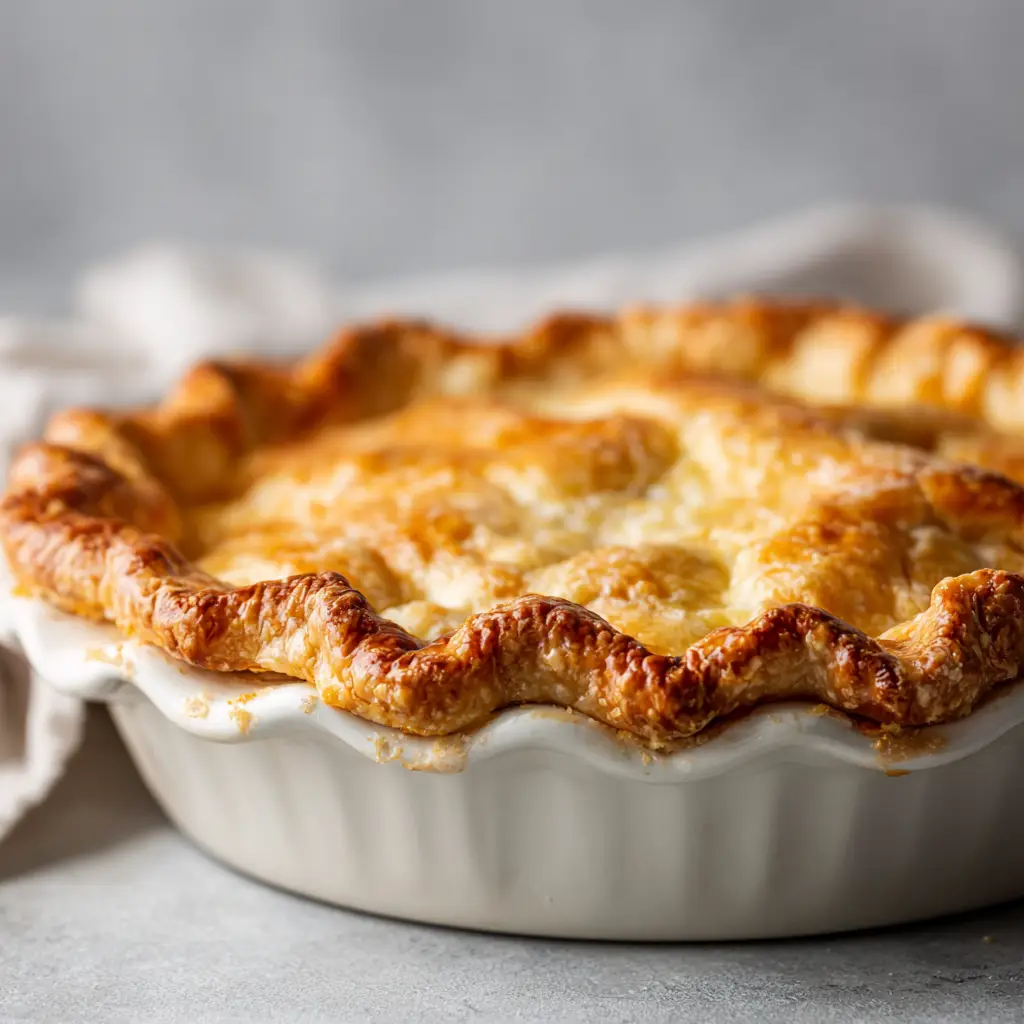
There is nothing quite like the sight of a Flaky Buttery Pie Crust emerging from the oven, its surface shimmering with golden-brown hues and its edges boasting a rustic, hand-crimped finish. This isn’t just a vessel for filling; it is the structural masterpiece that defines a world-class dessert or savory pot pie.
Achieving that elusive, shattered-glass texture requires more than just luck; it requires a deep understanding of fat distribution and temperature control. Whether you are a novice or a seasoned baker, mastering this Flaky Buttery Pie Crust will transform your kitchen into a professional pâtisserie.
Imagine a crust so tender it melts on your tongue, yet so sturdy it holds its shape when sliced. In this guide, we are diving deep into the culinary science that creates those visibly flaky pastry layers and the perfectly blistered surface you see in professional food photography.

The Anatomy of a Perfect Golden-Brown Pastry
To recreate the visual masterpiece described in our blueprint, we focus on several key sensory and structural elements. These are the hallmarks of a truly elite crust:
- The Shatter Factor: Multi-layered, paper-thin sheets of dough that crunch audibly when poked with a fork.
- The Rustic Crimp: Hand-fluted edges that provide a thick, buttery foundation and a homemade aesthetic.
- Blistered Texture: Micro-bubbles on the surface of the dough, caused by rapidly expanding steam from cold butter pockets.
- Chromatic Perfection: A deep, even golden-brown finish that indicates a fully developed Maillard reaction and a crisp bottom.
The Pantry Essentials for Ultra-Flaky Results
Creating a Flaky Buttery Pie Crust requires high-quality, foundational ingredients. Each component plays a scientific role in the final texture and appearance of your baked pastry.
All-Purpose Flour: 2 1/2 cups (312g)
This provides the necessary gluten structure to hold the fat in place without making the crust tough or bready.
Unsalted Butter, Cubed and Chilled: 1 cup (227g)
High-fat European-style butter is preferred here to ensure those visibly flaky pastry layers stay distinct during the mixing process.
Granulated Sugar: 1 tbsp (12g)
While primarily for flavor, sugar aids in the “blistered cooked crust surface” by promoting caramelization and browning in the oven.
Fine Sea Salt: 1 tsp (6g)
Salt is the ultimate flavor enhancer, cutting through the richness of the butter and balancing the sweetness of any potential fillings.
Ice Cold Water: 6-8 tbsp (90-120ml)
Water binds the dough together, but it must be ice-cold to prevent the butter from melting before it hits the hot oven air.
Apple Cider Vinegar: 1 tsp (5ml)
A professional secret, the acid inhibits gluten development, ensuring the crust remains tender and “short” rather than elastic.
Egg Wash (1 egg + 1 tbsp water)
This is the essential “invisible” ingredient that creates the perfectly browned, blistered surface seen in the final visual prompt.
Essential Tools for Hand-Crimped Success
To achieve the hand-crimped dough edge and professional finish, you will need a few specific pieces of kitchen equipment. These tools help maintain the temperature of your ingredients.
A round white ceramic pie dish is ideal for even heat distribution, ensuring the bottom of the crust cooks at the same rate as the fluted edges. A pastry cutter or “blender” is vital for incorporating the butter into the flour without the heat of your hands melting the fat.
You will also need a chilled marble or wooden rolling surface and a heavy rolling pin. For the most rustic, hand-crimped look, your own fingers are the best tools for shaping the fluted edges that give the crust its signature thick, buttery border.
Step-by-Step Evolution of a Flaky Buttery Pie Crust
Phase 1: Cutting the Fat for Maximum Layers
Start by whisking your dry ingredients in a large chilled bowl. Add your cubes of frozen-cold butter and use a pastry blender to cut the fat into the flour.
Look for “pea-sized” chunks of butter; these are the secret to the visibly flaky pastry layers. If the butter is too small, the crust will be crumbly like shortbread; if it is too large, the crust will be greasy.
Phase 2: Hydration and Fusing
Slowly drizzle in the ice water and vinegar mixture one tablespoon at a time. Use a spatula to toss the flour until it just begins to clump together.
The dough should look shaggy and slightly dry. Press a small amount between your fingers; if it holds together without crumbling, you have reached the perfect hydration level.
Phase 3: Chilling and Structural Setting
Divide the dough into two discs, wrap them tightly in plastic, and refrigerate for at least two hours. This step is non-negotiable for a Flaky Buttery Pie Crust.
Chilling allows the gluten to relax and the butter to re-solidify. This ensures that when the crust hits the oven, the butter melts instantly, creating steam pockets that lift the dough into layers.
Phase 4: Rolling and Hand-Crimping
Roll the dough out on a lightly floured surface to a 12-inch (30cm) circle. Drape it over your ceramic pie dish, leaving an inch of overhang.
To create the hand-crimped dough edge, fold the overhang under itself to create a thick border. Use your thumb and index finger of one hand and the knuckle of the other to “pinch” a fluted pattern around the entire circumference.
Phase 5: The Bake for Blistered Perfection
Brush the crimped edges and the base with a light coating of egg wash. This is what guarantees that blistered cooked crust surface and deep golden-brown color.
Bake at 400°F (205°C) for the first 15 minutes to “set” the flakiness, then reduce the heat to 375°F (190°C) until the crust is visually browned and crisp. Look for small bubbles on the surface—this is the sign of a successful bake.
Expert Tips for a Flawless Pastry Result
- Keep Everything Cold: If your kitchen is hot, put your flour and bowl in the freezer for 15 minutes before starting.
- Don’t Overwork the Dough: Stop mixing the moment the dough holds together. Over-mixing leads to a tough, leathery texture rather than a tender, flaky one.
- The Vinegar Trick: The small amount of acid prevents the dough from turning gray and keeps the gluten strands short and delicate.
- Blind Baking: If making a custard pie, use pie weights to prevent the bottom from puffing up, ensuring a flat base for your filling.
The Ideal Pairings for Your Golden Crust
A Flaky Buttery Pie Crust is a versatile foundation that works for both sweet and savory applications. If you are leaning into a savory dinner, this crust is the perfect topper for a rich French Onion Soup inspired pot pie.
For a decadent lunch, try using this pastry for a quiche served alongside an Italian Grinder Salad Sandwich. If you have leftover dough scraps, bake them with cinnamon and sugar and dip them in Texas Roadhouse Cinnamon Honey Butter for a quick snack.
For those looking for a complete meal, this crust pairs beautifully with a side of Chicken Bacon Ranch Fries or a hearty bowl of French Onion Beef Short Rib Soup.
Common Challenges and Troubleshooting
Why is my pie crust shrinking?
Shrinking usually happens because the gluten wasn’t allowed to rest. Ensure you chill the dough both after mixing and after rolling it into the pan to prevent the edges from pulling back.
How do I prevent a soggy bottom?
To avoid a “soggy bottom,” bake your pie on the lowest rack of the oven. You can also brush the bottom of the raw crust with egg white before adding the filling to create a moisture barrier.
Can I make this dough in a food processor?
Yes, but be careful. Pulse only a few times until the butter is the size of peas. It is very easy to over-process the dough in a machine, which destroys the visibly flaky pastry layers.
Yes, lard creates a very flaky texture, but butter provides the superior flavor and the golden-brown blistering seen in our visual guide.
The blistered effect is achieved by using very cold butter and applying an egg wash just before baking, which traps steam and promotes browning.
Ceramic dishes, like the one in our prompt, are excellent for even heat distribution and professional presentation, though glass allows you to see the bottom browning.
Vinegar limits gluten development, which ensures the crust stays tender and prevents it from becoming tough or chewy.
The most common reason is that the butter melted before baking. Ensure your butter is frozen-cold and your water is ice-cold to maintain those distinct fat pockets.
Mastering the Flaky Buttery Pie Crust
Flaky Buttery Pie Crust: The Ultimate Guide to Golden-Brown Layers
Ingredients
Equipment
Instructions
- In a large bowl, whisk flour, sugar, and salt. Use a pastry blender to cut the chilled butter into the flour until pea-sized crumbs form.
- Stir in the vinegar and ice water one tablespoon at a time until the dough just holds together when pressed.
- Divide into two discs, wrap in plastic, and refrigerate for at least 2 hours.
- Roll dough to 12 inches (30cm) and place in the pie dish. Fold the overhang and use your fingers to create a rustic hand-crimped fluted edge.
- Brush the surface with egg wash to ensure a blistered, perfectly browned finish.
- Bake at 400°F (205°C) for 15 minutes, then reduce to 375°F (190°C) and bake until the surface is golden-brown and blistered.
Notes
Avoid overworking the dough to keep it tender.
Storage and Freezing Guidelines
You can prepare the dough for this Flaky Buttery Pie Crust up to three days in advance if kept in the refrigerator. Ensure it is wrapped twice in plastic to prevent it from absorbing any “fridge smells.”
For long-term storage, the dough discs freeze beautifully for up to three months. To use, thaw overnight in the refrigerator before rolling. If you have already baked the crust, it can stay at room temperature for 24 hours or be frozen for up to a month.
Join the DaisyMeals Baking Community
We hope this guide helps you achieve the golden-brown, flaky results you’ve been dreaming of! There is nothing more satisfying than the “crunch” of a perfectly executed pastry. If you enjoyed this recipe, please leave a comment below and tell us what filling you chose!
Don’t forget to share your creations on social media and follow DaisyMeals on Pinterest for more culinary inspiration. Pin this recipe to your “Baking Essentials” board so you always have the secret to the perfect crust at your fingertips!