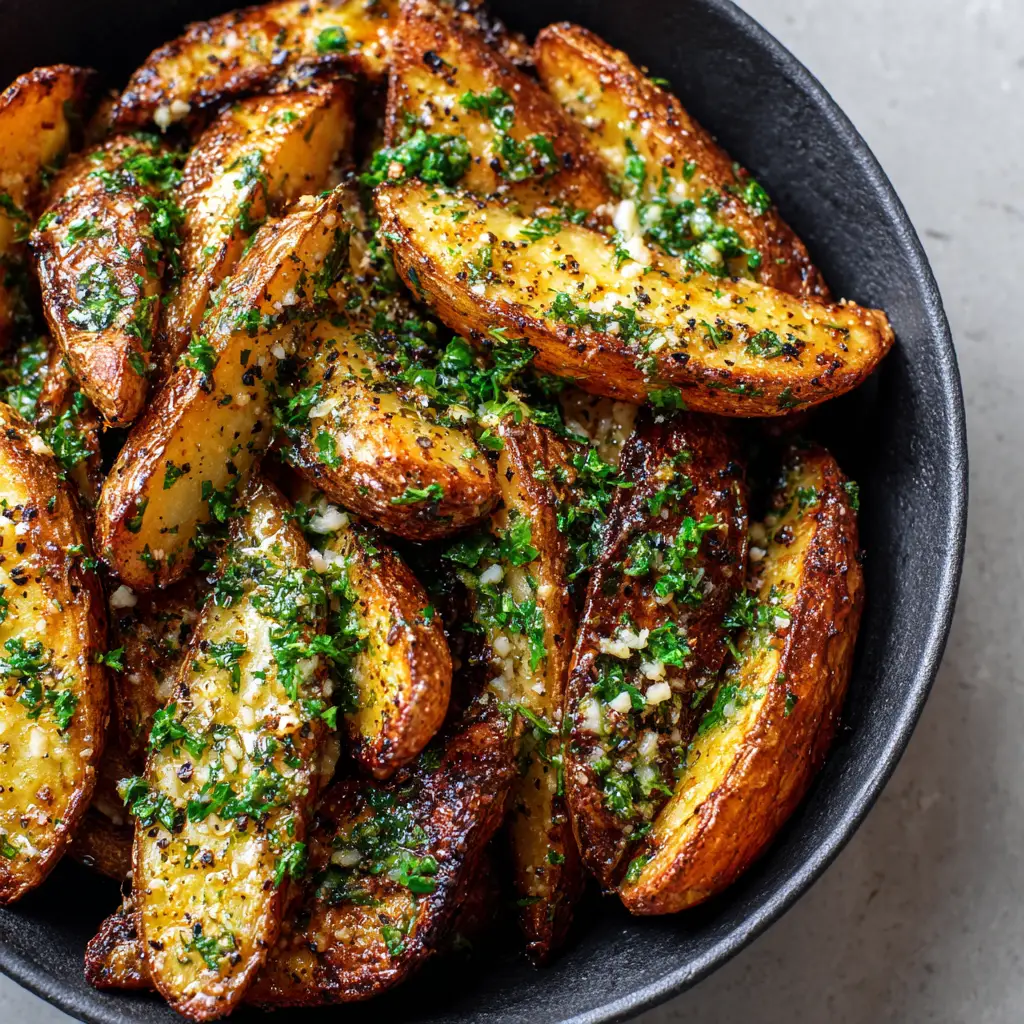
There is nothing quite like the visual of Garlic Parmesan Roasted Potatoes served straight from a seasoned cast iron skillet, their golden-brown edges whispering promises of a perfect crunch. This recipe is designed to bridge the gap between high-end steakhouse sides and the comforting soul of home cooking, delivering a texture profile that is as complex as it is satisfying. You are looking for that specific oily sheen and the vibrant contrast of scattered bright green parsley against a backdrop of melted, gooey cheese.
In the world of side dishes, the Garlic Parmesan Roasted Potatoes reign supreme because they hit every sensory note: the visual appeal of charred, crispy exteriors, the scent of aromatic roasted garlic, and the tactile joy of a fluffy, pillowy interior. This isn’t just about roasting vegetables; it is about mastering the Maillard reaction to create a dish that looks exactly like a professional food photograph captured in soft, natural daylight.
The Irresistible Appeal of These Skillet-Roasted Wedges
- Textural Masterclass: Each wedge features a dual-texture experience with a shatteringly crisp outer crust and a center as soft as mashed potatoes.
- Gooey Cheese Finish: Unlike dry, powdered toppings, we use a technique that creates a thick layer of melted, gooey parmesan cheese that clings to every crevice.
- Visual Contrast: The deep golden hues are punctuated by coarse black pepper flakes and a heavy garnish of freshly chopped green parsley for a restaurant-quality presentation.
- Cast Iron Magic: Roasting in heavy iron ensures the “charred edges” described in our visual blueprint, providing a smoky depth you can’t get on a standard sheet pan.
The Anatomy of Perfect Garlic Parmesan Roasted Potatoes
To achieve the result seen in professional handheld smartphone food photography, every ingredient must serve a specific culinary purpose. We aren’t just tossing things in a bowl; we are building layers of flavor and structural integrity.
3 lbs (1.36kg) Yukon Gold Potatoes: I recommend Yukon Golds for this recipe because their medium starch content allows them to hold their wedge shape while developing a creamy, buttery interior. You can use Russets for a fluffier bite, but the golden color of the Yukon Gold better matches our visual blueprint.
1/4 cup (60ml) Extra Virgin Olive Oil: This provides the rich oily sheen necessary for heat conduction and flavor. It is the invisible engine that roasts the starch into a golden crust.
1 cup (90g) Freshly Grated Parmesan Cheese: Avoid the canned stuff. You need high-moisture, freshly grated parmesan to achieve that thick, gooey melted texture that drapes over the hot wedges.
6 cloves (30g) Garlic, Finely Minced: We use fresh garlic, minced finely to ensure it nests in the potato crannies. It will be added toward the end of roasting to prevent the bitterness of over-charred garlic.
1/2 cup (15g) Fresh Italian Parsley: This isn’t just a garnish; it provides a bright, herbaceous lift to the heavy fats of the cheese and oil. The visual contrast of “bright green” is essential for the final look.
1 tsp (2g) Coarse Black Pepper Flakes: We specifically use coarse flakes to provide a visual pop and a punchy heat that cuts through the richness of the parmesan.
1 tsp (5g) Kosher Salt: Salt is required not just for flavor, but to draw moisture out of the potato surface, allowing the edges to char more effectively in the skillet.
Essential Tools for the Crispiest Results
To replicate the “dark cast iron skillet” aesthetic and functionality, you need a 12-inch (30cm) cast iron skillet. The thermal mass of the iron is what creates those deep, charred edges. If you don’t have one, a heavy-duty roasting pan will suffice, but you may lose some of that authentic “handheld smartphone” rustic charm.
You will also need a sharp chef’s knife for clean wedge cuts. Uniformity is key; if your wedges vary in size, the smaller ones will burn before the larger ones reach that fluffy interior stage. A large stainless steel mixing bowl is also required for an aggressive “toss” to rough up the potato edges, which releases starches for extra crunch.
The Step-by-Step Path to Golden Perfection
Preparing the Wedges for Maximum Surface Area
Start by scrubbing your potatoes clean but leave the skins on. The skin provides the structural “hinge” for the wedge and contributes to the charred aesthetic. Cut each potato in half lengthwise, then into even wedges. Aim for about 8 wedges per medium-sized potato.
Place the wedges into your mixing bowl and toss them with the olive oil, salt, and half of the coarse black pepper. This is a culinary secret: the salt begins to break down the surface starch immediately. Toss them vigorously until you see a slight “starchy slurry” forming on the potatoes; this slurry is what fries in the oven to create the crispy exterior.
The Sizzle and the First Roast
Preheat your oven to 425°F (220°C). Place your empty cast iron skillet in the oven while it preheats. This is a critical technical step. When you drop your oiled potatoes into a screaming hot skillet, you initiate an immediate sear. You should hear a distinct sizzle—a sensory cue that the Maillard reaction has begun.
Arrange the wedges in the skillet. Avoid overcrowding. If the potatoes are piled too high, they will steam rather than roast, and you will lose those charred edges we are looking for. Roast for 25-30 minutes, flipping once halfway through, until the undersides are a deep, mahogany brown.
Infusing the Roasted Garlic and Cheese
Once the potatoes are golden and tender, pull the skillet out. Scatter the minced roasted garlic over the top. By adding it now, the residual heat and the remaining 10 minutes of oven time will mellow the garlic without burning it. If you add it at the start, the high heat would turn the garlic into bitter black charcoal.
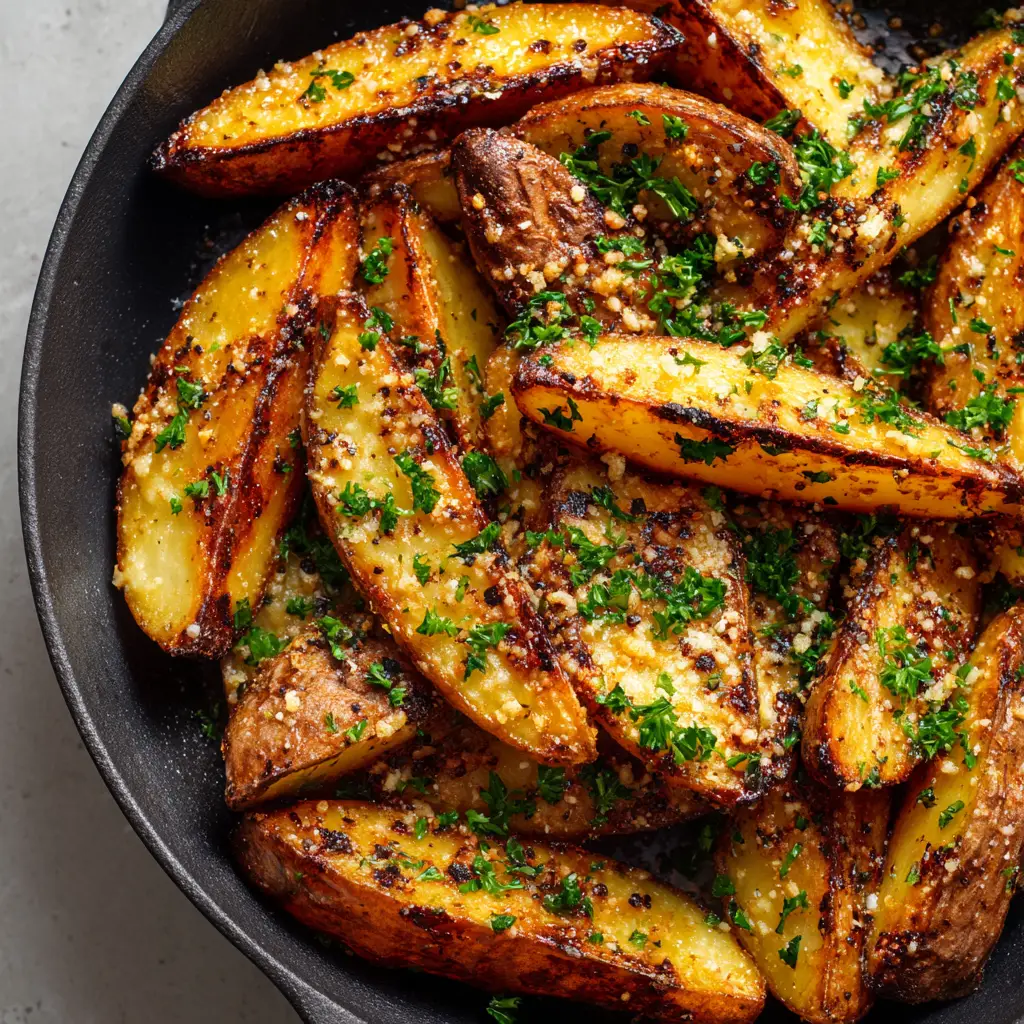
Immediately follow the garlic with a generous, thick layer of your freshly grated parmesan cheese. Return the skillet to the oven for another 5-8 minutes. Watch for the visual cue: the cheese should be bubbling and losing its individual strand shape, turning into a gooey, unified layer that coats the wedges.
Professional Tips for Garlic Parmesan Roasted Potatoes
- The “Dry” Secret: After washing your potatoes, pat them bone-dry with a lint-free towel. Moisture is the enemy of the “charred and crispy” texture.
- Parmesan Quality: Use a microplane or the small holes of a box grater. Finer shreds melt faster and create a more “gooey” appearance than thick shreds.
- Temperature Control: If your potatoes aren’t charring enough, move the skillet to the top rack for the final 5 minutes of roasting.
- The “Rest”: Let the skillet sit for 3 minutes after removing it from the oven. This allows the cheese to “set” slightly so it clings to the potato rather than sliding off.
Preserving the Crunch: Storage and Reheating
Garlic Parmesan Roasted Potatoes are best served immediately to appreciate the oily sheen and melted cheese. However, if you have leftovers, store them in an airtight container in the refrigerator for up to 3 days. To reheat, avoid the microwave, which will make the potatoes rubbery.
Instead, place them back in a skillet or on a sheet pan at 400°F (200°C) for 10 minutes. This will revive the crispy edges and re-melt the parmesan. While the parsley will darken upon reheating, the flavor will remain intact.
What to Pair with Your Skillet Potatoes
These potatoes are a versatile side dish that complements a variety of main courses. For a complete Italian-inspired feast, serve them alongside an Italian grinder salad sandwich. The acidity of the sandwich balances the richness of the cheese.
If you are looking for a more decadent pairing, these wedges are the perfect companion to a bowl of French onion beef short rib soup. The potatoes are excellent for dipping into the rich, beefy broth. For a lighter dinner, try them with creamy herb chicken, where the herbs in the chicken mirror the fresh parsley on the potatoes.
Frequently Asked Questions
It is not recommended. Bottled garlic is stored in citric acid and won’t develop the sweet, aromatic ‘roasted’ flavor found in fresh minced garlic.
Add the cheese in the last 5-8 minutes of roasting. This provides enough time for it to melt into a gooey layer without turning into a hard, burnt crust.
While par-boiling is a popular method, this recipe uses a high-heat cast iron skillet technique and an olive oil toss to achieve a crispy exterior without the extra step of boiling.
Yukon Gold potatoes are ideal for this recipe because they provide the perfect balance of a creamy interior and a golden, crispy skin that chars beautifully.
This usually happens due to overcrowding the pan, which creates steam. To fix this, use a large skillet or two pans to ensure every wedge has direct contact with the hot surface.
The Ultimate Garlic Parmesan Roasted Potatoes Recipe
Garlic Parmesan Roasted Potatoes with Crispy Charred Edges
Ingredients
Equipment
Instructions
- Preheat your oven to 425°F (220°C) and place your cast iron skillet inside to heat up.
- Cut potatoes into even wedges. In a large bowl, toss with olive oil, salt, and half the pepper until a starchy coating forms.
- Carefully place wedges in the hot skillet, skin-side down where possible. Roast for 25-30 minutes, flipping once for even charring.
- Remove skillet, sprinkle with minced garlic and grated parmesan. Return to oven for 5-8 minutes until cheese is gooey and melted.
- Remove from oven. Immediately garnish with fresh chopped parsley and remaining coarse black pepper flakes. Serve hot from the skillet.
Notes
Preheating the skillet is the secret to charred edges.
Join the Community and Share Your Success
Mastering these Garlic Parmesan Roasted Potatoes is a rite of passage for any home cook looking to elevate their side dish game. The combination of the dark cast iron skillet and the vibrant garnishes makes for a stunning table centerpiece. If you enjoyed this recipe, please leave a comment below and tell us how your charred edges turned out!
Don’t forget to follow us on Pinterest for more visually-driven recipe inspiration and culinary deep dives. Share your own photos of this dish; we love seeing your “handheld smartphone” masterpieces in the wild!