Forget everything you thought you knew about Greek salad. We are leaving behind sad, lettuce-filled bowls and embracing the vibrant, authentic original: the Horiatiki. This is the ultimate greek salad recipe, a celebration of fresh, sun-ripened vegetables, salty feta, and a bright, simple vinaigrette.
This recipe is more than just a list of ingredients; it’s a guide to creating a truly transportive dish. In just 15 minutes, you can assemble a salad that tastes like a summer afternoon on a Greek island. It’s rustic, it’s bold, and it’s unbelievably delicious. Let’s make it together.
What Makes This Greek Salad Truly Authentic?
The beauty of a traditional Greek salad, or Horiatiki, lies in its simplicity and the quality of its components. There are two non-negotiable rules that set the authentic version apart from many Western interpretations.
The “No Lettuce” Rule
This is the most important distinction. A true Horiatiki salad contains no lettuce or leafy greens of any kind. The body of the salad is created by the chunky, crisp vegetables themselves, allowing their pure flavors to shine without any filler.
The Importance of Quality Ingredients
With so few ingredients, each one must be at its peak. Use the ripest tomatoes you can find, the crispest cucumbers, and a high-quality extra virgin olive oil. The difference in taste is not just noticeable; it’s transformative.
Key Ingredients for the Perfect Greek Salad
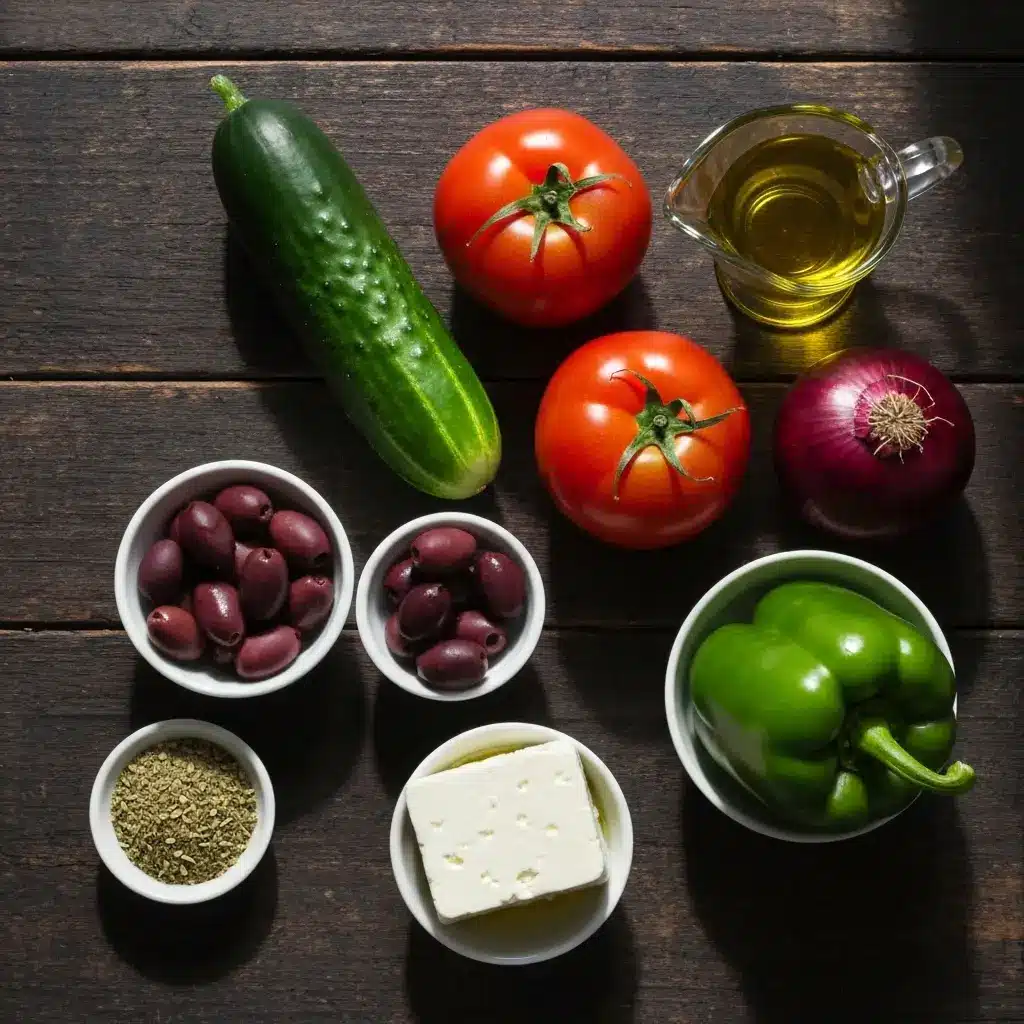
Gathering the right components is the first step to success. Here’s what you’ll need for the salad and its classic dressing.
For the Salad
- Tomatoes: Use ripe, firm tomatoes like Roma or vine-ripened varieties. They should be juicy but not mushy.
- Cucumbers: We prefer Persian or English cucumbers for their thin skin and minimal seeds.
- Red Onion: Thinly sliced red onion adds a sharp, welcome bite.
- Green Bell Pepper: Provides a mild, sweet crunch that is essential to the classic flavor profile.
- Kalamata Olives: Their rich, briny flavor is iconic. Always use pitted olives for ease of eating.
- Feta Cheese: Buy a block of sheep’s milk feta packed in brine. It’s creamier and has a more complex flavor than pre-crumbled versions.
For the Simple Greek Vinaigrette
- Extra Virgin Olive Oil: This is the base of your dressing. A good quality, flavorful oil makes all the difference.
- Red Wine Vinegar: Provides the bright, acidic backbone of the vinaigrette.
- Dried Oregano: A sprinkle of dried Greek oregano is the signature herbal note.
- Sea Salt & Black Pepper: To season and enhance all the flavors.
How to Make the Best Greek Salad Recipe: A Step-by-Step Guide
This simple process ensures every component is perfectly prepped for the best texture and flavor.
- Prep the Vegetables: Chop the tomatoes into large, bite-sized wedges. Cut the cucumber into thick half-moons. Thinly slice the green bell pepper and the red onion. Add all prepped vegetables to a large salad bowl.
- Add the Olives: Scatter the pitted Kalamata olives over the vegetables in the bowl.
- Make the Vinaigrette: In a small bowl or jar, whisk together the extra virgin olive oil, red wine vinegar, and dried oregano. Season with a pinch of sea salt and freshly cracked black pepper.
- Dress the Salad: Pour about two-thirds of the dressing over the vegetables. Gently toss everything together until the vegetables are lightly coated. Taste and add more dressing or salt if needed.
- Add the Feta: Place the entire block of feta right on top of the salad, or break it into large, rustic chunks over the top. Do not crumble it finely. Drizzle the remaining dressing over the feta and finish with an extra sprinkle of oregano.
- Serve Immediately: For the best and freshest taste, serve the salad right away.
Essential Tips for a Flawless Horiatiki Salad
These small details elevate your salad from good to unforgettable.
Use a Block of Feta, Never Crumbled
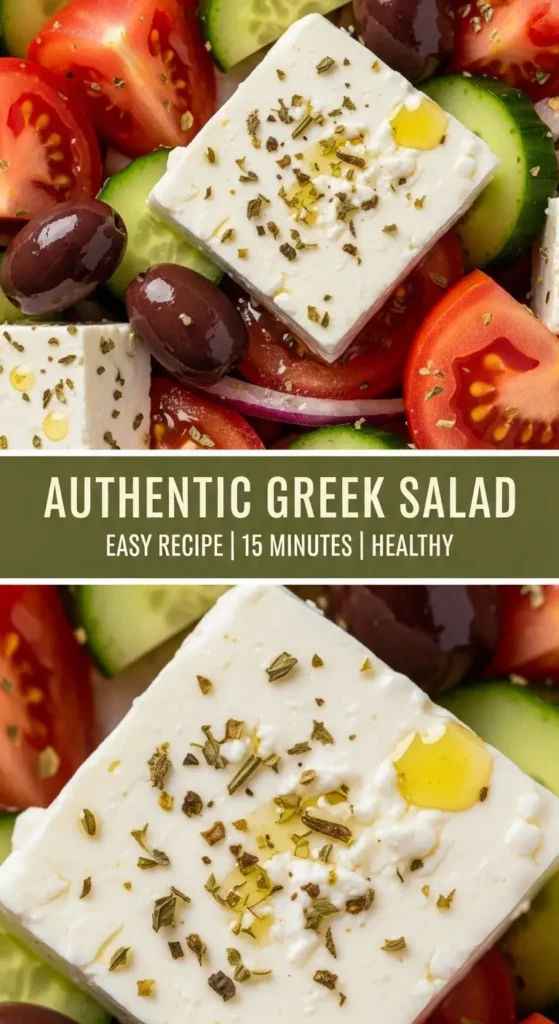
Pre-crumbled feta is often dry and coated with anti-caking agents. A block of feta packed in brine is creamier, tangier, and allows you to create wonderfully rustic, large chunks that are a hallmark of the dish.
Choose the Right Olives
While other olives can be used in a pinch, Kalamata olives offer the most authentic, rich, and fruity flavor. Their unique taste is a cornerstone of this classic recipe.
Don’t Overdress the Salad
Start by adding about two-thirds of the dressing and toss. You can always add more. The goal is to lightly coat the vegetables to make them shine, not to drown them in oil and vinegar.
Delicious Variations and Additions
While the classic recipe is perfect as is, you can certainly customize it. For a more substantial meal, consider adding a cup of drained and rinsed chickpeas. This addition makes it similar to this hearty classic chickpea salad (coming soon). Capers can also add an extra pop of briny flavor. If you enjoy creamy textures, a simple egg salad (coming soon) served on the side provides a wonderful contrast.
What to Serve with Your Greek Salad
This versatile salad pairs beautifully with a wide range of main courses. It’s the perfect side for grilled chicken, fish, or lamb souvlaki. It’s also fantastic alongside a comforting creamy potato salad at a barbecue. Serve it with warm pita bread for dipping into the delicious juices at the bottom of the bowl.
Storage and Make-Ahead Instructions
A Greek salad is best enjoyed fresh, as the vegetables will release water over time. If you need to prep ahead, you can chop all the vegetables and store them in an airtight container in the refrigerator for up to 24 hours. Prepare the dressing and store it separately. When ready to serve, simply combine the vegetables, toss with the dressing, and top with feta.
Frequently Asked Questions
No, a traditional and authentic Greek salad, known as Horiatiki, does not contain lettuce. The salad’s substance comes from the chunky, fresh vegetables like tomatoes, cucumbers, and bell peppers.
This is a matter of preference. For this recipe, we recommend using English or Persian cucumbers, which have thin, tender skin that doesn’t require peeling. Leaving the skin on adds color and a pleasant, firm texture.
The best choice is a block of sheep’s milk feta cheese sold in brine. It is much creamier and has a superior, tangier flavor compared to pre-crumbled feta, which can be dry.
Greek salad is a versatile side dish that pairs wonderfully with grilled meats like chicken, lamb, or fish. It’s also excellent with souvlaki, gyros, and warm pita bread for dipping.
The Authentic Greek Salad Recipe
Greek Salad Recipe (The Ultimate Authentic Guide)
Ingredients
Equipment
Instructions
- Prep the Vegetables: Chop the tomatoes into large, bite-sized wedges. Cut the cucumber into thick half-moons. Thinly slice the green bell pepper and the red onion. Add all prepped vegetables to a large salad bowl.
- Add the Olives: Scatter the pitted Kalamata olives over the vegetables in the bowl.
- Make the Vinaigrette: In a small bowl or jar, whisk together the extra virgin olive oil, red wine vinegar, and dried oregano. Season with a pinch of sea salt and freshly cracked black pepper.
- Dress the Salad: Pour about two-thirds of the dressing over the vegetables. Gently toss everything together until the vegetables are lightly coated. Taste and add more dressing or salt if needed.
- Add the Feta: Place the entire block of feta right on top of the salad, or break it into large, rustic chunks over the top. Do not crumble it finely. Drizzle the remaining dressing over the feta and finish with an extra sprinkle of oregano.
- Serve Immediately: For the best and freshest taste, serve the salad right away.
Notes
Don’t Add Lettuce: A traditional Greek salad (Horiatiki) does not contain lettuce. The focus is on the fresh, chunky vegetables.
Serve Fresh: This salad is best enjoyed immediately after being dressed to maintain the crispness of the vegetables.
More Salad Inspiration
We hope this authentic greek salad recipe becomes a new favorite in your home. If you enjoyed this fresh and simple dish, you might also love our vibrant Caprese Salad or our refreshing Cucumber Salad. They are perfect for any occasion that calls for bright, delicious flavors.
Did you make this recipe? We’d love to hear how it turned out! Leave a comment below and don’t forget to share a picture on Pinterest!