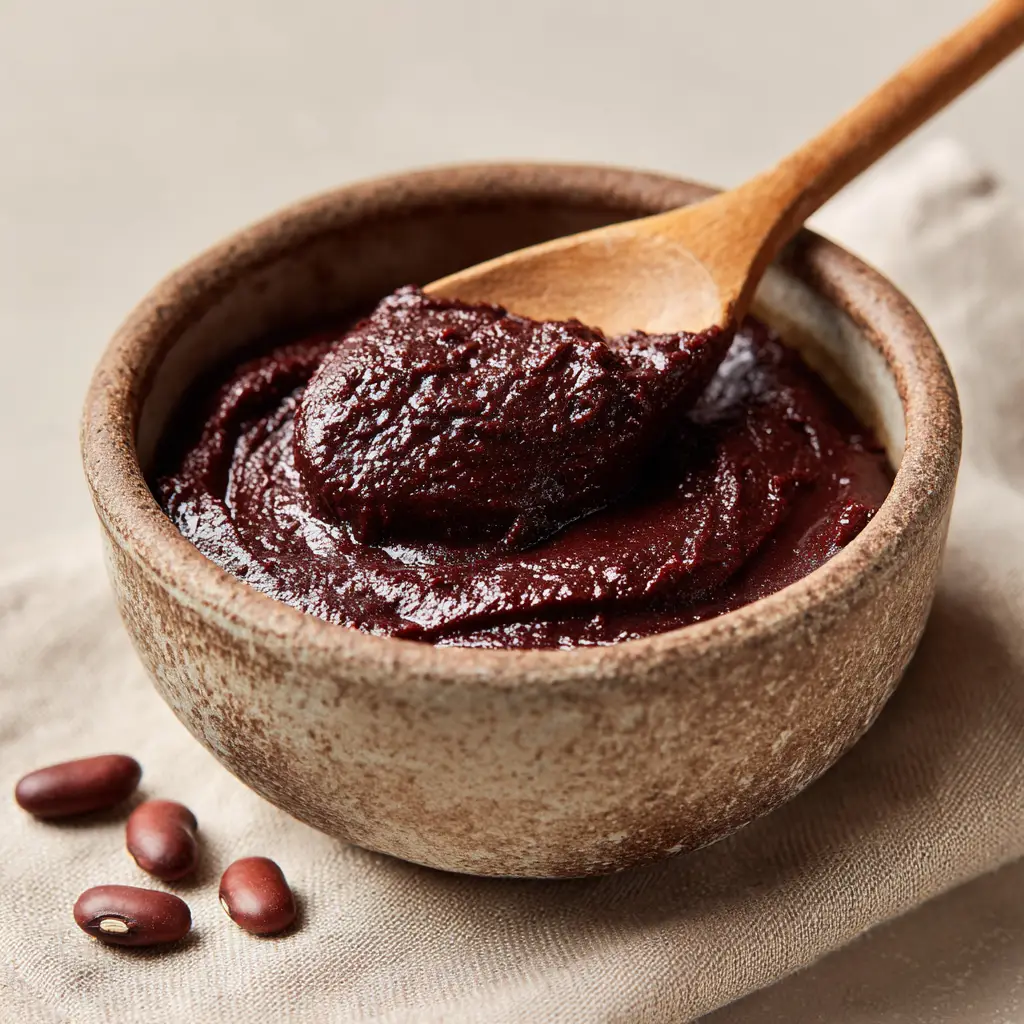
There is nothing quite as satisfying as scooping up a generous spoonful of thick, glossy, dark burgundy Homemade Red Bean Paste. If you have ever admired the dense, smooth yet slightly textured consistency of authentic Japanese anko, you are going to fall in love with this recipe. It beautifully captures that rich, earthy sweetness that makes Asian desserts so irresistible.
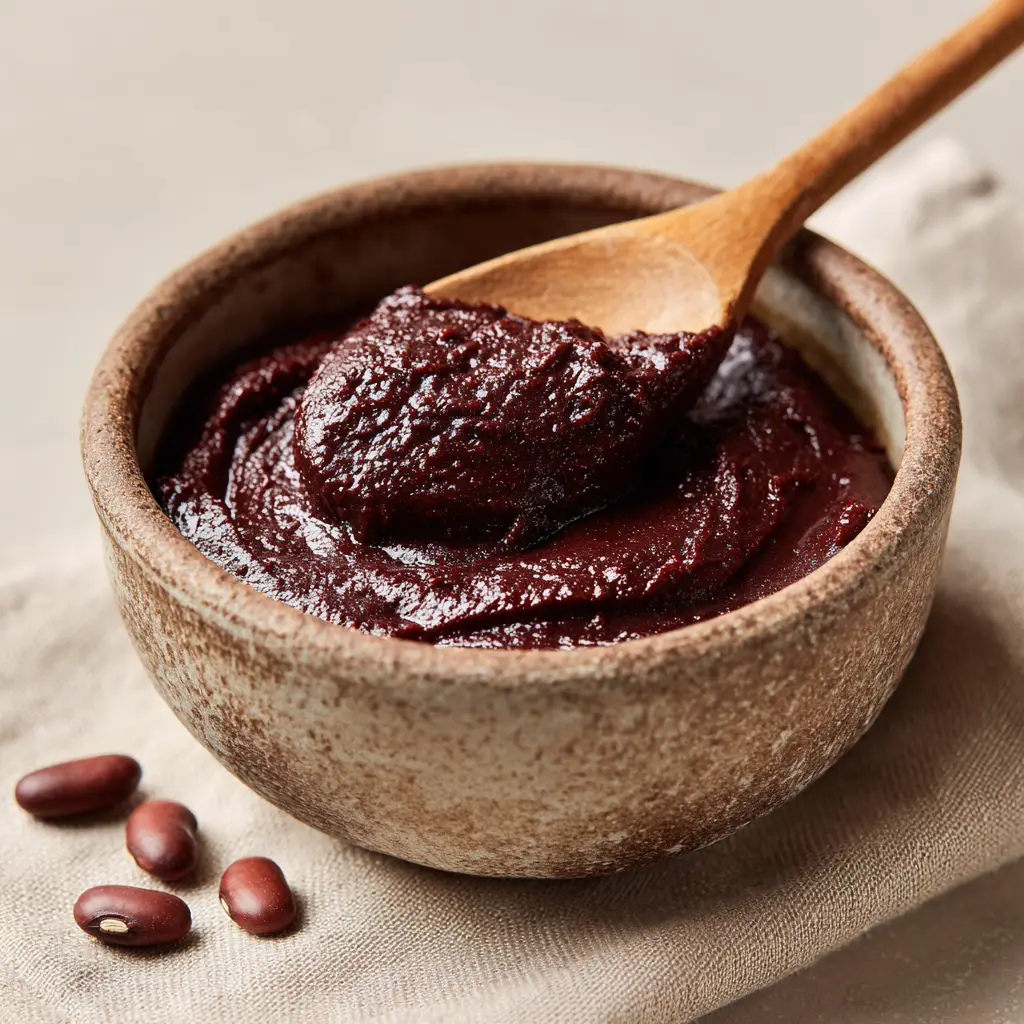
Picture a rustic ceramic bowl sitting on a light beige linen napkin, holding a generous scoop of this thick sweet paste. A few dry, raw adzuki beans scattered nearby hint at the humble beginnings of this incredible culinary transformation. By mastering a few simple techniques, you will achieve the ultimate glossy finish and perfect crushed bean specks.
Why This Dense, Glossy Sweet Bean Recipe Works
- Perfect Visual Accuracy: By using a specific ratio of sugar to cooked beans, you naturally develop that iconic dark burgundy color without any artificial dyes.
- Incredible Texture Control: Hand-mashing the beans allows you to maintain subtle crushed bean specks, creating a rich mouthfeel that isn’t overly pureed.
- Unmatched Glossy Sheen: A secret touch of neutral oil at the very end of the cooking process guarantees a beautifully thick, shiny finish.
- Balanced Sweetness: A crucial pinch of salt enhances the earthy adzuki flavor, keeping the sweetness perfectly balanced.
Essential Ingredients for Dark Burgundy Anko
Dry Raw Adzuki Beans: You will need 1 cup (200g) of high-quality dry raw adzuki beans for this recipe. Sorting through them on a clean surface ensures no stones or shriveled beans make it into your pot.
Granulated Sugar: We use 1 cup (200g) of white granulated sugar to sweeten the paste and help preserve it. As the sugar melts and reduces, it deepens the color to a gorgeous dark burgundy.
Kosher Salt: Adding 1/4 tsp (1.5g) of kosher salt is a non-negotiable culinary step. It works invisibly to amplify the natural nuttiness of the legumes while cutting through the heavy sugars.
Neutral Oil (or Unsalted Butter): Incorporating 2 tbsp (30ml) of a neutral oil, like canola or grapeseed, is the scientific secret to a professional sheen. It coats the crushed adzuki bean specks, ensuring a glossy, smooth finish.
Filtered Water: You will need about 4 cups (960ml) of water for the boiling phases. Using filtered water prevents harsh minerals from toughening the bean skins during the simmering process.
Kitchen Tools Needed for Smooth Yet Textured Results
To achieve the precise consistency described in our visual blueprint, you will need a heavy-bottomed saucepan to prevent the dense paste from scorching. A fine-mesh strainer is essential for the initial astringency-removal boil.
You will also need a sturdy wooden spoon for the final reduction process. A wooden spoon rests perfectly inside the bowl and is the best tool for gently mashing the beans against the side of the pot to create those rustic crushed specks.
Step-by-Step Instructions to Crafting Red Bean Paste
Step 1: Sorting and Purging the Raw Adzuki Beans
Begin by scattering your dry raw adzuki beans across a light beige linen napkin or a clean kitchen towel. Visually inspect the beans, removing any discolored or broken pieces. Rinse the sorted beans thoroughly under cold running water until the water runs completely clear.
Step 2: The Astringency Boil (Shibuminuki)
Place the rinsed beans in your heavy-bottomed pot and cover them with 2 cups (480ml) of water. Bring to a rolling boil over medium-high heat, and let them boil vigorously for exactly 5 minutes. Drain the beans into your fine-mesh strainer and discard the dark, bitter water.
Step 3: Simmering to Total Tenderness
Return the purged beans to the pot and add the remaining 4 cups (960ml) of fresh filtered water. Bring to a gentle simmer, then cover with a lid left slightly ajar. Cook on low heat for 60 to 75 minutes, or until the beans are so tender you can effortlessly crush one between your thumb and pinky finger.
Step 4: Sweetening and Building the Glossy Finish
Once the beans are tender, drain any excess water so the beans are just barely submerged. Stir in the granulated sugar and kosher salt, increasing the heat to medium. Cook the mixture down for 10-15 minutes, stirring continuously with your wooden spoon.
Step 5: Mashing for that Signature Crushed Speck Texture
As the mixture thickens, use the back of your wooden spoon to mash about half of the beans against the side of the pot. This creates a dense, smooth yet slightly textured consistency with lovely crushed bean specks. Stir in the neutral oil during the final 2 minutes of cooking to achieve that thick, glossy dark burgundy finish.
Pro Culinary Tips for Flawless Sweet Bean Paste
- Do Not Rush the Boil: Boiling the beans in fresh water after the initial purge is critical. Acidic or hard water can prevent the skins from softening completely.
- Watch the Sugar Timing: Never add the sugar until the beans are completely soft. Sugar hardens the cellular structure of the beans and will halt the softening process immediately.
- Pull It Early: The paste will thicken significantly as it cools. Remove it from the heat when it easily coats the back of your wooden spoon but still looks slightly looser than your desired final texture.
- Maximize the Gloss: Stir constantly once the sugar and oil are added. This constant friction emulsifies the fats and sugars, preventing crystallization and maximizing the glossy visual appeal.
How to Store, Freeze, and Reheat Your Fresh Paste
Allow your Homemade Red Bean Paste to cool completely to room temperature in a rustic ceramic bowl. Once cooled, transfer it to an airtight glass container and store it in the refrigerator for up to one week. The high sugar content helps preserve the paste naturally.
If you want to make a large batch, this paste freezes beautifully. Portion it into freezer-safe zip-top bags, flatten them out to remove excess air, and freeze for up to three months. Thaw overnight in the fridge before using in your favorite recipes.
Delightful Pairings and Ways to Use Your Sweet Bean Filling
This dense, sweet paste is incredibly versatile. It serves as the perfect traditional filling for mochi, dorayaki, or steamed buns. If you’re hosting an Asian-inspired dinner, serve this as a sweet finish after enjoying some crispy Japanese katsu bowls.
For a fun fusion dessert, try swirling this dark burgundy paste into a batch of 3-ingredient banana brownies for an incredibly fudgy, earthy twist. It also pairs harmoniously with tropical flavors; try sandwiching it between pink coconut snowball cake bars!
If you’re curating a beautiful dessert platter for the holidays, a small dish of this paste alongside homemade butter mints offers a gorgeous color contrast and varying textures for your guests.
Frequently Asked Questions About Cooking Adzuki Beans
Yes! Simply return the paste to the saucepan and cook it over low-medium heat, stirring continuously with a wooden spoon until the excess moisture evaporates and you reach a dense, smooth consistency.
No, adzuki beans are small enough that they do not require an overnight soak. The initial 5-minute astringency boil, followed by a 60-75 minute simmer, is perfectly sufficient to achieve tender beans.
The glossy sheen comes from adding a small amount of neutral oil or butter at the very end of the cooking process, combined with the caramelization of the sugar as you reduce the moisture in the paste.
This happens if you add the sugar too early. Sugar alters the cellular structure and stops the softening process. Always ensure your beans are completely soft and easily crushed between your fingers before adding any sugar.
Authentic Sweet Bean Paste Recipe Card
The Ultimate Homemade Red Bean Paste
Ingredients
Equipment
Instructions
- Scatter the dry raw adzuki beans on a clean surface to inspect and remove any broken pieces. Rinse thoroughly under cold water.
- Place beans in a pot with 2 cups of water. Bring to a rapid boil for 5 minutes, then drain and discard the bitter water.
- Return the beans to the pot with 4 cups of filtered water. Simmer on low heat with the lid slightly ajar for 60-75 minutes until the beans easily crush between your fingers.
- Drain off excess water so beans are just submerged. Stir in the granulated sugar and kosher salt. Cook over medium heat for 10-15 minutes, stirring continuously.
- Use the back of a wooden spoon to mash half the beans against the pot to create crushed specks. Stir in the neutral oil during the last 2 minutes for a thick, glossy finish. Remove from heat.
Notes
Tip 2: The paste will continue to thicken significantly as it cools in the bowl.

Share Your Sweet Success!
Crafting this incredible Homemade Red Bean Paste from scratch is a highly rewarding culinary project. Once you see that thick, glossy, dark burgundy finish in your own kitchen, you will never go back to the canned versions!
If you loved the dense, smooth yet slightly textured consistency of this recipe, please leave a star rating and a comment below. Don’t forget to snap a photo of your rustic ceramic bowl filled with anko and share it with us on Pinterest!