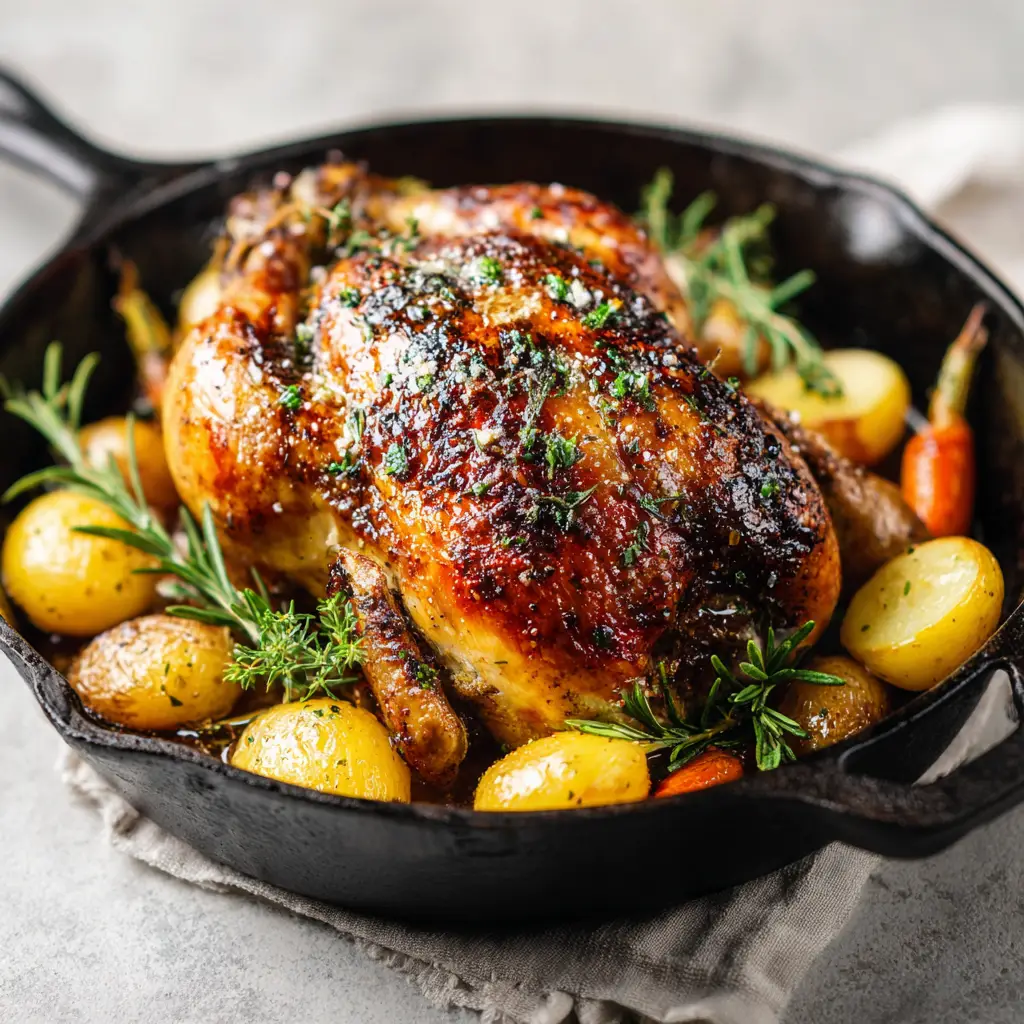
There is something inherently majestic about a perfectly Roasted Cornish Hen glistening in a cast iron skillet. It offers all the visual drama of a full-scale Thanksgiving turkey but in a perfectly portioned, elegant package that fits right on your weeknight dinner table.
Imagine the scent of fresh rosemary and thyme mingling with savory pan drippings as they sizzle against a hot pan. The skin of the bird reaches a deep, blistered golden-brown, shattering under the knife to reveal tender, succulent meat seasoned to the bone.
In this guide, we are bridging the gap between professional culinary technique and home-kitchen reality. You will learn how to achieve that high-end restaurant “glaze” and perfectly tender baby carrots using nothing more than a hot oven and a few key sensory cues.
Why This One-Pan Poultry Dinner Works
- Unrivaled Skin Texture: By utilizing high-heat roasting and specific dry-seasoning techniques, we achieve a deeply blistered, crackling golden skin that rivals any rotisserie.
- Caramelized Flavor Depth: The baby yellow potatoes are roasted cut-side down, absorbing the Roasted Cornish Hen drippings while developing a rich, mahogany crust.
- Aromatics in Every Bite: Roasting the garlic cloves whole in their skins prevents bitterness, resulting in a buttery, mellow paste that spreads like a dream over the meat.
- Effortless Elegance: This dish moves seamlessly from the oven to a rustic wooden board, making it the ultimate “showstopper” for intimate dinner parties.
The Anatomy of a Perfect Roast: Essential Ingredients
1.25 lb (565g) Whole Cornish Hen: This small bird cooks faster than a standard chicken, allowing the skin to crisp up without the breast meat drying out during the process.
Baby Yellow Potatoes (450g): We halve these to maximize the surface area for caramelization; their waxy texture holds up perfectly against the high roasting temperature.
Whole Baby Carrots (225g): Keeping these whole allows them to blister on the outside while maintaining a slight “snap” in the center, providing a sweet contrast to the savory bird.
Whole Garlic Cloves (1 head): We leave the skins on to protect the delicate sugars inside, allowing the cloves to steam into a savory confit while the bird roasts.
Fresh Rosemary and Thyme Sprigs: These aren’t just for show; tucked into the pan drippings, they infuse the entire skillet with an earthy, piney fragrance that defines the dish.
Coarse Black Pepper and Sea Salt Flakes: These larger crystals provide a tactile crunch and localized bursts of flavor that fine table salt simply cannot replicate.
Extra Virgin Olive Oil (30ml) and Salted Butter (15g): The oil handles the high heat, while the butter provides the milk solids necessary for that iconic golden-brown shimmer on the skin.
The Tool Kit: Achieving Professional Results
To get that specific “smartphone photo” aesthetic of a rustic, well-seasoned dish, a 12-inch (30cm) cast iron skillet is non-negotiable. The heavy metal retains heat and distributes it evenly, ensuring the potatoes at the bottom of the pan get just as much “love” as the bird on top.
You will also need a reliable meat thermometer to ensure the Roasted Cornish Hen reaches an internal temperature of 165°F (74°C) without overshooting and losing those precious juices. If you love deep, savory flavors, you might also find success using similar techniques with a French onion soup profile for your next meal.
Step-by-Step: The Master Roasting Method
Phase 1: The Dry Brine and Prep
Remove the hen from the refrigerator 30 minutes before cooking to take the chill off. Use a paper towel to pat the skin extremely dry; moisture is the enemy of a blistered, crispy result.
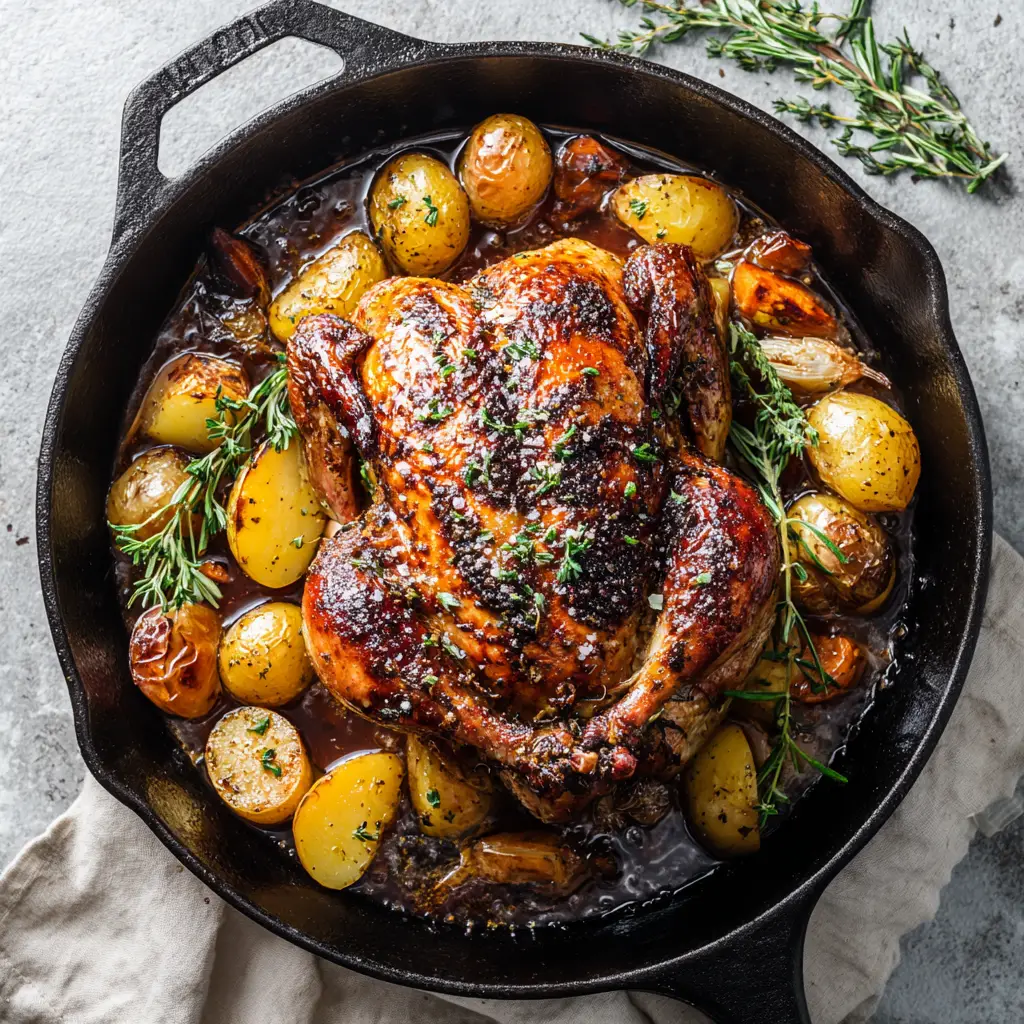
Generously season the cavity and the exterior with sea salt flakes and coarse black pepper. Press the seasoning into the skin so it adheres firmly, creating that textured look seen in the visual blueprint.
Phase 2: Arranging the Skillet
Preheat your oven to 425°F (218°C). Place your cast iron skillet over medium-high heat on the stovetop and add 1 tbsp (15ml) of oil. Once shimmering, place the potatoes cut-side down and the carrots around the edges.
Let them sear for 2-3 minutes without moving them. This “pre-sear” ensures the potatoes develop that caramelized edge before the bird even begins its main roast.
Phase 3: The High-Heat Roast
Place the seasoned Roasted Cornish Hen directly in the center of the skillet, nestled among the vegetables. Tuck the whole garlic cloves (skins on) and the sprigs of rosemary and thyme into the gaps.
Transfer the skillet to the oven. Roast for 45-50 minutes. You are looking for a visual cue: the skin should be deeply golden and appear slightly “bubbled” or blistered.
Phase 4: The Finishing Glaze
In the final 5 minutes of cooking, carefully brush the bird with a small amount of melted butter or the savory pan juices. This creates the “shiny savory glaze” that makes the dish look so appetizing.
Once the internal temperature hits 165°F (74°C), remove the skillet. Let the bird rest for at least 10 minutes; this allows the juices to redistribute, ensuring every slice is moist.
Expert Tips for the Perfect Golden Bird
- Don’t Crowd the Pan: If the vegetables are piled on top of each other, they will steam instead of roast. Ensure the baby carrots and potatoes are in a single layer to get those charred, blistered edges.
- The Garlic “Squeeze”: When serving, encourage your guests to squeeze the roasted garlic out of the skins. It creates a natural “sauce” that is incredible when paired with a creamy roasted garlic lemon pasta sauce on the side.
- High Heat is Key: Don’t be afraid of the 425°F (218°C) temperature. The high heat is what creates the “shattered glass” texture of the skin while the small size of the hen ensures the meat doesn’t dry out.
- Fresh Garnish: Always wait until the very last second to add the finely chopped parsley. The residual heat from the hen will wake up the oils in the herbs without wilting them into a dull brown.
Storage and Reheating the Leftovers
While the Roasted Cornish Hen is best served fresh from the skillet, leftovers can be stored in an airtight container for up to 3 days. To maintain the crispy skin, avoid the microwave.
Instead, reheat in a 350°F (177°C) oven or air fryer for 8-10 minutes. This will revive the caramelized edges of the potatoes and keep the carrots from becoming mushy. If you find yourself with extra chicken meat, it works beautifully in a turkey Dijon melt style sandwich.
What to Serve with Your Cornish Hen
This dish is a complete meal on its own, but a few bright additions can elevate the experience. A crisp green salad provides a necessary acid hit to cut through the rich pan drippings. For a more indulgent side, consider serving some chicken bacon ranch fries if you are hosting a casual gathering.
If you have extra herbs and butter, you can also whip up a batch of Texas Roadhouse cinnamon honey butter to serve with warm rolls alongside the savory bird.
Frequently Asked Questions
Yes, provided they are not crowded. You may need a larger 14-inch skillet or a roasting pan to ensure the vegetables have enough space to caramelize rather than steam in the birds’ moisture.
Trussing (tying the legs together) helps the bird cook more evenly and creates a more compact, aesthetic presentation, but it is not strictly necessary for a delicious result in a cast iron skillet.
The secret is moisture control. Pat the hen extremely dry with paper towels and leave it uncovered in the fridge for an hour before roasting. High heat (425°F) and a final brush of fat are also essential.
The most reliable method is using a meat thermometer inserted into the thickest part of the thigh (without hitting bone); it should read 165°F (74°C). Visually, the juices should run clear, and the skin should be deeply golden and blistered.
Leaving the skins on protects the garlic from the high oven heat, preventing it from turning bitter and burnt. Inside the skin, the garlic cloves steam and caramelize into a soft, spreadable paste.
The Ultimate Roasted Cornish Hen Recipe
Roasted Cornish Hen with Caramelized Root Vegetables and Garlic
Ingredients
Equipment
Instructions
- Pat the Cornish hen completely dry with paper towels. Season generously inside and out with sea salt flakes and coarse black pepper, pressing the spices into the skin.
- Preheat oven to 425°F (218°C). In a cast iron skillet over medium-high heat, add oil and place potatoes cut-side down. Add carrots around the edges and sear for 3 minutes.
- Place the hen in the center of the skillet. Nestle garlic cloves and herb sprigs among the vegetables. Roast for 45-50 minutes until the skin is blistered and golden.
- Brush the bird with melted butter or pan drippings in the final 5 minutes. Remove from oven when internal temp is 165°F (74°C). Rest for 10 minutes before garnishing with parsley.
Notes
Keep garlic in its skin to prevent burning and create a sweet, spreadable texture.
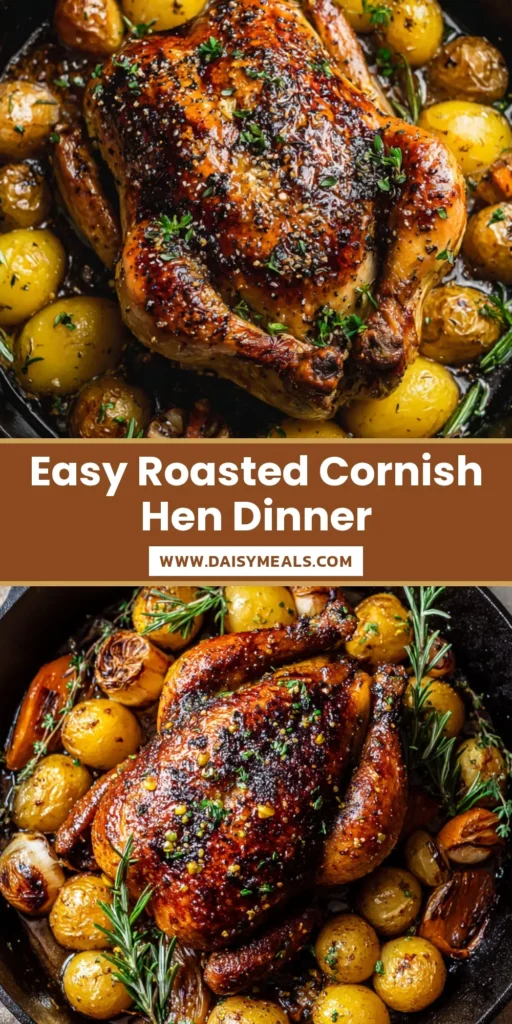
This Roasted Cornish Hen is more than just a meal; it is a sensory experience. From the first crackle of the golden skin to the sweet, mellow flavor of the roasted garlic cloves, it represents the pinnacle of home-cooked comfort.
If you enjoyed this recipe, please leave a comment below and let us know how your roast turned out! Be sure to follow Pinterest for more culinary inspiration and share your skillet photos with us.