When the temperature drops and the days grow shorter, there is nothing more comforting than a Winter Vegetable Casserole bubbling away in the oven. This dish isn’t just a side; it is a vibrant celebration of seasonal produce, smothered in a velvet-smooth cheese sauce that brings warmth to any dinner table.
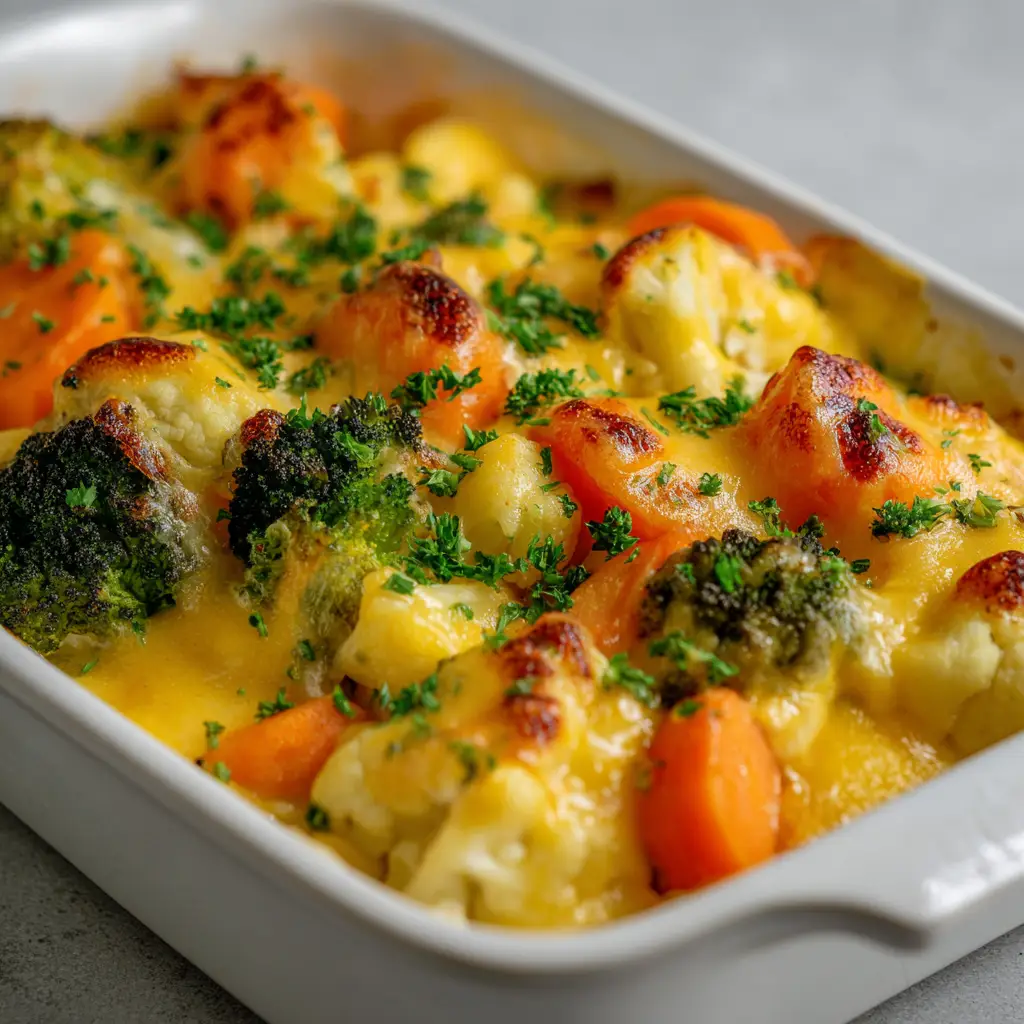
The beauty of this Winter Vegetable Casserole lies in the contrast of colors and textures. Imagine tender green broccoli, soft white cauliflower, and thick-cut bright orange carrots, all unified by a glossy, yellow-orange melted cheese sauce that has been broiled to perfection.
In this guide, we are going to dive deep into the culinary science of the perfect bake. From preventing mushy vegetables to achieving those iconic charred, blistered spots on the cheese surface, you will learn how to master this cold-weather classic like a professional chef.

Why This Winter Vegetable Casserole is the Ultimate Comfort Food
- Vibrant Visual Appeal: The combination of deep green broccoli, snowy cauliflower, and bright orange carrots creates a stunning mosaic in your baking dish.
- Textural Harmony: We utilize a specific steaming technique to ensure the vegetables remain tender-crisp, never becoming a soggy mess under the weight of the sauce.
- The Perfect Mornay Sauce: Our cheese sauce is thick, glossy, and emulsified with precision to avoid graininess, ensuring every bite is rich and decadent.
- Blistered Cheese Finish: By utilizing high-heat broiling, we create a golden-brown crust with charred spots that provide a smoky depth of flavor.
- Fresh Herb Finish: A final dusting of finely chopped parsley adds a pop of freshness that cuts through the richness of the melted cheese.
The Produce Trio: Selecting Your Winter Vegetables
The foundation of any great Winter Vegetable Casserole is, of course, the vegetables themselves. For this recipe, we focus on the “Big Three” of the winter harvest: broccoli, cauliflower, and carrots.
Fresh Broccoli Florets: Look for tight, dark green heads without any yellowing. The stalks should be firm, and we recommend cutting them into uniform bite-sized pieces to ensure even cooking.
Snowy White Cauliflower: A perfect head of cauliflower should feel heavy for its size. We use the florets here to soak up the yellow-orange sauce, creating a beautiful color contrast in the white ceramic dish.
Thick-Cut Orange Carrots: Unlike thin coins, we want thick-cut slices about 1/2 inch (1.25cm) thick. This ensures they maintain their structural integrity and provide a sweet, earthy bite amidst the savory cheese.
If you love hearty vegetable dishes, you might also enjoy pairing this with a creamy garlic pasta or even serving it alongside a classic French onion soup.
Foundational Ingredients for the Glossy Cheese Sauce
The sauce is what transforms these steamed vegetables into a true Winter Vegetable Casserole. We aren’t just melting cheese; we are creating a stabilized Mornay sauce.
Unsalted Butter: 4 tbsp (56g) of high-quality butter serves as the fat base for our roux. It provides a nutty, rich background note to the entire dish.
All-Purpose Flour: 1/4 cup (30g) of flour is whisked into the butter. This “invisible” ingredient is the thickening agent that prevents your casserole from becoming watery.
Whole Milk: 2 cups (480ml) of milk are added slowly. Using whole milk is essential for that “glossy” look described in our visual blueprint, as the fat content helps emulsify the cheese.
Sharp Cheddar & Red Leicester: 2 cups (225g) of shredded cheese. We suggest a blend of sharp white cheddar for flavor and Red Leicester or a high-quality yellow cheddar to achieve that specific yellow-orange hue.
Seasoning Essentials: 1 tsp (6g) sea salt, 1/2 tsp (1g) black pepper, and a pinch of nutmeg. Nutmeg is the secret ingredient in professional cheese sauces, as it enhances the dairy notes without tasting “spicy.”
Essential Equipment for a Professional Bake
To achieve the look of a “handheld smartphone photo” that looks effortless yet perfect, you need the right tools. A rectangular white ceramic baking dish is non-negotiable for that clean, classic aesthetic.
You will also need a large steamer basket. Steaming the vegetables separately before baking is the only way to ensure they are fully cooked without losing their vibrant colors to the boiling water.
A heavy-bottomed saucepan and a balloon whisk are required for the sauce. A whisk allows you to incorporate the milk into the roux gradually, preventing lumps and ensuring a thick, glossy finish.
Step-by-Step Instructions: Engineering the Perfect Casserole
Prep and Steam the Vegetable Base
Start by preparing your vegetables. Cut 1 lb (450g) of broccoli and 1 lb (450g) of cauliflower into uniform florets. Peel and slice 3 large carrots (approx. 250g) into 1/2 inch (1.25cm) thick rounds.
Place the carrots in the steamer basket first, as they take the longest. Steam for 4 minutes, then add the broccoli and cauliflower. Steam for an additional 5-6 minutes until the vegetables are tender but still hold their shape.
Immediately transfer the steamed vegetables to your white ceramic baking dish. Arrange them so the colors are interspersed; you want the orange of the carrots to pop against the green and white florets.
Crafting the Velvety Cheese Sauce
In your saucepan, melt the 4 tbsp (56g) of butter over medium heat. Once bubbling, whisk in the 1/4 cup (30g) of flour. Cook this roux for about 2 minutes, just until it smells slightly nutty but hasn’t turned brown.
Slowly pour in the 2 cups (480ml) of milk, whisking constantly. This is the “active” phase—if you add the milk too fast, you’ll get lumps. Continue cooking and whisking until the sauce thickens enough to coat the back of a spoon.
Remove from heat and stir in 1.5 cups (170g) of the shredded cheese blend. Stir until the sauce is thick, glossy, and a beautiful yellow-orange. Season with salt, pepper, and that vital pinch of nutmeg.
Assembling and Achieving the Blistered Crust
Pour the glossy cheese sauce over the steamed vegetables in the ceramic dish. Use a spatula to gently toss the vegetables, ensuring every crevice of the broccoli and cauliflower is smothered in sauce.
Top the casserole with the remaining 1/2 cup (55g) of cheese. Place the dish in a preheated oven at 400°F (200°C) for 15 minutes. This allows the flavors to meld and the sauce to begin bubbling at the edges.
For the final touch, turn your oven to the “Broil” setting. Watch closely for 2-3 minutes. You are looking for specific visual cues: the cheese should develop bubbly, lightly browned, and gently charred blistered spots across the surface.
The Final Garnish and Presentation
Once the casserole has reached its peak golden-brown state, remove it from the oven. Let it rest for 5 minutes. This resting period allows the cheese sauce to set slightly so it doesn’t run when served.
Finely chop a handful of fresh green parsley. Sprinkle it sparingly across the top layer. This provides a “fresh” visual element that contrasts beautifully with the rich, baked cheese.
Serve this Winter Vegetable Casserole directly from the white ceramic dish for a rustic, “handheld smartphone photo” vibe that your family or guests will love.
Expert Tips for Casserole Success
- Dry Your Veggies: After steaming, pat the vegetables with a clean paper towel. Excess moisture on the surface of the broccoli can thin out your cheese sauce.
- Grate Your Own Cheese: Pre-shredded cheese is coated in potato starch or cellulose to prevent clumping. This can make your sauce gritty. Grate your cheese from a block for the glossiest results.
- The Broiler Watch: Never walk away from the oven when the broiler is on. The transition from “perfectly blistered” to “completely burnt” happens in seconds.
- Make it a Meal: While this is a perfect side, you can turn it into a main course by serving it with cottage cheese cloud bread for a low-carb feast.
Storage, Reheating, and Make-Ahead Advice
This Winter Vegetable Casserole stores beautifully. Keep leftovers in an airtight container in the refrigerator for up to 4 days. The flavors of the cheese sauce actually deepen over time.
To reheat, we recommend using the oven rather than the microwave. Place a portion in an oven-safe dish and bake at 350°F (175°C) until the cheese is bubbling again. This helps maintain the texture of the vegetables.
We do not recommend freezing this dish. The high water content in cauliflower and broccoli, combined with the dairy-based sauce, can lead to a broken, grainy texture once thawed and reheated.
What to Serve With Your Winter Vegetable Casserole
This dish is incredibly versatile. For a cozy winter dinner, serve it alongside a bowl of French onion short rib soup. The richness of the beef pairs perfectly with the creamy vegetables.
If you are looking for something lighter, a simple Italian grinder salad provides a crisp, acidic contrast to the heavy cheese sauce. For a more casual “game day” vibe, these vegetables make a great side for chicken bacon ranch fries.
Frequently Asked Questions
While fresh is preferred for the best texture, you can use frozen. Ensure you steam them less than fresh and pat them completely dry to prevent the casserole from becoming watery.
The secret is the broiler. After baking the casserole to heat it through, turn on the broiler for just 2-3 minutes while watching it constantly. The high direct heat creates those specific blistered spots.
Steaming is superior for this casserole. Boiling can lead to water-logged vegetables that dilute the cheese sauce. Steaming preserves the vibrant colors and structural integrity.
A combination of Sharp Cheddar and Red Leicester provides both the sharp flavor and the deep yellow-orange color seen in professional culinary photography.
Grainy sauce is usually caused by using pre-shredded cheese (which contains anti-clumping agents) or by adding cheese to a boiling liquid. Always grate your own and stir it into the sauce off the heat.
The Complete Winter Vegetable Casserole Recipe
Winter Vegetable Casserole with a Blistered Golden Cheese Crust
Ingredients
Equipment
Instructions
- Place carrots in a steamer basket over boiling water for 4 minutes. Add broccoli and cauliflower and steam for 5-6 more minutes until tender-crisp.
- Transfer the steamed vegetables to the white ceramic baking dish, ensuring an even distribution of colors.
- Melt butter in a saucepan, whisk in flour, and cook for 2 minutes over medium heat.
- Gradually whisk in milk and simmer until the sauce is thick and glossy. Remove from heat and stir in 1.5 cups of cheese.
- Pour sauce over vegetables, top with remaining cheese, and bake at 400°F (200°C) for 15 minutes.
- Switch to broil and cook for 2-3 minutes until the surface has charred, blistered spots.
Notes
Pat the vegetables dry after steaming to prevent a watery sauce.

A Warm Winter Favorite
This Winter Vegetable Casserole is more than just a way to eat your greens; it is a comfort food masterpiece. With its vibrant colors and blistered cheese crust, it’s a dish that looks as good as it tastes. Whether you’re serving it for a holiday meal or a quiet Tuesday night, it’s guaranteed to be a hit.
I’d love to see your results! If you make this, leave a comment below or tag me on social media. Don’t forget to save this recipe to your boards on Pinterest for your next winter meal prep session!