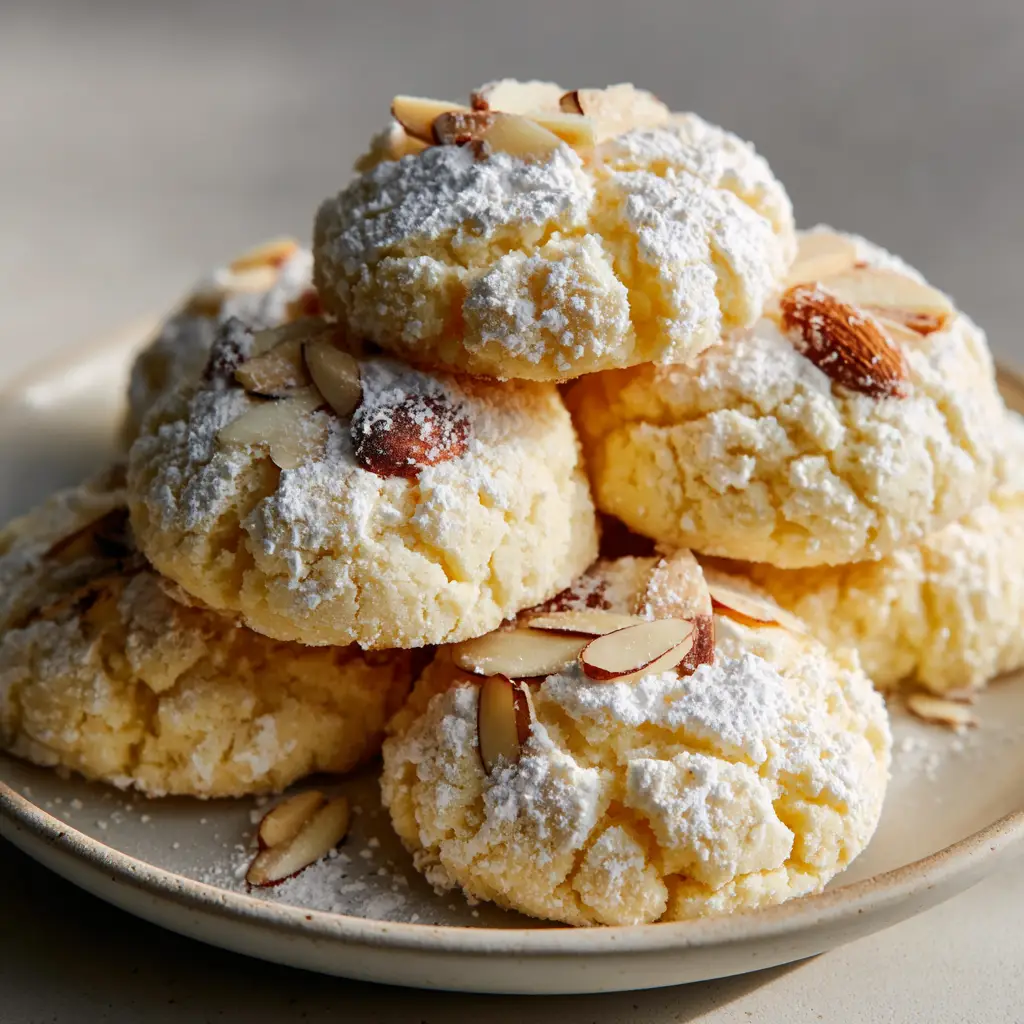
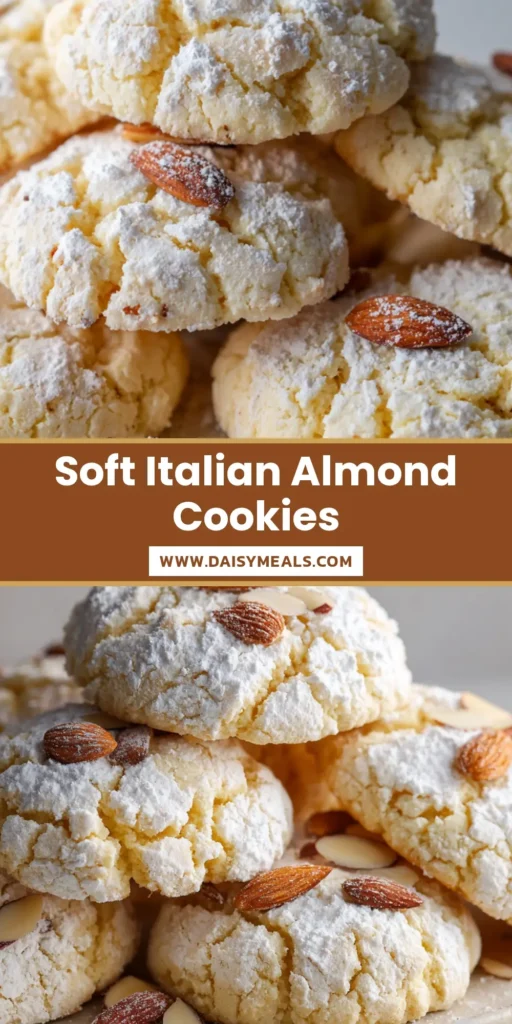
When you imagine the quintessential Italian bakery experience, your mind likely drifts to the delicate, cloud-like texture of authentic Almond Ricotta Cookies. These aren’t your standard crispy biscuits; they are thick, pale-yellow pillows of joy that offer a sophisticated balance of creamy cheese and fragrant almond essence. This specific recipe captures the rustic elegance of the Italian countryside, featuring a distinctive craggy and cracked surface that holds a generous dusting of snow-white powdered sugar.
The visual appeal of these Almond Ricotta Cookies is undeniable. Each cookie acts as a canvas for a beautiful arrangement of toasted slivered almonds and whole almonds, providing a nutty crunch that contrasts perfectly with the soft, cake-like interior. Whether you are serving these at a formal gathering or enjoying them with a quiet afternoon espresso, the combination of the vibrant yellow crumb and the pristine sugar coating makes them an instant showstopper on any dessert table.
In this guide, we are going to dive deep into the culinary science that makes these cookies so unique. We will explore how to manage moisture levels in the ricotta, the importance of “low and slow” baking to maintain that signature pale-yellow hue, and the precise techniques needed to achieve the crinkle-top texture shown in our professional visual blueprint. Prepare to elevate your baking repertoire with a recipe that is as visually stunning as it is delicious.
Why You Will Absolutely Adore These Craggy Italian Gems
- Unmatched Pillowy Texture: Thanks to the high moisture content of the ricotta cheese, these cookies possess a unique “soft-baked” consistency that sits halfway between a traditional cookie and a delicate sponge cake.
- Sophisticated Almond Profile: By utilizing both almond extract and two varieties of toasted almonds, we build layers of flavor that range from sweet marzipan notes to deep, roasted nuttiness.
- The Signature Crinkle: The high-protein flour combined with specific leavening agents creates a beautiful craggy surface that traps powdered sugar in every crevice for a stunning visual effect.
- Pale-Yellow Aesthetic: Unlike cookies that rely on heavy browning for flavor, these maintain a bright, elegant pale-yellow color that looks incredible against a neutral ceramic plate.
The Science of Texture: Essential Elements for Your Almond Ricotta Cookies
To achieve the result seen in our visual blueprint, we must be intentional with our ingredient selection. Each component plays a vital role in the structural integrity and flavor profile of the final bake.
Full-Fat Whole Milk Ricotta: Use 15 ounces (425g) of high-quality ricotta. This is the heart of the recipe, providing the moisture and creamy fat content required for that signature soft-baked crumb.
Unsalted High-Fat Butter: You will need 1/2 cup (115g) of room-temperature butter. Creaming the butter with sugar creates tiny air pockets that help the cookies rise and develop their thick, cake-like stature.
Granulated White Sugar: 1 cup (200g) of sugar provides sweetness without distracting from the almond flavor. It also aids in the “cracking” of the surface as the cookies expand in the oven.
Large Room-Temperature Eggs: 2 eggs (approx. 100g) provide the necessary lecithin and protein to bind the wet ricotta with the dry flour, ensuring the cookies don’t crumble apart.
Pure Almond Extract: 1 1/2 tsp (7.5ml) of extract gives that unmistakable “Italian bakery” aroma. It is much more potent than vanilla and is the primary flavor driver here.
All-Purpose Flour: 2 1/2 cups (315g) of flour provides the structure. We want enough to hold the “craggy” shape but not so much that the cookies become dense or dry.
Baking Powder & Baking Soda: A combination of 1 tsp (5g) baking powder and 1/2 tsp (2.5g) baking soda ensures a quick lift, which is what causes the surface texture to fracture and crack.
Toasted Almond Toppings: You will need 1/4 cup (30g) of slivered almonds and 12-15 whole almonds. Toasting them to a pale brown enhances their oils and creates the visual contrast seen in the prompt.
Fine Powdered Sugar: 1/2 cup (60g) for dusting. This should be applied generously to highlight the crevices and mimic the “fine white layer” described in our visual guide.
Essential Kitchen Tools for Professional Italian Baking
Achieving the handheld, smartphone-photo-ready look of these cookies requires a few specific tools to ensure consistency and texture.
A stand mixer or electric hand mixer is non-negotiable for the creaming stage. You need significant mechanical force to incorporate enough air into the butter and sugar to support the heavy ricotta cheese.
A medium cookie scoop (approx. 2 tablespoons) is vital for the “casually stacked” look. Uniformity in size ensures that all cookies bake at the same rate, preventing some from browning while others remain undercooked.
Finally, a fine-mesh sieve is required for the powdered sugar dusting. To get that “heavily dusted” look that highlights the crevices, you need a tool that can distribute the sugar evenly without clumping.
The Step-by-Step Guide to Mastering Soft-Baked Perfection
Preparing the Ricotta Base
Start by draining your ricotta cheese if it appears overly watery. Place it in a fine-mesh strainer for 15 minutes to ensure the dough doesn’t become too slack, which would prevent the cookies from staying “thick” as described in the blueprint.
The Creaming and Emulsifying Process
In your mixer, beat the softened butter and granulated sugar for at least 3-4 minutes. You are looking for a visual change: the mixture should turn from yellow to a pale ivory and look noticeably fluffy. Add the eggs one at a time, followed by the almond extract and the drained ricotta, mixing until just combined.
Folding for Structure
Whisk your dry ingredients (flour, baking powder, baking soda, and salt) in a separate bowl. Slowly add them to the wet mixture. Use a low speed or a spatula to fold the flour in. Over-mixing at this stage will develop gluten, turning your soft-baked cookies into tough bread-like rounds. Stop as soon as no white streaks remain.
Chilling for the Craggy Surface
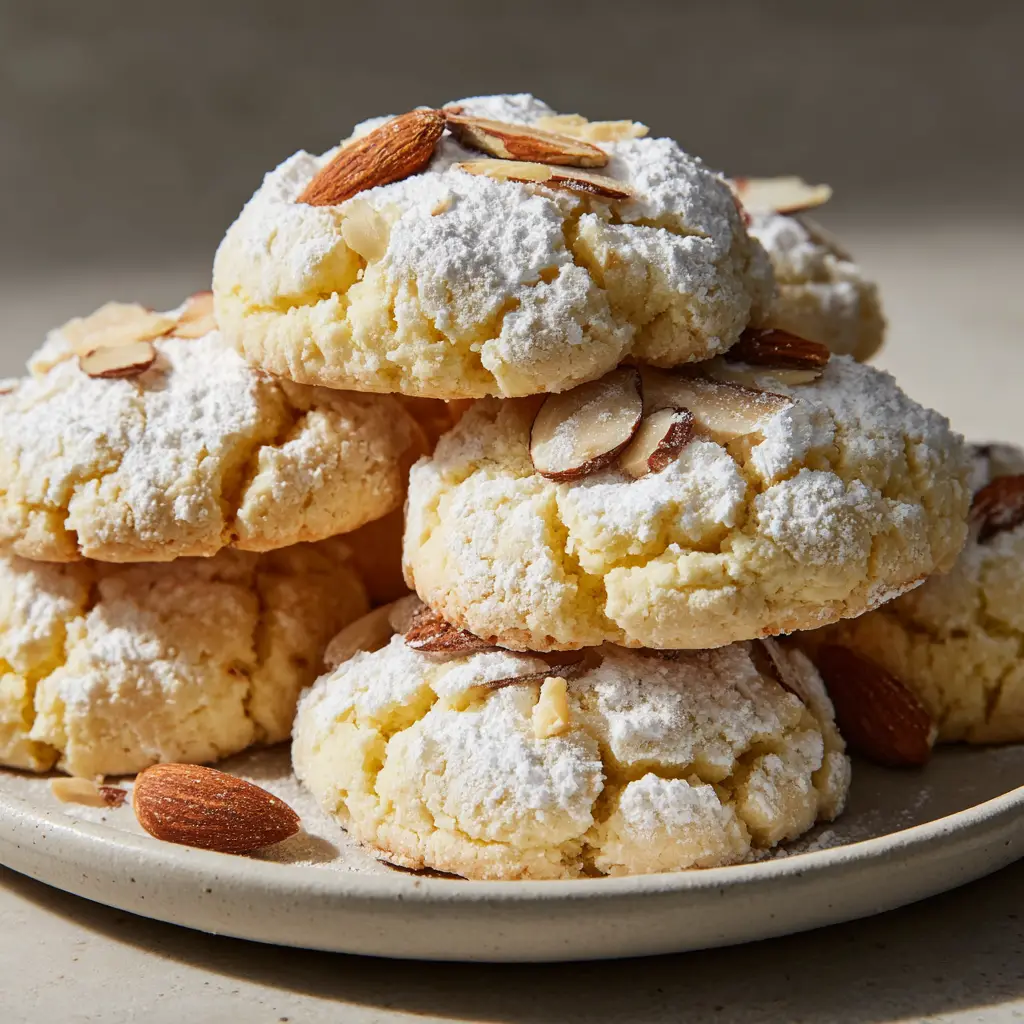
Chill the dough for at least 2 hours. This is the secret to the “distinctively cracked and craggy surface texture.” Cold dough hits the hot oven and expands rapidly, causing the set exterior to fracture beautifully.
Toasting and Topping
While the dough chills, lightly toast your slivered and whole almonds in a dry pan over medium heat for 3-5 minutes. Look for a “pale brown” color and a fragrant aroma. Once the cookies are scooped onto the parchment-lined tray, press a few slivered almonds and one whole almond into the top of each mound before baking.
Baking for Visual Accuracy
Bake at 350°F (175°C) for 12-14 minutes. The sensory cue you are looking for is a “firm set” on the edges while the centers remain pale-yellow. They should not be golden brown on top; the “pale-yellow” color is traditional for this Italian variety. Let them cool completely on the pan to allow the internal structure to set.
Expert Tips for Success
- The Temperature Rule: Ensure your ricotta and eggs are at room temperature. Cold ingredients can cause the creamed butter to seize, resulting in a lumpy dough and an uneven bake.
- Sifting the Flour: For the most “pillowy” results, sift your flour before measuring. This prevents dense pockets and helps the leavening agents work more effectively.
- Generous Sugar Dusting: Don’t be shy with the powdered sugar. The visual blueprint requires a “heavy layer” that highlights the crevices. Dust them once when slightly warm, and then again right before serving for the best contrast.
- Avoid Over-Baking: If the tops start to turn brown, they have been in too long. These should stay light and bright to contrast with the toasted almonds.
Shelf Life and Preserving the Pillowy Freshness
Because these cookies have a high moisture content from the cheese, they should be stored in an airtight container in the refrigerator if not consumed within 24 hours. They will stay fresh for up to 5 days. If you prefer to keep them at room temperature, ensure they are in a cool, dry place to prevent the powdered sugar from melting into the cookie.
For long-term storage, these cookies freeze exceptionally well. Place them in a single layer on a baking sheet to freeze solid, then transfer to a freezer-safe bag. When you’re ready to eat, let them thaw at room temperature and apply a fresh dusting of powdered sugar to restore that “heavily dusted” look.
Elevate Your Dessert Table: What to Serve with Ricotta Treats
These Almond Ricotta Cookies are a versatile addition to any dessert spread. If you are hosting a brunch, they pair beautifully with banana cinnamon pecan cupcakes for a variety of textures. For a more formal Italian-themed evening, start with a savory appetizer like prosciutto wrapped mozzarella before moving into the sweet course.
If you love the combination of almond and fruit, try serving these alongside a heaven on earth cake or a slice of tart made with a buttery pie crust recipe. The nutty crunch of the almonds on these cookies provides a great counterpoint to creamy or fruit-forward desserts.
Frequently Asked Questions About Italian Ricotta Baking
While you can add almond flour, it will change the structural integrity of the cookie. For this specific ‘soft-baked’ texture, pure almond extract provides the most concentrated flavor without compromising the pillowy crumb.
Wait until the cookies are completely cooled before applying the final heavy dusting. If the cookie is even slightly warm, the sugar will dissolve into the moisture of the ricotta.
No, traditional Italian Almond Ricotta Cookies should remain pale-yellow. Browning indicates they are becoming dry; the goal is a soft, moist, cake-like interior.
This usually happens if the dough is too warm or the butter was over-softened. Ensure you chill the dough for at least 2 hours; the temperature difference is what creates the steam lift and the fractured surface texture.
Ricotta cheese contains varying amounts of whey. Draining it ensures the dough has the proper consistency to bake up thick and maintain its ‘craggy’ surface rather than spreading too thin in the oven.
The Official Almond Ricotta Cookies Recipe
This recipe is designed to produce the exact visual and textural results described in our master blueprint: a thick, soft-baked cookie with a craggy top, toasted almonds, and a snowy coating of sugar. Follow the measurements closely for the best results.
Almond Ricotta Cookies: The Ultimate Soft-Baked Italian Recipe with Toasted Almonds
Ingredients
Equipment
Instructions
- In a stand mixer, beat the softened butter and granulated sugar until pale and fluffy, about 3-4 minutes.
- Add eggs one at a time, followed by almond extract and drained ricotta. Mix on medium-low until smooth.
- Whisk flour, baking powder, baking soda, and salt. Gradually add to the wet mixture, folding until just combined.
- Cover the dough and refrigerate for at least 2 hours to develop the signature craggy texture.
- Preheat oven to 350°F (175°C). Scoop 2-tablespoon mounds onto parchment-lined sheets. Press toasted slivered almonds and one whole almond into each top.
- Bake for 12-14 minutes until set but still pale-yellow. Do not let them brown significantly.
- Once cooled completely, use a sieve to heavily dust with powdered sugar, highlighting the craggy crevices.
Notes
Chill the dough thoroughly to ensure the surface cracks perfectly during baking.
Bringing the Italian Bakery to Your Kitchen
Creating authentic Italian sweets at home is a rewarding experience that fills your kitchen with the scent of toasted nuts and sweet almond. These Almond Ricotta Cookies are the perfect entry point for any home cook looking to master the balance of texture and presentation. The craggy tops and toasted almond garnishes ensure they look as good as they taste.
We would love to see your results! If you make these, please leave a comment below and let us know how they turned out. Don’t forget to follow us on Pinterest for more visually-driven recipe inspiration and share your photos with the DaisyMeals community!