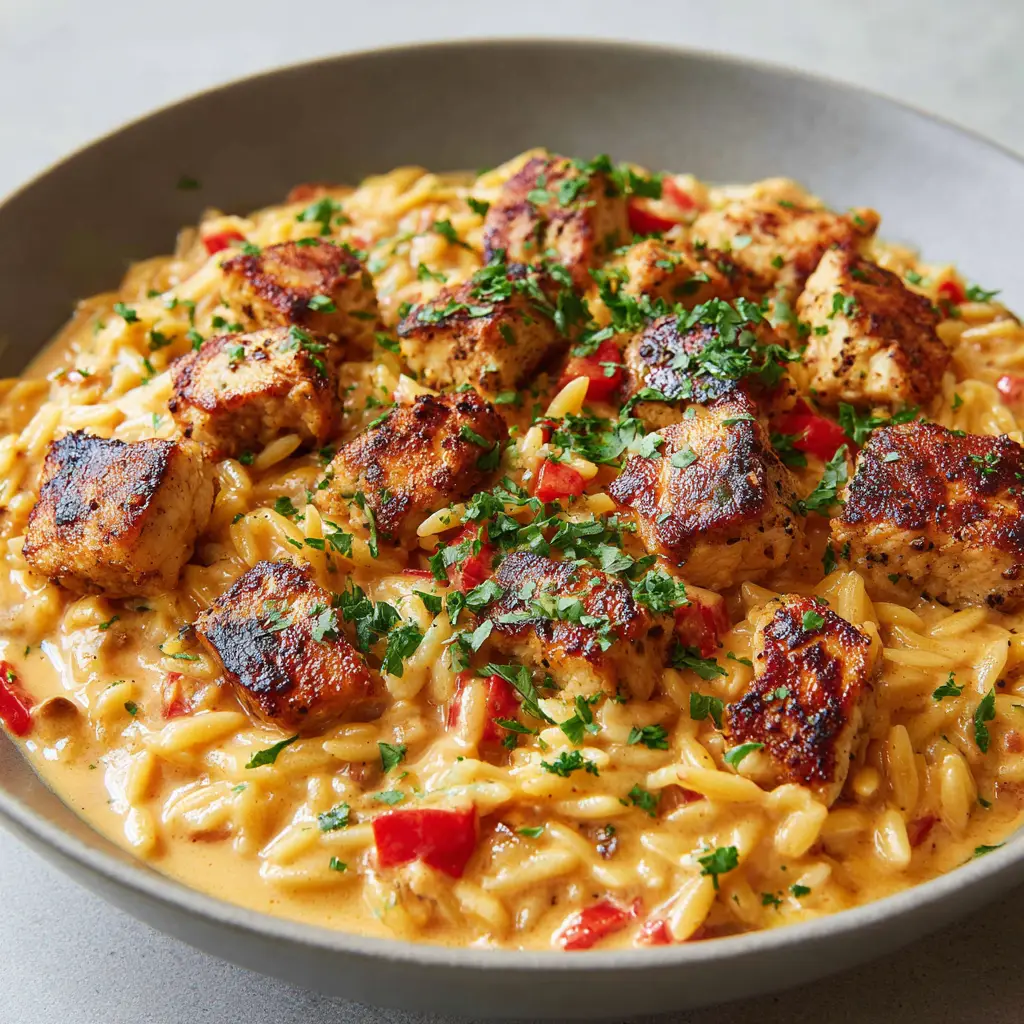
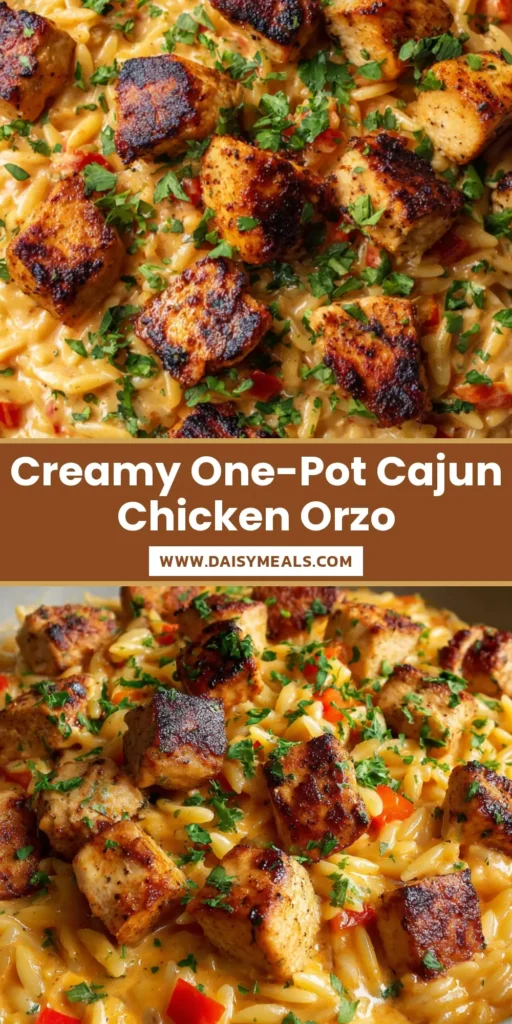
If you are searching for a dish that marries the soul-warming heat of the bayou with the velvet-smooth indulgence of an Italian classic, look no further than this Cajun Chicken Alfredo Orzo. This recipe isn’t just a meal; it’s a masterclass in texture, featuring tiny grains of rice-shaped pasta swimming in a thick, glossy, light orange sauce that carries just the right amount of kick. Every bite is punctuated by the snap of tender red peppers and the savory depth of chicken breast cubes seared to a deep, golden-brown perfection.
The visual appeal of this dish is undeniable, characterized by the vibrant contrast of the green parsley against the sunset-hued sauce. Whether you are hosting a weekend dinner party or looking for a weeknight upgrade, the Cajun Chicken Alfredo Orzo delivers a restaurant-quality experience right from your stovetop. It’s a modern twist on the classic chicken and broccoli alfredo bake that swaps traditional pasta for the unique, velvety mouthfeel of orzo.
Why This Zesty Pasta Hybrid is Taking Over Dinner Time
- Textural Harmony: The use of orzo creates a uniform, risotto-like consistency that traditional fettuccine simply cannot replicate, allowing the sauce to coat every millimeter of pasta.
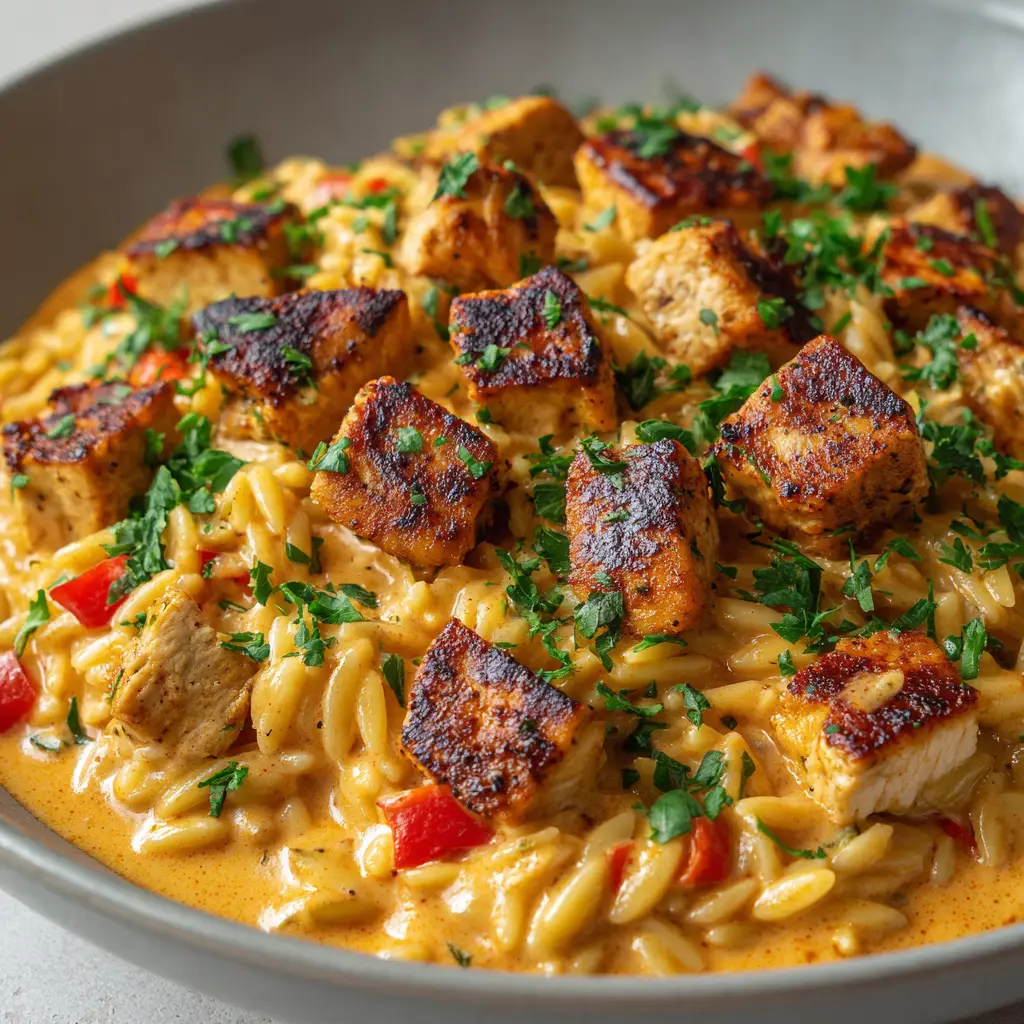
- Maillard-Rich Protein: By searing the chicken cubes at high heat, we develop dark char marks on the edges, providing a smoky contrast to the creamy Alfredo base.
- Visual Vibrancy: The natural pigments in Cajun spices transform a standard white sauce into a stunning light orange glaze, accented by the jewel-toned diced red peppers.
- Balanced Heat: While “Cajun” suggests spice, the heavy cream and Parmesan cheese act as a cooling agent, making this dish accessible to all palates.
The Essential Pantry Staples for That Signature Orange Glow
Creating the perfect Cajun Chicken Alfredo Orzo requires a specific harmony of ingredients. We start with 1.5 lbs (680g) of boneless, skinless chicken breast, diced into uniform 1-inch (2.5cm) cubes to ensure even searing and a consistent bite.
To achieve that iconic char, you will need 2 tbsp (30ml) of high-smoke point avocado oil or extra virgin olive oil. For the seasoning, a robust blend of 2 tbsp (15g) Cajun spice—heavy on the smoked paprika and garlic powder—is essential to provide both the heat and the vivid orange color that defines the sauce.
The foundation of the dish is 1.5 cups (330g) of dry orzo pasta. Unlike larger pasta shapes, orzo releases a small amount of starch into the sauce as it simmers, helping to create that “glossy” finish described in the visual blueprint.
For the aromatics and vegetables, you will need 1 large red bell pepper (approx. 200g), finely diced. This adds a necessary sweetness to balance the spice. You’ll also need 3 cloves (15g) of fresh minced garlic to build the base flavor profile.
The “Alfredo” component relies on 2 cups (480ml) of heavy cream and 1 cup (90g) of freshly grated Parmesan cheese. Never use the canned variety; fresh Parmesan contains the moisture necessary for a smooth emulsion that won’t break or become grainy.
Finally, the garnish is a critical visual bridge: 1/2 cup (15g) of finely chopped fresh parsley. This provides a “dense sprinkle” of green that cuts through the richness of the cream and the heat of the spices.
Professional Tools for the Perfect Kitchen Sear
To achieve the specific “dark char marks” on the chicken while keeping the interior juicy, a heavy-bottomed skillet is non-negotiable. A 12-inch (30cm) cast iron or stainless steel skillet is ideal because it retains heat effectively, preventing the chicken from steaming in its own juices.
You will also need a fine-mesh strainer to rinse the orzo, though some chefs prefer to leave the starch on for a thicker sauce. A high-quality chef’s knife is essential for dicing the red peppers and finely chopping the parsley into that “dense sprinkle” required for the final presentation.
For serving, consider using a shallow, matte grey bowl as suggested in our visual guide. The neutral, dark background makes the orange sauce and green parsley “pop,” mimicking professional handheld smartphone food photography. This presentation is just as impressive as a well-plated caramelized onion tart.
Master the Art of the Golden-Brown Chicken Crust
Step 1: The High-Heat Protein Sear
Pat the chicken cubes dry with paper towels—moisture is the enemy of a good sear. Toss the cubes in 1 tbsp (7.5g) of Cajun seasoning and a pinch of salt. Heat your skillet over medium-high heat until the oil is shimmering and just beginning to wisps of smoke.
Add the chicken in a single layer, ensuring they aren’t crowded. Listen for a loud, aggressive sizzle. Cook for 3-4 minutes without moving them to develop those “dark char marks” and golden-brown edges. Flip and cook for another 2 minutes, then remove from the pan and set aside.
Step 2: Sautéing the Visual Accents
In the same pan, add a touch more oil if needed. Throw in the diced red peppers. Sauté for 3-5 minutes until they are soft and the edges are slightly blistered, matching the vibrant aesthetic of our visual blueprint. Add the minced garlic in the last 60 seconds to avoid burning.
Step 3: Simmering the Orzo and Sauce Emulsion
Add the dry orzo directly to the skillet with the peppers. Stir for 1 minute to lightly toast the pasta. Pour in 2.5 cups (600ml) of chicken broth and the remaining Cajun seasoning. Bring to a boil, then reduce to a simmer, stirring frequently to prevent the orzo from sticking to the bottom.
Once the orzo is al dente and most of the liquid is absorbed, stir in the 2 cups (480ml) of heavy cream and the Parmesan cheese. Watch as the sauce transforms into a thick, glossy, light orange coating. If the sauce is too thick, add a splash of pasta water or broth, similar to the technique used in a professional peppercorn sauce recipe.
Step 4: The Final Assembly and Garnish
Fold the seared chicken cubes back into the creamy orzo. Let it sit for 2 minutes so the chicken can warm through and release its juices into the Alfredo. Portion the mixture into shallow bowls. Finish with a “generous, dense sprinkle” of finely chopped fresh parsley. The green should be vibrant and evenly distributed across the top.
Chef Secrets for a Glossy, Never-Grainy Alfredo
- The Temperature Rule: Always add your Parmesan cheese over low heat. If the sauce is boiling when the cheese hits the pan, the proteins will clump, resulting in a grainy texture rather than a glossy one.
- The Resting Period: Orzo continues to absorb liquid as it sits. If you aren’t serving it immediately, keep extra cream or broth on hand to loosen the sauce back to its original “glossy” state.
- Cajun Customization: Not all Cajun seasonings are created equal. Some are salt-heavy, while others are pepper-heavy. Taste your spice blend before adding extra salt to the dish.
- The Searing Secret: If your chicken isn’t charring, your pan isn’t hot enough. Wait until the oil “shimmers” before adding the protein.
Keeping Your Leftovers Luscious and Creamy
Store any remaining Cajun Chicken Alfredo Orzo in an airtight container in the refrigerator for up to 3 days. Because orzo is so small, it will continue to drink up the sauce as it cools.
When reheating, do not use the microwave on high power, as this will break the cream emulsion and make the dish oily. Instead, place the leftovers in a small saucepan over low heat. Add 2 tbsp (30ml) of milk or cream and stir constantly until the sauce regains its glossy, light orange appearance.
Freezing is not recommended for cream-based pasta dishes, as the texture of the orzo can become mushy upon thawing. It is best enjoyed fresh or within the first 48 hours of preparation.
Complementary Pairings for Your Cajun Feast
To balance the richness of the Alfredo sauce, serve this dish with a crisp green salad or a side of garlic parmesan roasted potatoes if you’re looking for a hearty feast. For an appetizer, the saltiness of prosciutto wrapped mozzarella creates a lovely contrast to the spicy Cajun profile.
If you want to end the meal on a sweet note, the bright citrus of lemon rice krispie treats or a slice of no-bake chocolate eclair cake provides a refreshing palate cleanser after the bold spices of the orzo.
Answering Your Burning Cajun Pasta Questions
Yes, but orzo is preferred for its rice-like texture. If substituting, use a small shape like ditalini or even arborio rice for a risotto-style finish.
Absolutely! Chicken thighs have a higher fat content and are harder to overcook, making them a great choice for getting those dark char marks.
Use a high-smoke point oil, pat the chicken dry before seasoning, and ensure your skillet is very hot before adding the meat. Don’t crowd the pan!
Reduce the Cajun seasoning by half and add a pinch of smoked paprika for color without the heat. The heavy cream will also naturally buffer the spice.
Graininess usually happens if the cheese is added to boiling liquid or if you use pre-shredded cheese. Always use fresh-grated Parmesan and stir it in over low heat.
The Master Recipe: Cajun Chicken Alfredo Orzo
Cajun Chicken Alfredo Orzo: The Ultimate Creamy One-Pan Comfort Meal
Ingredients
Equipment
Instructions
- Heat oil in a skillet. Toss chicken with 1 tbsp Cajun seasoning. Sear until golden-brown with dark char marks. Remove from pan.
- Add diced red peppers to the same skillet. Sauté until softened, about 4 minutes.
- Add orzo and broth. Simmer until orzo is tender and liquid is reduced.
- Stir in heavy cream and Parmesan. Fold chicken back in until sauce is thick and glossy.
Notes
Use fresh-grated Parmesan to ensure the sauce stays smooth and glossy.
Join the Community and Share Your Creations
The Cajun Chicken Alfredo Orzo is more than just a quick dinner; it’s a dish designed to be shared and photographed. We want to see your results! Did you get those perfect char marks? Is your sauce the perfect shade of orange?
Leave a comment below with your experience or any substitutions you tried. Don’t forget to follow us on Pinterest for more visually stunning recipe inspiration. If you loved this, please give us a 5-star rating and share this post with your fellow home cooks!