If you have been searching for a vegetable side dish that actually steals the spotlight, this Korean Baked Cauliflower is your answer. It is the perfect marriage of deep umami heat and a satisfying, oven-roasted crunch that mimics the best street food in Seoul.
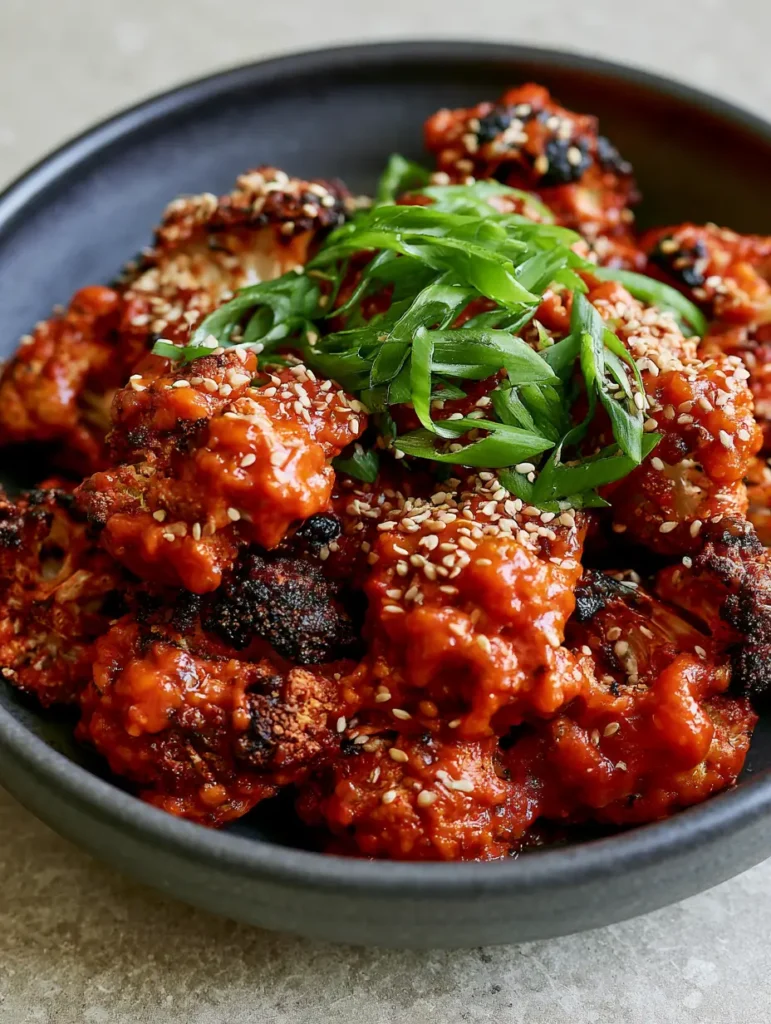
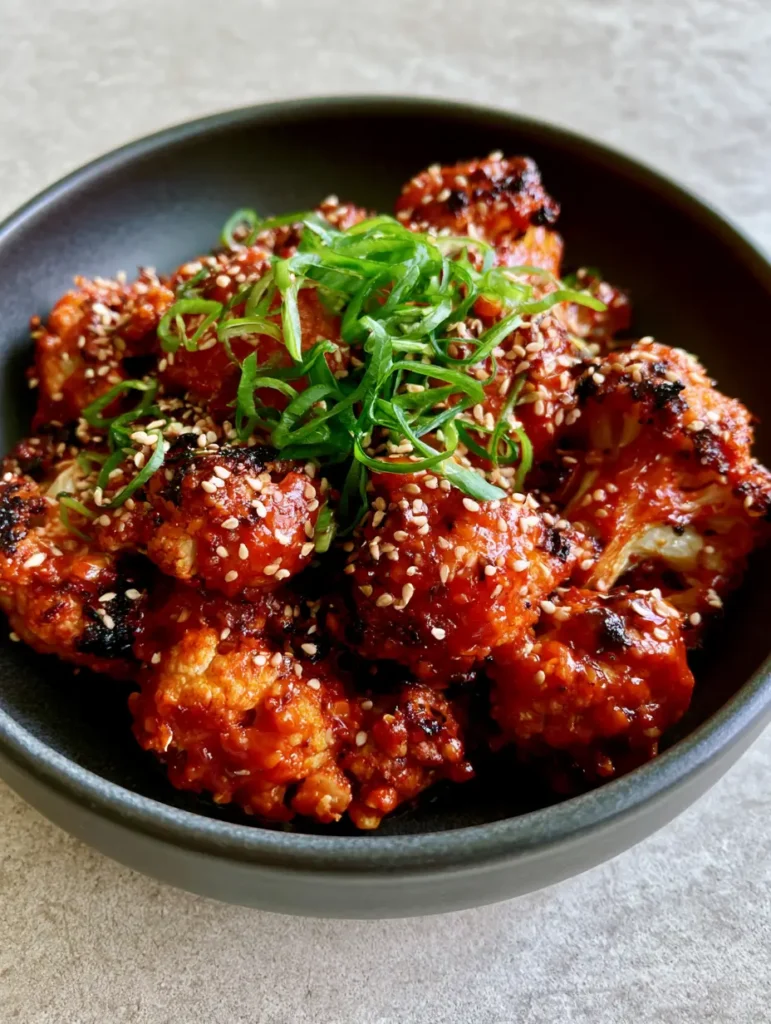
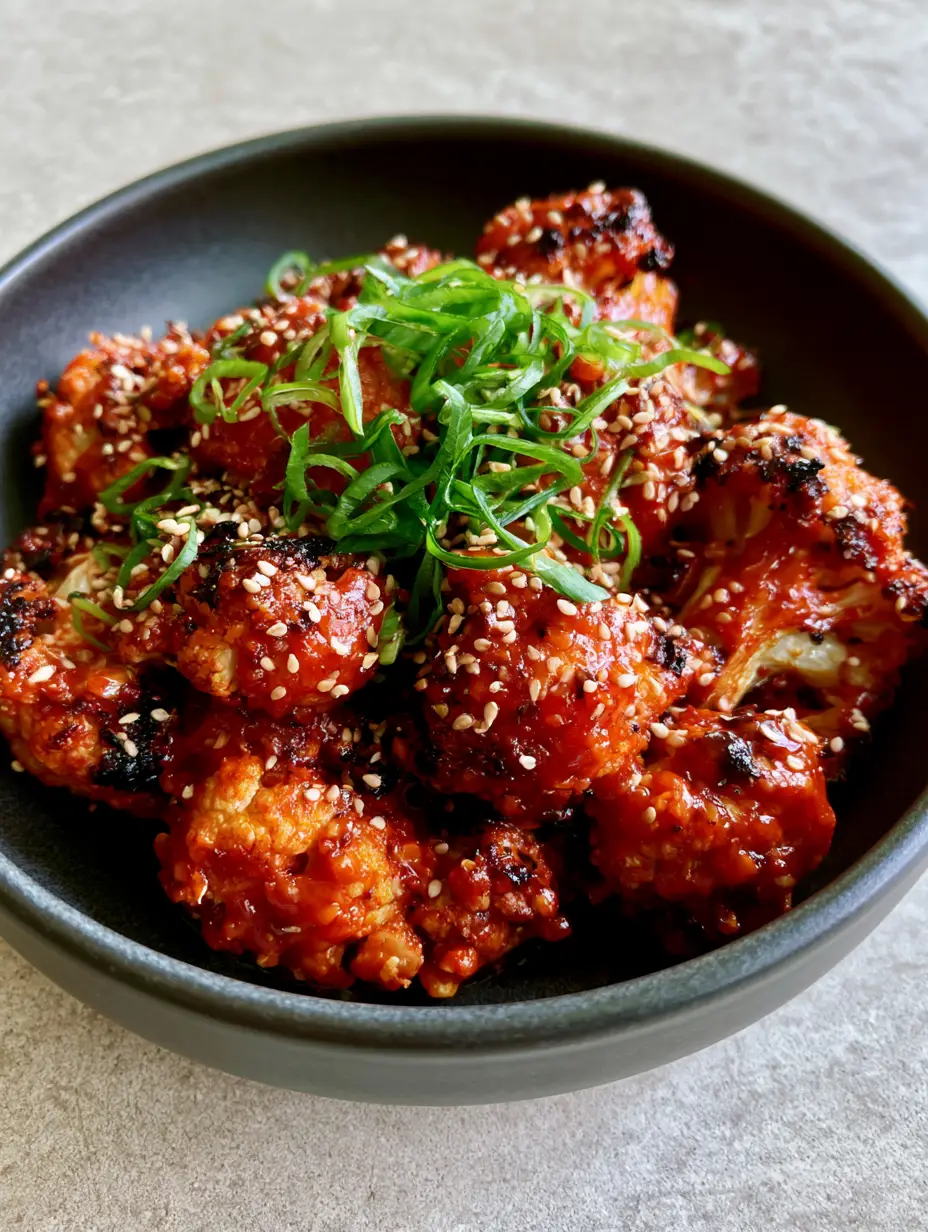
Imagine tender florets with perfectly charred edges, all encased in a thick, vibrant reddish-orange Gochujang sauce that clings to every single crevice. This isn’t just a side dish; it’s a sensory experience that balances the sticky sweetness of the glaze with the fresh bite of scallions.
Whether you are serving this alongside Korean BBQ meatballs or looking for a plant-based alternative to wings, this recipe delivers high-impact flavor with very little effort. Let’s dive into how to achieve that professional, glossy finish right in your home oven.
Why This Korean Baked Cauliflower Recipe Works Every Single Time
- The Perfect Char: By roasting the cauliflower at a high temperature before glazing, we achieve those smoky, crispy edges seen in the visual prompt.
- Glossy Sauce Consistency: Our secret cornstarch slurry technique ensures the Gochujang sauce is thick and “clinging,” rather than watery or thin.
- Balanced Heat: The recipe uses honey and rice vinegar to cut through the spice of the Gochujang, making it accessible for those who enjoy a medium kick.
- Texture Contrast: The addition of toasted white sesame seeds and fresh scallions provides a necessary crunch and brightness to the rich, sticky base.
The Core Ingredients for a Vibrant Gochujang Glaze
To recreate the visual of the Korean Baked Cauliflower from our blueprint, every ingredient plays a specific role in texture and color. Here is what you will need for your grocery list.
1 large head (approx. 2 lbs or 900g) Cauliflower: Choose a dense, heavy head with no brown spots to ensure the florets stay structurally sound during the high-heat roast.
3 tbsp (45ml) Neutral Oil: Use avocado or grapeseed oil; these have high smoke points, allowing the cauliflower to blister without the oil breaking down or tasting burnt.
1/4 cup (60g) Gochujang Paste: This fermented Korean chili paste is the soul of the dish, providing that deep reddish-orange hue and complex fermented funk.
2 tbsp (30ml) Soy Sauce: This adds the foundational saltiness and depth of umami that elevates the cauliflower from a simple vegetable to a savory powerhouse.
2 tbsp (30ml) Honey or Maple Syrup: The sugars here are essential for the “thick glossy” look, as they caramelize under the heat and create that sticky texture.
1 tbsp (15ml) Rice Vinegar: A splash of acidity is required to brighten the heavy fermentation of the Gochujang and balance the sweetness of the honey.
1 tsp (5g) Freshly Grated Ginger: Ginger provides a subtle, aromatic heat that works in the background to make the sauce taste restaurant-quality.
2 cloves Garlic, minced: Garlic infuses the oil and the sauce, ensuring every bite has a savory, pungent backbone.
1 tsp (5ml) Toasted Sesame Oil: A little goes a long way; this adds a nutty aroma that perfumes the entire dish as it comes out of the oven.
Foundational “Invisible” Ingredients for Success
While the blueprint highlights the sauce and garnishes, several invisible ingredients are scientifically necessary to achieve the result. We use 1 tsp (6g) Kosher Salt and 1/2 tsp (1g) Black Pepper during the initial roast to draw out moisture, which is what allows the edges to char effectively.
Additionally, we utilize 1 tsp (3g) Cornstarch mixed with a splash of water. This creates a slurry that, when heated with the sauce, provides that “clinging” property seen in the Midjourney prompt, ensuring the sauce doesn’t just slide off to the bottom of the bowl.
Essential Kitchen Equipment
To get that handheld smartphone photo look, you need a few specific tools. A large, rimmed baking sheet is non-negotiable for airflow; if you crowd the cauliflower, it will steam instead of charring.
A small saucepan is needed to simmer the glaze, and a dark matte ceramic bowl is the ideal vessel for serving, as the dark background makes the reddish-orange florets and bright green scallions pop visually. You may also find a silicone spatula helpful for tossing the florets to ensure they are “completely smothered.”
The Science of Roasting Your Korean Baked Cauliflower
Preparing the Florets for Maximum Surface Area
Start by breaking your cauliflower into medium-sized florets. It is vital that they are relatively uniform in size so they cook at the same rate. Aim for about 1.5 inches (4cm) per piece.
Wash the florets and dry them thoroughly with a clean kitchen towel. Any residual water will create steam in the oven, preventing the edges from reaching that crispy, charred state we are looking for.
The Initial High-Heat Charring Phase
Preheat your oven to 425°F (220°C). Toss the florets with the neutral oil, salt, and pepper directly on the baking sheet. Spread them out so none are touching.
Roast for 20-25 minutes. At the halfway mark, flip the florets. You are looking for deep golden-brown spots and blackened, wispy edges. This provides the structural integrity to hold the heavy glaze later.
Whisking the Glossy Gochujang Reduction
While the cauliflower roasts, combine the Gochujang, soy sauce, honey, vinegar, ginger, garlic, and sesame oil in a small saucepan over medium heat. Whisk until the paste dissolves into a smooth liquid.
Once bubbling, whisk in your cornstarch slurry. Let it simmer for 1-2 minutes until the sauce thickens and becomes translucent and glossy. It should coat the back of a spoon easily.
The Final Toss and Garnish
Transfer the hot, roasted cauliflower into a large mixing bowl. Pour the warm glaze over the top and toss gently but thoroughly. Every crevice should be filled with that vibrant sauce.
Transfer the mixture to your serving bowl. Immediately sprinkle with 1 tbsp (9g) toasted white sesame seeds and 2 thinly sliced scallions. The heat from the cauliflower will slightly soften the scallions, releasing their fresh aroma.
Expert Tips for the Most Realistic Results
- Don’t Over-sauce Too Early: Only toss the cauliflower in the sauce right before serving. If it sits in the glaze for too long in the oven, the crispy edges will soften and become soggy.
- The “Handheld Photo” Lighting: If you’re taking photos for social media, follow the prompt’s advice and use soft, natural daylight from the side to highlight the sticky texture of the sauce.
- Gochujang Varieties: Gochujang comes in different heat levels (usually marked 1 through 5). For this recipe, a level 3 “Medium” provides the best color without overwhelming the palate.
- Crowding the Pan: If you are doubling the recipe, use two baking sheets. Crowding is the enemy of the “charred edge.”
Storage, Reheating, and Meal Prep
Korean Baked Cauliflower is best enjoyed fresh from the oven to maintain the texture of the glaze. However, you can store leftovers in an airtight container in the refrigerator for up to 3 days.
To reheat, avoid the microwave as it will make the cauliflower mushy. Instead, place them back on a baking sheet at 350°F (175°C) for 8-10 minutes until the sauce begins to bubble again and the edges crisp up.
What to Serve with Korean Baked Cauliflower
This dish is incredibly versatile. It works beautifully as a vegetable side for a larger Asian-inspired spread. Try it alongside a bowl of shrimp and cabbage stir fry for a low-carb dinner.
If you want something heartier, serve it as the “protein” component over a bed of white jasmine rice or even next to some garlic parmesan roasted potatoes for a fusion-style feast. For those focused on high-protein options, this cauliflower makes a great side for a high-protein egg roll in a bowl.
Frequently Asked Questions
Yes! Air fry the florets at 400°F (200°C) for 12-15 minutes until charred, then toss in the prepared glaze and air fry for another 1-2 minutes to set the sauce.
Frozen cauliflower can be used, but it won’t get as charred or crispy as fresh. Thaw completely and pat very dry before following the roasting steps.
To make it gluten-free, ensure your Gochujang paste is certified GF (some brands use barley) and swap the soy sauce for Tamari or coconut aminos.
It has a medium kick due to the Gochujang paste, but the heat is balanced by the honey and rice vinegar. You can use a ‘mild’ Gochujang if you are sensitive to spice.
This usually happens if the sauce is too thin. Make sure to use the cornstarch slurry and simmer the sauce until it is thick and translucent before tossing.
The Complete Korean Baked Cauliflower Recipe
Korean Baked Cauliflower: The Ultimate Sweet and Spicy Gochujang Glaze
Ingredients
Equipment
Instructions
- Preheat oven to 425°F (220°C). Toss dried cauliflower florets with neutral oil, salt, and pepper on a baking sheet.
- Roast for 25 minutes, flipping halfway through, until florets are tender and edges show a visible dark char.
- In a small saucepan, whisk Gochujang, honey, soy sauce, vinegar, ginger, garlic, and sesame oil over medium heat. Add cornstarch slurry and simmer until thick and glossy.
- Toss the roasted cauliflower in a bowl with the warm glaze until every piece is completely smothered in the reddish-orange sauce.
- Transfer to a bowl and top generously with toasted sesame seeds and fresh scallions.
Notes
Use a level 3 Gochujang for a balanced heat profile.
Closing & Call to Action
This Korean Baked Cauliflower is a testament to how simple ingredients like Gochujang and honey can transform a humble vegetable into a gourmet experience. The charred edges and sticky, reddish-orange glaze make it a visual and culinary triumph for any home cook.
If you enjoyed this recipe, please leave a comment below and let us know how your cauliflower turned out! Don’t forget to follow DaisyMeals on Pinterest for more visual recipe inspiration and share your photos of this dish with us.