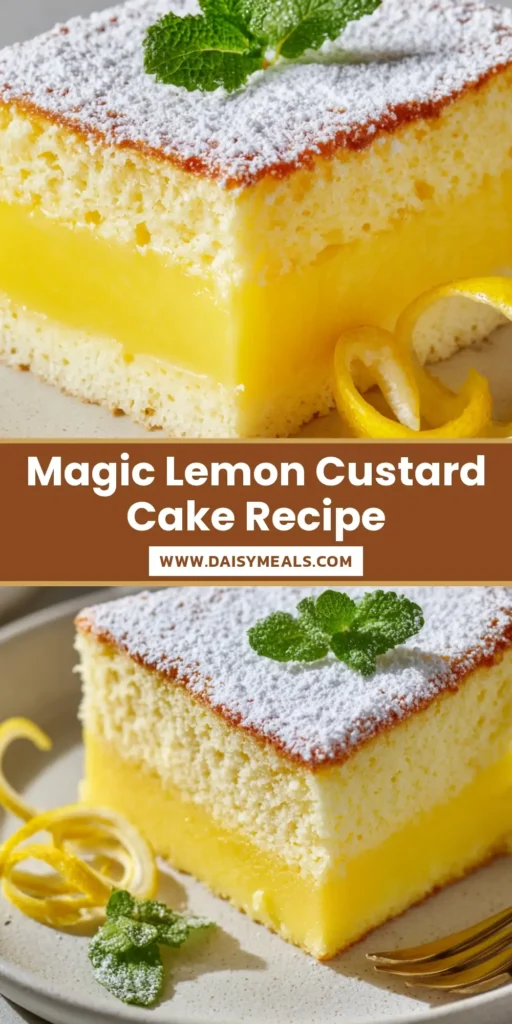
The Lemon Custard Cake is a culinary phenomenon that feels more like a magic trick than a baking project. This single batter transforms in the oven, naturally separating into a dense, silky custard base and a light, cloud-like sponge topper.
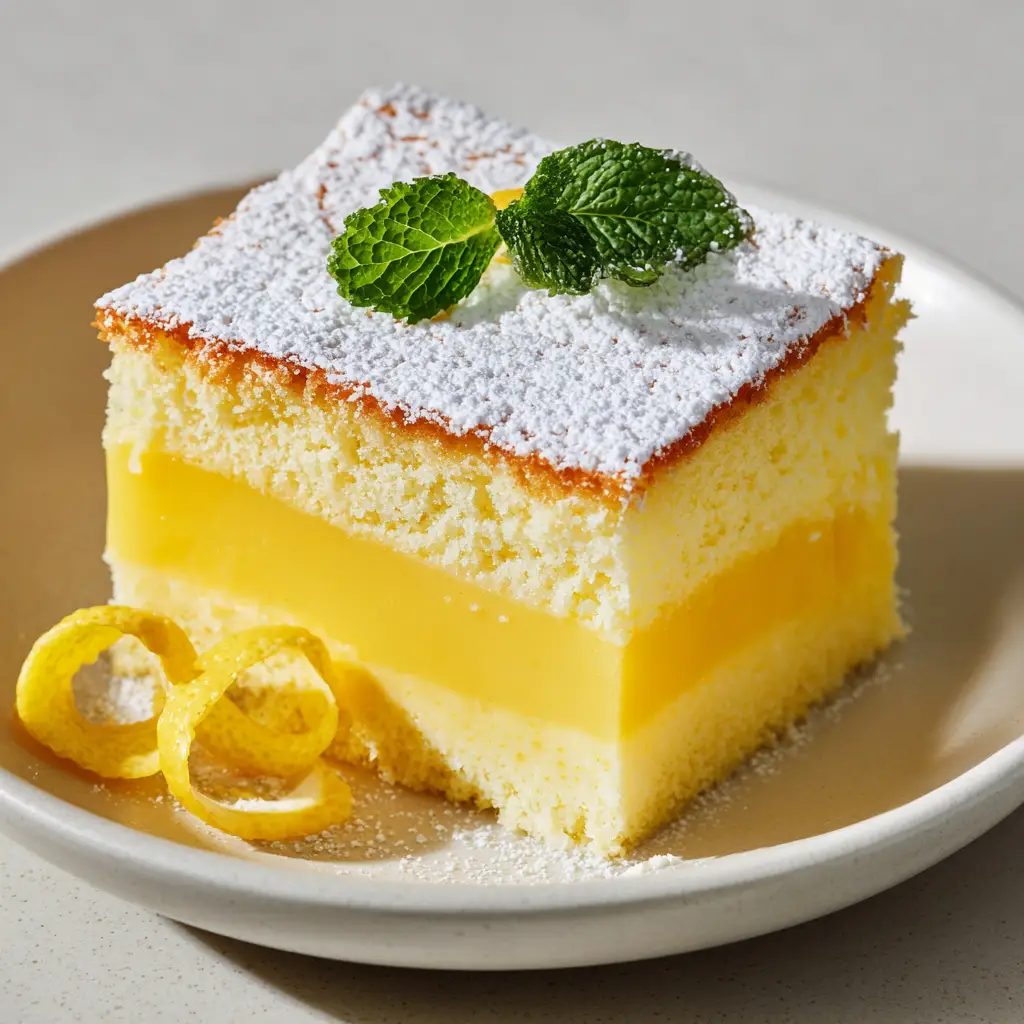
If you have been searching for a dessert that captures the bright, sun-drenched essence of fresh citrus, this is the masterpiece you have been waiting for. The visual contrast between the translucent yellow bottom and the opaque, airy top makes it a showstopper for any gathering.
Our version stays true to the classic technique while ensuring the lemon flavor is bold and refreshing. Every slice is a sensory experience, from the fine dusting of powdered sugar to the aromatic scent of fresh mint and curled lemon zest.
The Visual Allure: What Makes This Magic Cake So Special?
- Dual-Texture Engineering: A heavy, smooth lemon custard sits beneath a delicate, golden-brown sponge layer.
- Vibrant Citrus Palette: The deep yellow base offers a beautiful color gradient against the lighter yellow cake.
- Gourmet Presentation: We finish each piece with a professional dusting of white powdered sugar and fresh greenery.
- Scientific Precision: By utilizing specific ingredient temperatures, we guarantee the “magic” separation every single time.
Essential Components for the Perfect Citrus Separation
Creating a Lemon Custard Cake requires a specific balance of fats, proteins, and liquids. Here is exactly what you need to achieve that signature two-layer look.
Large Eggs (4): These are the structural heart of the cake; you will separate the yolks to build the custard and whip the whites for the sponge. Ensure they are at room temperature for maximum volume.
Granulated Sugar (3/4 cup / 150g): Sugar provides sweetness and helps stabilize the delicate egg white foam. It also aids in the browning of the top surface during the baking process.
Unsalted Butter (1/2 cup / 113g): Melted and slightly cooled butter adds a rich, velvety mouthfeel to the custard layer. High-quality butter ensures a clean, dairy-forward flavor that complements the lemon.
All-Purpose Flour (3/4 cup / 95g): This small amount of flour provides just enough gluten to support the sponge layer without making the custard too thick. It is the “invisible” binder that keeps the layers distinct.
Whole Milk (2 cups / 480ml): Lukewarm milk is vital for the custard base. If the milk is too cold, the butter will seize; if it is too hot, it may scramble the yolks prematurely.
Fresh Lemon Juice (1/4 cup / 60ml) and Zest (1 tbsp): These provide the acidic punch and aromatic oils needed for that bright yellow flavor profile. Never use bottled juice for this recipe!
Vanilla Extract (1 tsp): A hint of vanilla rounds out the acidity of the lemon. It acts as a bridge between the creamy custard and the light cake top.
A Step-by-Step Guide to the Magic Separation Technique
Preparing the Base and Whipping the Foam
Preheat your oven to 325°F (160°C). Grease an 8×8 inch (20x20cm) baking pan thoroughly to ensure the delicate custard doesn’t stick.
In a large mixing bowl, beat the 4 egg yolks and sugar until the mixture is pale and thick. Slowly drizzle in the melted butter and vanilla, whisking constantly until fully incorporated.
Sift in the flour and add the lemon zest. Stir gently until just combined before slowly pouring in the lukewarm milk and lemon juice; the batter will be very thin and liquid, which is normal.
Mastering the Airy Sponge Layer
In a separate, clean glass or metal bowl, beat the 4 egg whites until stiff peaks form. This is the “secret” to the airy top layer—the whites must be firm enough to hold their shape but not dry.
Gently fold the egg whites into the lemon batter using a spatula. Do not over-mix; you want small “clumps” of egg whites floating on the surface, as these form the sponge layer during baking.
Baking for Sensory Perfection
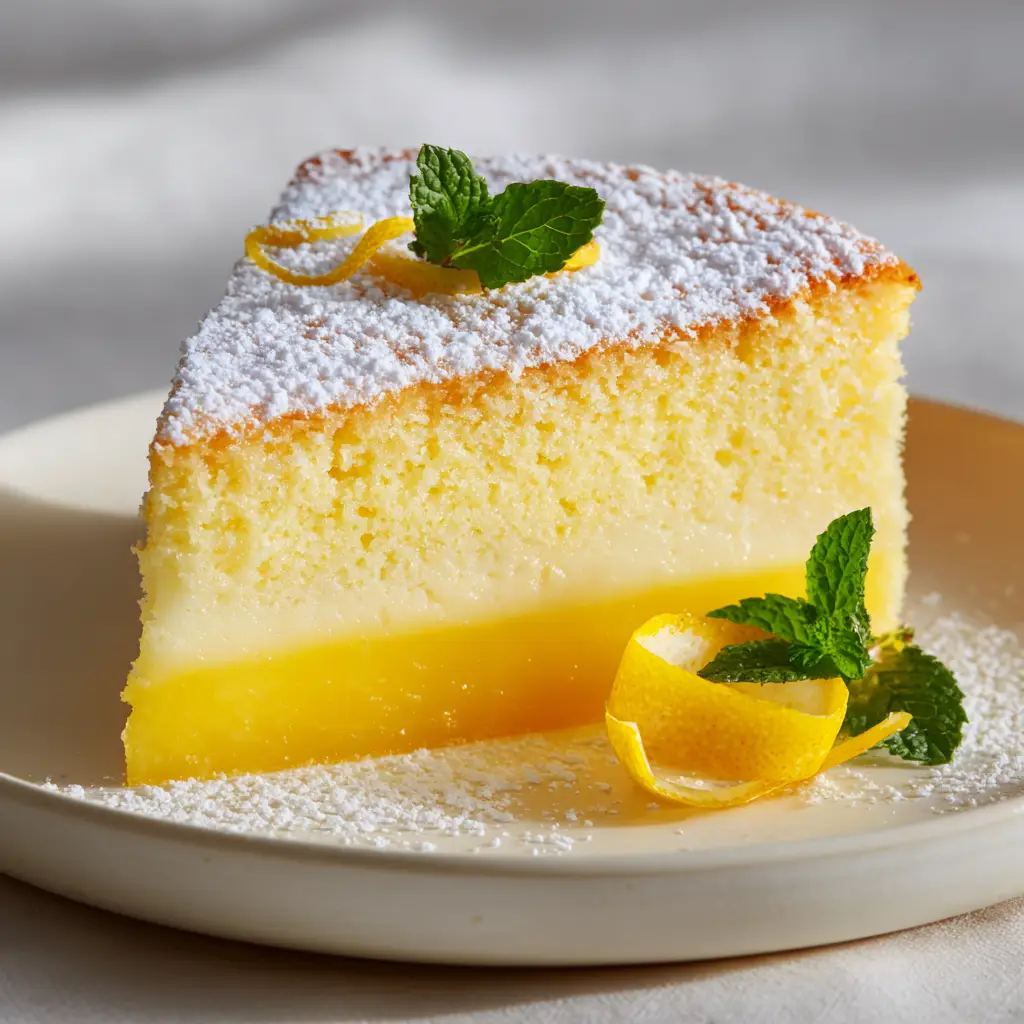
Pour the batter into your prepared pan and bake for 45 to 50 minutes. You are looking for a specific visual cue: the top should be a light golden brown, and the center should have a slight “jiggle” when shaken.
Allow the cake to cool completely in the pan for at least 2 hours. This rest period is essential for the custard to set into its dense, smooth, translucent yellow state.
Expert Tips for Success with Lemon Custard Cake
- Temperature is Key: Ensure your milk is lukewarm and your eggs are room temperature to prevent the fats from clumping.
- Fold, Don’t Stir: When adding the egg whites, use a “cutting” motion with your spatula to preserve the air bubbles.
- The Sift Factor: Sift your powdered sugar through a fine-mesh strainer just before serving to achieve that professional, even “snow” look.
- The Clean Cut: Use a sharp, warm knife to slice the cake, wiping it between cuts to show off the two distinct layers clearly.
Creative Pairings: What to Serve With Your Citrus Masterpiece
While this cake is a star on its own, it pairs beautifully with other vibrant flavors. If you are hosting a full dinner, start with something savory like a creamy roasted garlic lemon pasta to carry the citrus theme throughout the meal.
For a cozy afternoon tea, serve a slice of Lemon Custard Cake alongside some warm rolls with cinnamon honey butter for a sweet and salty contrast. If you’re looking for something lighter, follow up a meal of savory creamy chickpeas with this refreshing dessert.
The Best Way to Store and Refresh Your Cake
This cake is best served chilled or at room temperature. Because of the high egg and milk content in the custard layer, it must be stored in the refrigerator.
Cover the pan tightly with plastic wrap or transfer slices to an airtight container. It will stay fresh and delicious for up to 4 days.
We do not recommend freezing this cake. The delicate structure of the custard can become grainy once thawed, losing that smooth, translucent texture we worked so hard to achieve.
Frequently Asked Questions
Yes, you can substitute the all-purpose flour with a 1:1 gluten-free baking flour blend. Since the flour amount is small, it won’t drastically change the texture of the custard layer.
We highly recommend fresh lemon juice. Bottled juice lacks the vibrant acidity and aromatic oils found in fresh lemons, which are essential for both flavor and the chemical reaction that helps the cake set.
Yes. If the milk is cold, it will cause the melted butter to clump. If it’s too hot, it can cook the egg yolks prematurely. Lukewarm milk ensures a smooth, emulsified custard base.
The top should be a light golden brown and the edges firm, but the center should still have a slight jiggle. It will fully set as it cools for at least 2 hours.
The separation depends on correctly whipping the egg whites to stiff peaks and folding them gently into the thin batter. If you over-mix, the air bubbles escape, and the layers will blend together.
The Complete Lemon Custard Cake Recipe
Lemon Custard Cake: The Ultimate Guide to the Magic Two-Layer Citrus Dessert
Ingredients
Equipment
Instructions
- Preheat your oven to 325°F (160°C). Grease an 8x8 inch square baking pan with butter or cooking spray.
- In a large bowl, beat egg yolks and granulated sugar together until pale and thick. Whisk in the melted butter and vanilla extract.
- Stir in the sifted flour and lemon zest until combined. Slowly pour in the lukewarm milk and lemon juice while whisking gently.
- In a separate clean bowl, beat the egg whites until stiff peaks form.
- Gently fold the egg whites into the batter using a spatula. Leave small clumps of whites on top; do not over-mix.
- Pour the batter into the prepared pan. Bake for 45-50 minutes until the top is golden brown and the center has a slight jiggle.
- Cool completely for 2 hours. Dust with powdered sugar, and garnish with fresh mint and a curled lemon peel before slicing.
Notes
Ensure milk is lukewarm (not cold) to prevent the butter from seizing.
Final Thoughts on the Ultimate Lemon Dessert
This Lemon Custard Cake is more than just a recipe; it is a conversation starter. The way it creates its own layers is a testament to the beauty of culinary science, resulting in a dessert that is as visually stunning as it is delicious.
Whether you are serving this at a spring brunch or as a light summer treat, the combination of tangy lemon and creamy custard is always a winner. If you enjoyed this magic cake, be sure to follow us on Pinterest for more inspired bakes!
Leave a comment below and let us know how your layers turned out—we love hearing from our community of home cooks!