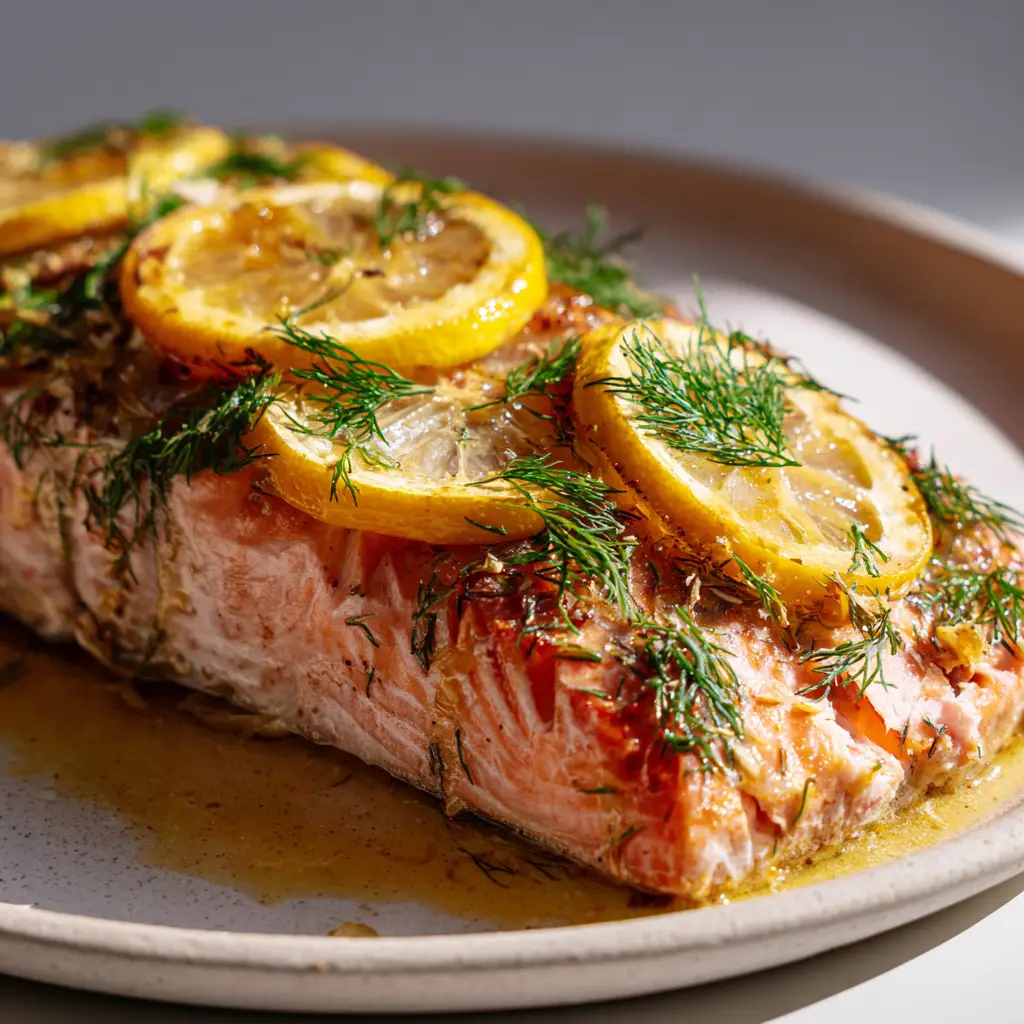
When you imagine the perfect weeknight centerpiece, this Lemon Dill Baked Salmon is exactly what comes to mind. It features a thick, center-cut fillet that is roasted until the edges turn a beautiful golden-brown while the interior remains a perfect, opaque pink. This isn’t just a basic fish recipe; it is a masterclass in balancing acidity, fat, and herbaceous freshness.
The visual appeal of this dish is undeniable, characterized by its flaky texture and the vibrant contrast of fresh green dill against the warm, caramelized yellow of thin lemon slices. Every bite offers a citrus-forward brightness that cuts through the rich, healthy fats of the fish. Whether you are hosting a dinner party or preparing a quick nutritious meal, this recipe delivers restaurant-quality results with minimal effort.
By using a high-heat roasting technique, we achieve those coveted “roasted edges” without drying out the delicate proteins. The natural fats of the salmon meld with the lemon zest to create a light pool of cooking juices that serves as its own built-in sauce. Let’s dive into the culinary science of making this masterpiece in your own kitchen.
Why This Oven-Roasted Salmon Recipe Always Wins
- Perfectly Flaky Texture: We use specific timing to ensure the salmon reaches an opaque pink center that flakes effortlessly with a fork.
- Caramelized Citrus Depth: Unlike raw garnishes, roasting the lemon slices mellows their sharp acidity into a sweet, concentrated syrup.
- High-Impact Aromatics: The combination of fresh dill and cracked black pepper creates a sensory experience that fills your kitchen with an inviting aroma.
- Visual Sophistication: This dish mirrors a professional culinary presentation, complete with roasted edges and a glistening juice drizzle.
Premium Ingredients for the Ultimate Lemon Dill Baked Salmon
Thick Salmon Fillet (approx. 1.5 lbs / 680g): Choose a center-cut piece for even cooking. The thickness is essential for achieving that contrast between the roasted exterior and the tender, opaque pink interior.
Extra Virgin Olive Oil (2 tbsp / 30ml): This acts as our foundational fat. It facilitates the Maillard reaction on the edges of the fish and ensures the seasonings adhere perfectly to the skin and flesh.
Fresh Lemons (2 medium): You will use one for juice and one to be sliced into thin rounds. Roasting the slices is what provides that “caramelized” look and deep, concentrated citrus flavor seen in the blueprint.
Fresh Green Dill (1/2 cup / 15g, finely chopped): Freshness is non-negotiable here. The dill provides the “generous sprinkle” of green that provides the final visual pop and a signature anise-like flavor profile.
Kosher Salt and Coarse Black Pepper (to taste): Salt is the “invisible” essential that draws out moisture to help the edges crisp up, while coarse pepper adds a subtle heat and visual texture.
Unsalted Butter (1 tbsp / 14g, optional): A small pat of butter added during the final minutes of cooking helps create the rich “cooking juice drizzle” that pools at the base of the fish.
Essential Kitchen Tools for Seafood Success
To achieve the specific visual results of a rustic, perfectly roasted fillet, you will need a heavy-duty rimmed baking sheet. This ensures even heat distribution so the edges of the salmon brown at the same rate the center cooks. A sharp chef’s knife is also required for slicing the lemons into thin, uniform rounds that will caramelize rather than just steam.
We also recommend using a piece of parchment paper or a silicone baking mat. This prevents the delicate fish skin from sticking and makes it much easier to collect those precious cooking juices. Lastly, an instant-read meat thermometer is your best friend to ensure you never overcook your salmon again.
Mastering the Perfect Bake: Step-by-Step Guide
Preparing the Salmon for Maximum Flavor
Start by removing your salmon fillet from the refrigerator about 15 minutes before cooking to take the chill off. This ensures the thickest part of the fish cooks evenly without the edges becoming tough. Pat the salmon completely dry with paper towels; moisture is the enemy of the “roasted edges” we are looking for.
Place the fillet on your prepared baking sheet and drizzle with 1 tbsp (15ml) of olive oil. Rub the oil into the flesh, ensuring the sides are also coated. Season generously with kosher salt and coarse black pepper, which provides the foundational seasoning for the Lemon Dill Baked Salmon.
Creating the Caramelized Lemon Layer
Slice your lemon into very thin rounds, roughly 1/8 inch (3mm) thick. Lay three to four of these slices directly on top of the salmon fillet, overlapping them slightly. This placement allows the lemon oils to seep into the fish while the natural sugars in the fruit caramelize under the direct heat of the oven.
Drizzle the remaining olive oil over the lemon slices. This encourages the browning process, giving them those dark, “partially caramelized” edges described in our visual blueprint. The lemon juice that escapes during this process will mingle with the fats to create a delicious sauce.
The Roasting Process and Sensory Cues
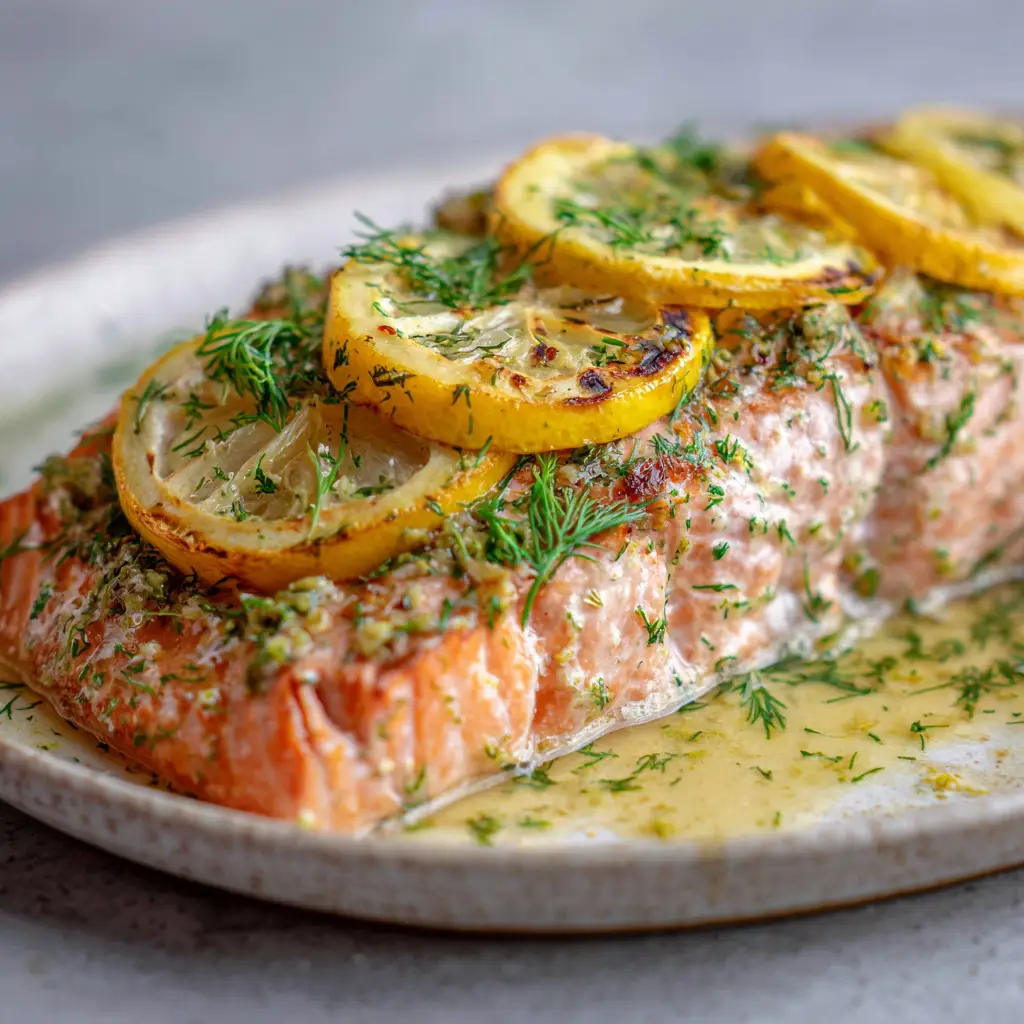
Preheat your oven to 400°F (200°C). Slide the baking sheet into the center rack. Watch for the salmon to change from translucent red to a soft, opaque pink. This transformation usually takes about 12-15 minutes depending on the thickness of the fillet.
Listen for a gentle sizzling sound—this is the fat rendering and the edges of the salmon beginning to crisp. You are looking for the very tips of the lemon slices to turn a deep amber color. Use a thermometer to check for an internal temperature of 135°F (57°C) for a perfect medium-rare that will carry over to a buttery medium.
The Finishing Touches: Dill and Drizzle
Once removed from the oven, let the salmon rest for 3-5 minutes. During this time, the “cooking juices” will pool slightly at the base of the fish. If you used the optional butter, it will have melted into a golden emulsion with the lemon juice and rendered salmon fat.
Take your finely chopped fresh green dill and sprinkle it generously over the entire fillet. The residual heat from the fish will slightly “activate” the dill, releasing its oils without wilting it. Use a spoon to gather the juices from the pan and drizzle them back over the top of the fish for a glossy, professional finish.
Pro Tips for Restaurant-Quality Salmon
- Don’t Skimp on the Dill: The “generous sprinkle” isn’t just for looks; it provides the herbal bridge between the rich salmon and the acidic lemon.
- Check for Pin Bones: Always run your finger along the center of the fillet before seasoning to ensure no small bones remain.
- Skin-Side Down: Always bake salmon skin-side down to protect the delicate flesh from the direct heat of the baking sheet.
- The Broiler Trick: If your lemons aren’t caramelized enough when the fish is done, pop the tray under the broiler for 60 seconds—but watch it like a hawk!
Serving Suggestions and Flavor Pairings
This Lemon Dill Baked Salmon is incredibly versatile. For a complete Mediterranean-inspired feast, serve it alongside this creamy garlic lemon pasta which echoes the citrus notes of the fish. The richness of the pasta balances the flaky texture of the salmon perfectly.
If you are looking for a lower-carb option, this dish pairs beautifully with a fresh Italian grinder salad (minus the bread) or even some savory cloud bread for a gluten-free side. For those who love a variety of seafood, you might also enjoy comparing this flavor profile to our popular cilantro lime salmon or the viral Marry Me Salmon recipe.
Frequently Asked Questions
While you can, fresh dill is highly recommended for this recipe. Fresh dill provides the vibrant green color and delicate anise flavor that dried dill lacks, which can often taste dusty or muted.
Yes, but ensure it is completely thawed and patted dry with paper towels before starting. Frozen salmon often contains more moisture, which can prevent the edges from roasting properly if not dried well.
The secret is high heat (400°F/200°C) and patting the fish completely dry before roasting. This allows the exterior to brown quickly while the thick center remains moist and tender.
The salmon is done when the flesh is opaque pink and flakes easily with a fork. For the best texture, use an instant-read thermometer to check for an internal temperature of 135°F (57°C).
Always bake with the skin on. The skin acts as a protective barrier against the heat of the pan, keeping the fish moist. You can easily slide the meat off the skin once it is cooked.
The Ultimate Lemon Dill Baked Salmon Recipe
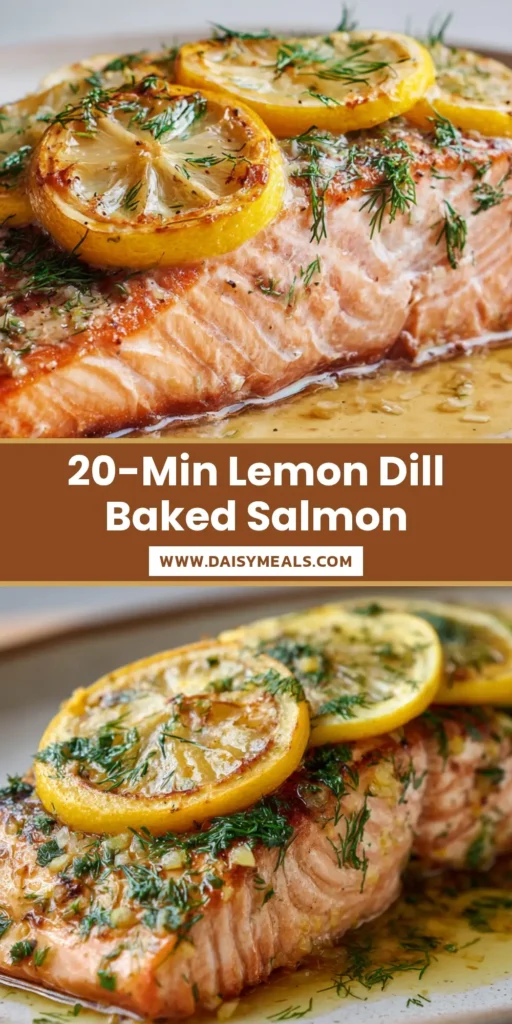
Lemon Dill Baked Salmon with Caramelized Citrus and Fresh Herbs
Ingredients
Equipment
Instructions
- Preheat your oven to 400°F (200°C). Line a rimmed baking sheet with parchment paper. Pat the salmon fillet completely dry with paper towels.
- Place salmon skin-side down on the sheet. Drizzle with 1 tbsp (15ml) olive oil and rub to coat. Season generously with salt and pepper.
- Layer three thin lemon slices on top of the fillet. Drizzle the lemons with the remaining 1 tbsp (15ml) olive oil to assist in caramelization.
- Bake for 12-15 minutes until the salmon is opaque pink in the center and the edges are slightly roasted and browned.
- Remove from oven and let rest for 3 minutes. Generously sprinkle with chopped fresh dill and drizzle with the pan juices before serving.
Notes
Use a thermometer to hit 135°F for the perfect flaky texture.
Closing Thoughts and Joining the Community
Mastering this Lemon Dill Baked Salmon is a gateway to effortless, healthy cooking that never feels like a compromise. The combination of opaque pink flakes, roasted edges, and caramelized citrus creates a profile that is as sophisticated as it is simple. We hope this becomes a staple in your weekly meal rotation!
Did you try this recipe? We would love to hear how your caramelized lemons turned out! Leave a comment below or share your beautiful creations with us by tagging @DaisyMeals on social media. For more visual inspiration and dinner ideas, be sure to follow us on Pinterest and sign up for our newsletter to get new recipes delivered straight to your inbox.