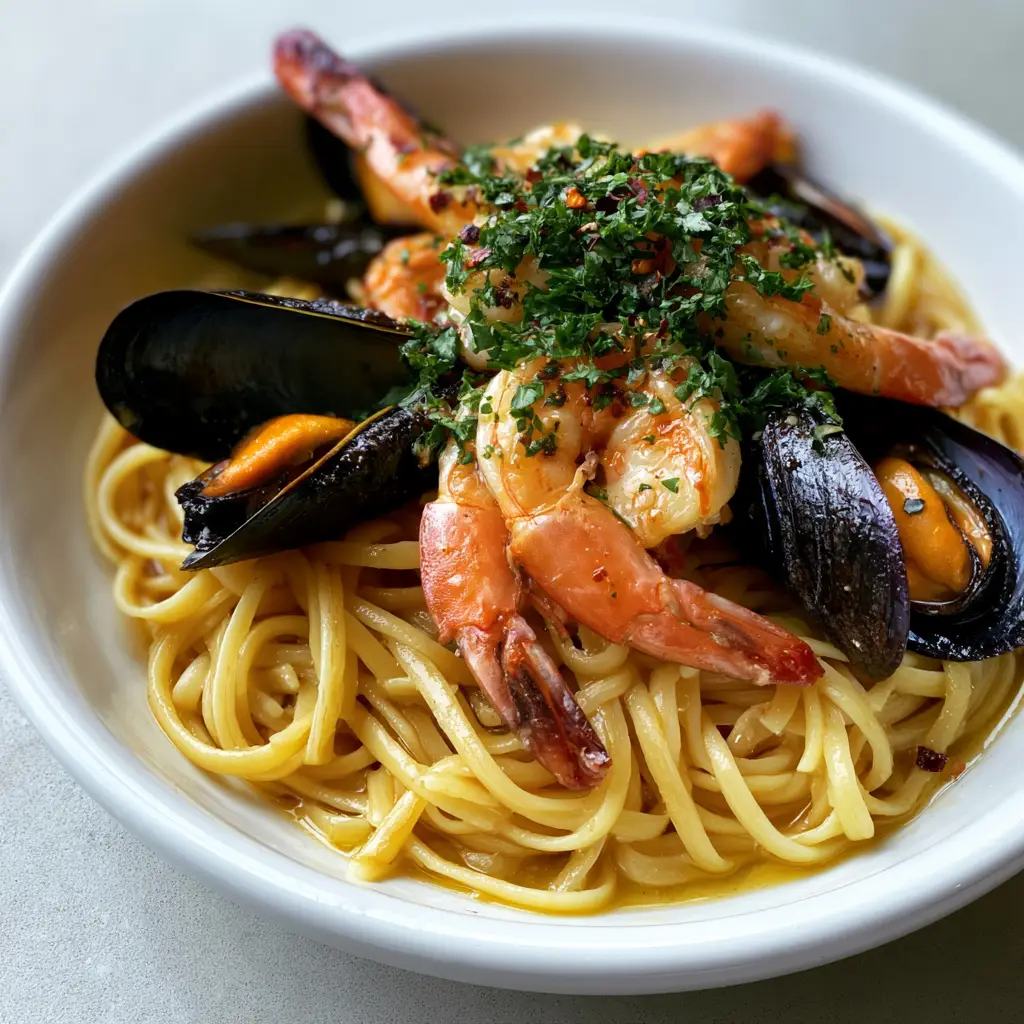
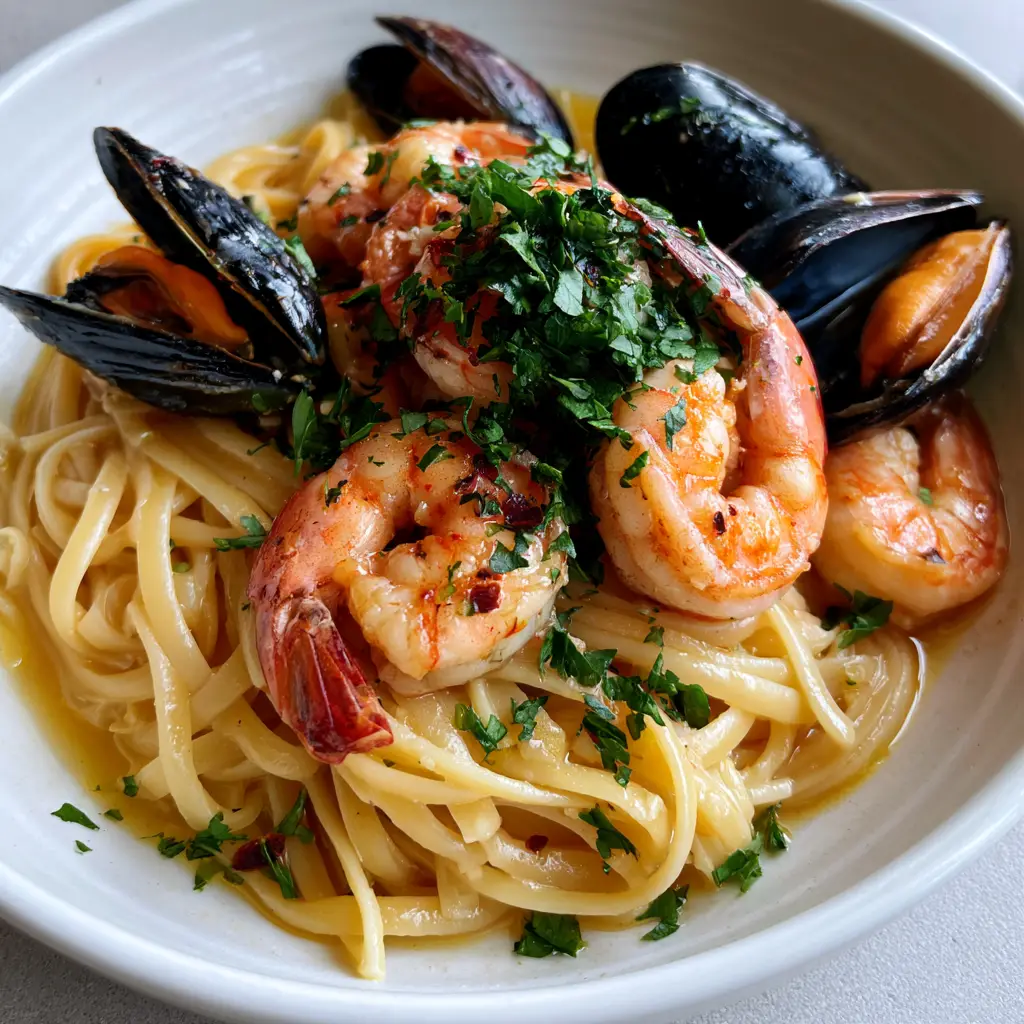
There is nothing quite like the visual allure of a perfectly plated Seafood Linguine Recipe. Imagine a shallow white ceramic bowl, piled high with golden, glossy linguine that glistens under soft natural daylight. Tucked into the pasta are plump, pink-orange seared shrimp and striking black mussel shells that have popped open to reveal tender, orange meat. A generous dusting of finely chopped parsley and a few fiery specks of red pepper flakes complete the rustic, handheld-photo-worthy look.
This Seafood Linguine Recipe isn’t just a feast for the eyes; it is a masterclass in balancing delicate oceanic flavors with a robust garlic butter and white wine sauce. Whether you are hosting a sophisticated dinner party or simply craving a restaurant-quality meal at home, this dish delivers on every sensory promise. The aroma of sizzling garlic and simmering wine will fill your kitchen, signaling that something truly special is about to be served.
Why This Zesty Mediterranean Pasta Will Become Your New Favorite
- Visually Stunning Contrast: The combination of jet-black mussel shells against the vibrant pink shrimp and golden pasta creates a plate that looks like it was styled for a professional editorial.
- Texture Symphony: You will experience the perfect “al dente” bite of the linguine paired with the snap of seared shrimp and the buttery softness of steamed mussels.
- Glossy Emulsified Sauce: We use professional culinary techniques to ensure the white wine and butter form a cohesive, silky glaze that clings to every strand of pasta.
- Balanced Heat and Herby Freshness: The red pepper flakes provide a gentle back-of-the-throat warmth that is immediately brightened by a mountain of fresh parsley.
The Essential Components for an Authentic Seafood Linguine Recipe
To achieve the specific visual and flavor profile described in our blueprint, every ingredient must be selected with care. High-quality seafood is the star, while the pantry staples provide the structural integrity of the sauce.
Linguine Pasta: 1 lb (450g). We use linguine because its flat surface area is superior to spaghetti for capturing the glossy garlic butter sauce. Always cook it in heavily salted water to season the pasta from the inside out.
Large Shrimp (Tails On): 1 lb (450g). Seek out “pink-orange” varieties like Gulf shrimp. Keeping the tails on adds a rustic elegance to the plating and imparts more flavor into the searing oil.
Fresh Black Mussels: 1 lb (450g). These should be tightly closed before cooking. They provide the dramatic visual contrast and a deep, briny essence that defines a true Seafood Linguine Recipe.
Dry White Wine: 1/2 cup (120ml). Choose a crisp wine like Pinot Grigio or Sauvignon Blanc. The acidity is crucial for cutting through the richness of the butter and deglazing the pan to lift those flavorful browned bits.
Unsalted Butter: 4 tbsp (60g). This is the secret to the “glossy, golden-hued” finish. We add it at the end to create a velvety emulsion rather than just oily pasta.
Extra Virgin Olive Oil: 2 tbsp (30ml). This foundational fat allows us to sear the shrimp at a high temperature without burning the butter. It provides the initial “pink-orange” color and caramelized edges.
Fresh Garlic: 6 cloves (30g). Minced finely, this provides the aromatic backbone. Garlic is essential for achieving the fragrant “garlic butter” profile seen in our visual prompt.
Fresh Parsley: 1/2 cup (15g). It must be finely chopped. This isn’t just a garnish; it adds a grassy freshness that balances the heavy seafood notes.
Red Pepper Flakes: 1 tsp (2g). These small red specks add a pop of color and a controlled heat that cuts through the richness of the mussels.
Reserved Pasta Water: 1/2 cup (120ml). This “liquid gold” contains starch that acts as a bridge between the fat of the butter and the liquid of the wine, creating a thick, glossy sauce.
Necessary Tools to Achieve Professional Results
Using the right equipment ensures you get that perfect sear on the shrimp and enough space for the mussels to open fully. A shallow white ceramic bowl is the best vessel for serving, as it allows the seafood to be perched beautifully on top of the pasta mound.
- Large Pasta Pot: For boiling the linguine in plenty of water to prevent sticking.
- Wide Skillet or Sauté Pan: A 12-inch (30cm) pan provides enough surface area to sear the shrimp without crowding them, which would cause them to steam rather than brown.
- Fine Mesh Sieve: For rinsing the mussels and ensuring no grit ends up in your Seafood Linguine Recipe.
- Tongs: Essential for swirling the linguine into a neat mound and precisely placing the mussel shells for the final presentation.
Step-by-Step Evolution of the Perfect Seafood Pasta
1. Preparing the Seafood and Aromatics
Begin by scrubbing the mussels under cold running water. Remove the “beard”—the fuzzy bit sticking out of the shell—by pulling it toward the hinge. Pat the shrimp dry with a paper towel; moisture is the enemy of a good sear. Finely chop your parsley and mince the garlic cloves. Having everything ready (mise en place) is vital because the actual cooking process moves very quickly.
2. Boiling the Linguine to Al Dente
Bring a large pot of water to a rolling boil and add a generous tablespoon of salt. Drop the 1 lb (450g) of linguine and cook for 1-2 minutes less than the package directions. You want the pasta to be slightly firm, as it will finish cooking in the sauce. Before draining, reserve at least 1/2 cup (120ml) of the starchy pasta water. This is the foundation of our glossy coating.
3. Searing the Pink-Orange Shrimp
Heat the olive oil in your wide skillet over medium-high heat until it shimmers. Place the shrimp in the pan in a single layer. Sear for about 2 minutes per side until they turn a vibrant pink-orange and develop a slight golden crust. Remove the shrimp from the pan and set them aside. This ensures they remain plump and tender rather than becoming rubbery during the steaming phase.
4. Steaming the Mussels and Deglazing
In the same pan, lower the heat to medium and add a tablespoon of butter and the minced garlic. Sauté for 30 seconds until fragrant but not browned. Pour in the 1/2 cup (120ml) of white wine, scraping the bottom of the pan to release the fond. Add the mussels and cover the pan with a lid. Steam for 3-5 minutes. You will know they are ready when the black shells pop open to reveal that tender orange meat. Discard any mussels that remain closed.
5. The Final Emulsion and Toss
Add the cooked linguine, the remaining butter, and half of the reserved pasta water to the skillet with the mussels. Toss vigorously over medium heat. The butter will melt and combine with the wine and starch to create a glossy, golden-hued sauce. Add the seared shrimp back into the pan, along with the red pepper flakes and most of the parsley. Toss one last time until every strand of pasta is coated in the shimmering sauce.
Expert Culinary Tips for Seafood Success
- Cold Butter Technique: For an extra glossy sauce, use cold butter at the very end. The slow melting process helps create a more stable emulsion that won’t separate on the plate.
- Don’t Overcook the Seafood: Shrimp and mussels cook incredibly fast. Once the shrimp are pink and the mussels are open, remove them from the heat immediately to preserve their delicate texture.
- Wine Quality Matters: Never cook with a wine you wouldn’t drink. A low-quality “cooking wine” often contains excess salt and can ruin the balance of your Seafood Linguine Recipe.
- Pasta Water Logic: If the sauce looks too thick or dry, add the reserved pasta water one tablespoon at a time. It acts as a natural thickener and lubricant for the dish.
Flavor Pairings: What to Serve Alongside Your Seafood Linguine Recipe
This dish is a complete meal on its own, but a few strategic sides can elevate the experience. For a starter, consider a velvety seafood bisque to set the oceanic tone. If you are serving a larger crowd, an elegant seafood cassolette (coming soon) makes for a stunning companion piece.
To balance the richness of the garlic butter sauce, a side of garlic parmesan roasted potatoes provides a satisfying crunch. If you’re looking for an appetizer with a bit of a kick, these Cajun seafood stuffed potatoes are a fantastic way to introduce more heat before the main course. For a traditional Italian touch, start the meal with homemade arancini (coming soon) to pique the appetite.
Preserving Your Masterpiece: Storage and Reheating
Seafood is best enjoyed immediately, but if you have leftovers, they can be stored in an airtight container in the refrigerator for up to 2 days. To reheat, avoid the microwave, as it will turn the shrimp into rubber. Instead, place the pasta in a skillet with a splash of water or clam juice. Heat gently over low flame until just warmed through.
Freezing is not recommended for this Seafood Linguine Recipe. The texture of the linguine and the delicate mussels will degrade significantly upon thawing, losing that “rustic yet neat” appeal we worked so hard to achieve.
Common Questions About This Mediterranean Classic
Yes, you can use frozen shrimp, but ensure they are completely thawed and patted dry with paper towels before searing. Excess moisture will prevent them from developing that beautiful pink-orange golden crust.
Before cooking, discard any mussels with cracked shells or those that stay open when tapped. After cooking, only eat the mussels that have opened wide; discard any that remain tightly closed.
Yes, leaving the tails on provides a more rustic and professional look, similar to what you see in high-end restaurants. It also adds a bit more depth to the garlic butter sauce during the searing process.
A crisp, dry white wine with high acidity like Pinot Grigio, Sauvignon Blanc, or Muscadet is best. Avoid sweet wines or heavily oaked Chardonnays, as they can overwhelm the delicate flavor of the shrimp and mussels.
A watery sauce usually means it hasn’t emulsified. Make sure to use starchy reserved pasta water and cold butter at the end, tossing the pasta vigorously over medium heat to bind the fats and liquids together.
The Final Plate: A Seafood Linguine Recipe to Remember
Seafood Linguine Recipe: The Ultimate Garlic Butter and White Wine Masterpiece
Ingredients
Equipment
Instructions
- Cook linguine in salted boiling water until 1 minute before al dente. Reserve 1/2 cup pasta water and drain.
- Sear shrimp in olive oil for 2 minutes per side until pink-orange and golden. Remove and set aside.
- Sauté garlic in butter, add wine and mussels. Cover and steam for 3-5 minutes until shells open.
- Toss pasta, remaining butter, and pasta water with mussels. Add shrimp back in with parsley and pepper flakes.
Notes
Discard any mussels that do not open after steaming.
Join the Culinary Conversation!
We hope this Seafood Linguine Recipe brings a taste of the Mediterranean coast to your dining room. The combination of glossy sauce, seared shrimp, and steamed mussels is a timeless classic that never fails to impress. If you enjoyed this recipe, please leave a comment below and tell us how yours turned out! Don’t forget to follow DaisyMeals on Pinterest for more visual recipe inspiration and share your creations with our community.