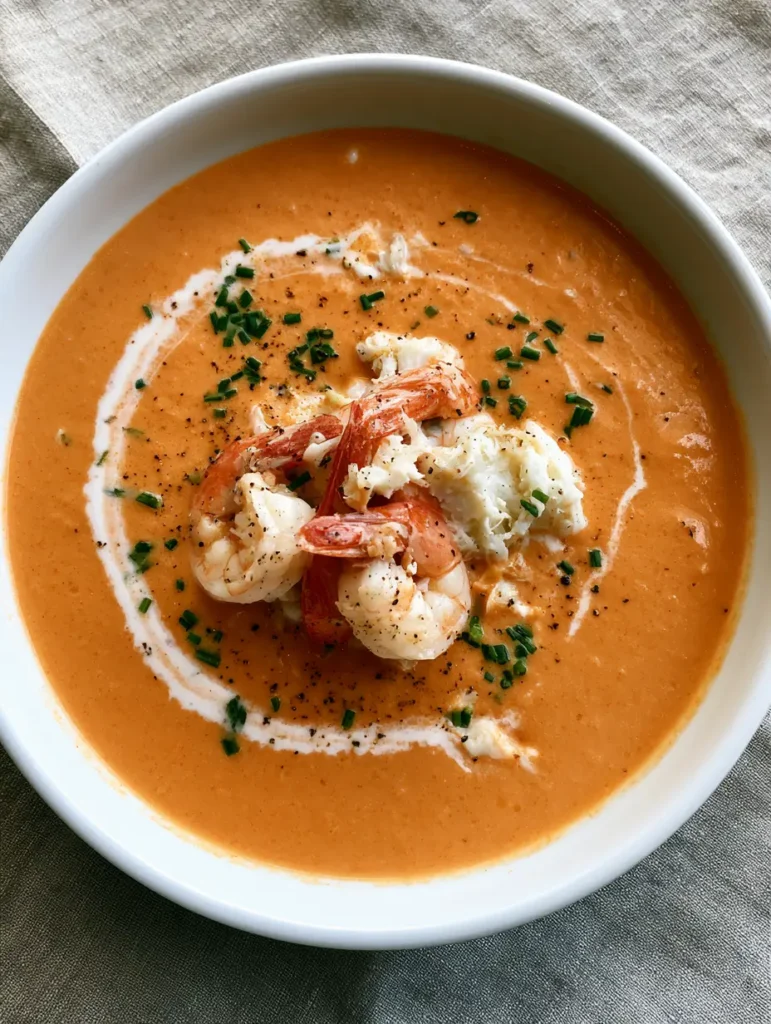
There is nothing quite as sophisticated or soul-warming as a perfectly executed Seafood Bisque. This recipe creates a velvety, thick, and creamy orange-pink broth that serves as the perfect canvas for succulent poached shrimp and jumbo lump crab meat.
In this guide, you will learn how to achieve that signature deep orange hue and rich silken texture seen in high-end coastal bistros. We focus on building layers of flavor through aromatics, deglazing with spirits, and finishing with a delicate cream drizzle.
Whether you are hosting a formal dinner party or simply craving a luxurious weekend meal, this Seafood Bisque delivers on every sensory promise. From the first sight of the tail-on shrimp to the final crack of black pepper, this is culinary excellence in a bowl.
The Signature Textures and Visual Elements of an Elite Bisque
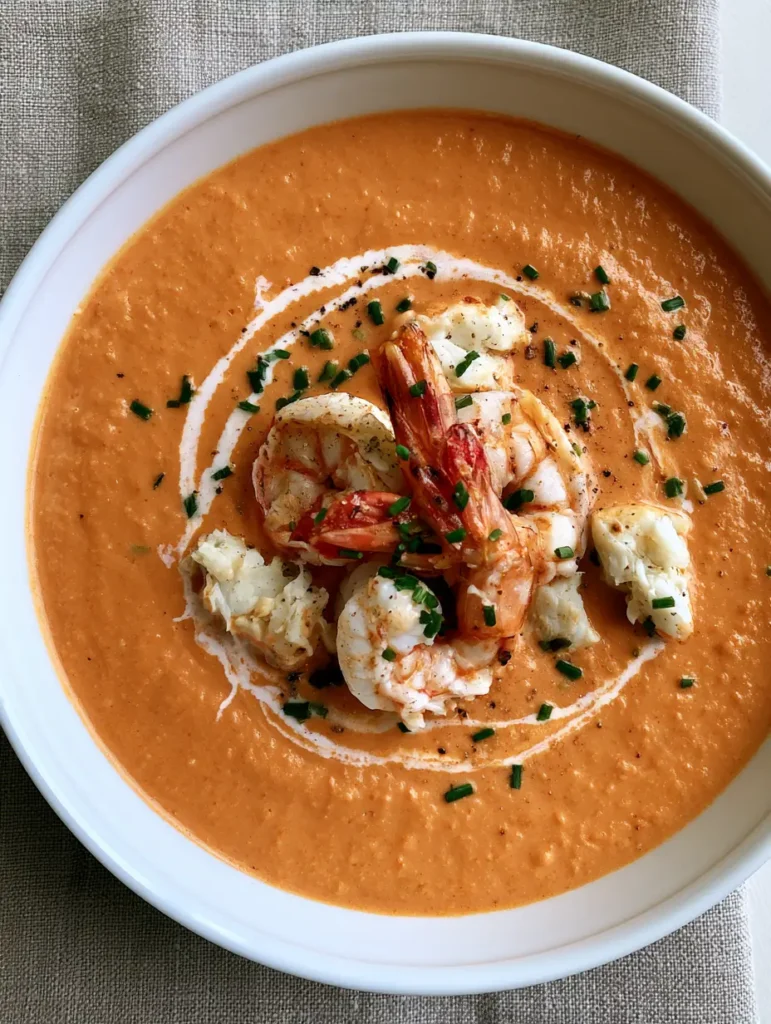
What sets an elite Seafood Bisque apart from a standard seafood soup is the interplay of textures and the specific visual presentation. Our recipe is designed to produce a result that is both aesthetically stunning and gastronomically complex.
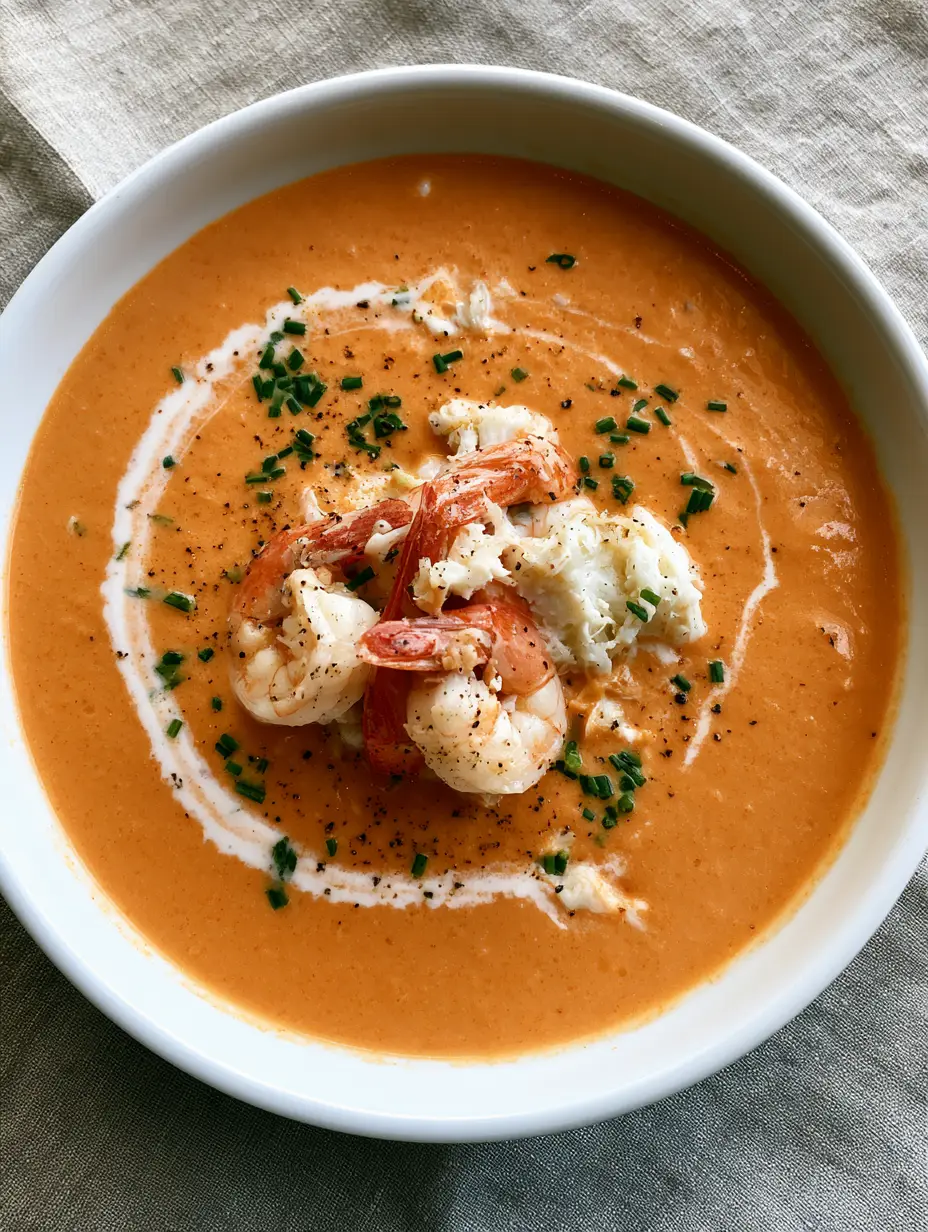
- The Velvety Base: A thick, creamy orange-pink seafood broth that coats the back of a spoon with a glossy sheen.
- Premium Shellfish: Three tender, poached tail-on shrimp and generous clusters of white lump crab meat positioned front and center.
- Artisanal Garnishes: A thin, elegant swirl of white heavy cream contrasted by vibrant green chopped chives and flakes of cracked black pepper.
- Aromatic Depth: A base built on sautéed mirepoix and tomato paste to achieve that deep, sunset-colored finish.
Essential Components for a Rich and Silken Seafood Base
To achieve the specific visual and flavor profile of this Seafood Bisque, we must use a combination of fresh aromatics and high-quality dairy. Every ingredient serves a structural or aesthetic purpose.
Unsalted Butter: 4 tbsp (56g). Butter is the foundational fat used to sauté aromatics and create the roux that thickens our broth to a luscious consistency.
Mirepoix (Onion, Celery, Carrots): 1 cup (150g) finely diced. These vegetables provide the underlying sweetness and savory depth required for a complex seafood profile.
Tomato Paste: 2 tbsp (32g). This is the “secret” to the orange-pink color; it provides umami depth and the specific pigment visible in the final dish.
All-Purpose Flour: 3 tbsp (24g). When combined with butter, flour creates a roux that ensures the bisque remains thick and stable rather than watery.
Seafood Stock: 4 cups (960ml). Use a high-quality stock, preferably made from roasted lobster or shrimp shells, to provide the backbone of the bisque flavor.
Dry Sherry or Brandy: 1/4 cup (60ml). Alcohol acts as a solvent that releases flavor compounds in the tomato paste and aromatics that water alone cannot.
Heavy Cream: 1 cup (240ml). This creates the “creamy” aspect of the Seafood Bisque, lightening the dark stock into that beautiful orange-pink shade.
Tail-On Shrimp: 12 large (approx. 340g). We poach these gently to maintain their tender texture and keep the tails on for a professional, “handheld smartphone photo” aesthetic.
Lump White Crab Meat: 8 oz (225g). Chunks of jumbo lump crab provide a luxurious mouthfeel and a bright white contrast against the orange broth.
Fresh Chives and Black Pepper: For garnishing. These provide the final “scattering” of color and a sharp, spicy bite to cut through the richness of the cream.
Professional Tools for a Perfectly Smooth Consistency
Achieving the texture described in our “Visual Recipe Blueprint” requires a few specific kitchen tools to ensure the soup is free of vegetable chunks and perfectly emulsified.
A heavy-bottomed Dutch oven is essential for even heat distribution during the sautéing and simmering phases. You will also need a fine-mesh sieve or an immersion blender to achieve that “thick, creamy” texture without any gritty vegetable remains.
For the final presentation, a set of white porcelain bowls is recommended. The bright white ceramic makes the orange-pink broth pop, much like the top-down view described in our visual prompt.
Step-by-Step Evolution: From Aromatics to Velvety Bisque
Building the Flavor Foundation
In your Dutch oven over medium heat, melt 4 tbsp (56g) of butter until it begins to foam. Add your finely diced onion, celery, and carrots, sautéing for 8-10 minutes until soft and translucent.
Stir in 2 tbsp (32g) of tomato paste. Cook the paste for 2-3 minutes, stirring constantly, until it turns a deep rusty red and smells slightly sweet; this step is vital for the final orange color of the Seafood Bisque.
The Deglazing and Thickening Process
Sprinkle 3 tbsp (24g) of flour over the vegetables and stir for 1 minute to cook out the raw flour taste. Slowly pour in 1/4 cup (60ml) of sherry or brandy, scraping the bottom of the pot to release any browned bits.
Gradually whisk in 4 cups (960ml) of seafood stock. Bring the mixture to a gentle boil, then reduce heat and simmer for 20 minutes to allow the flavors to meld and the roux to thicken the liquid.
Refining the Texture and Color
For a truly professional result, use an immersion blender to purée the soup until completely smooth. If you desire an even more refined texture, pass the liquid through a fine-mesh sieve into a clean pot.
Stir in 3/4 cup (180ml) of the heavy cream, reserving the rest for the final drizzle. Watch as the dark red-brown liquid transforms into a stunning, thick, creamy orange-pink seafood bisque.
Poaching the Seafood to Perfection
Add the tail-on shrimp to the simmering liquid. Poach them for 3-4 minutes just until they turn pink and opaque. Do not overcook, or they will lose that “tender” quality described in the visual prompt.
Gently fold in 6 oz (170g) of the lump crab meat, leaving the remaining 2 oz for garnish. The heat of the soup will warm the crab through without breaking the delicate lumps.
Expert Tips for a Faultless Seafood Bisque
- Sauté the Tomato Paste: Never skip the step of “frying” the tomato paste in butter; this caramelizes the sugars and prevents the bisque from tasting metallic.
- Temperature Control: When adding the heavy cream, ensure the soup is not at a rolling boil. High heat can cause the dairy to break or curdle.
- Shrimp Preparation: Pat the shrimp dry before adding them to the pot to ensure they poach cleanly in the broth.
- The Cream Drizzle: To get a thin, professional swirl of cream on top, use a small spoon or a squeeze bottle and move in a quick circular motion.
Preserving the Freshness: Storage and Reheating
Seafood Bisque is best enjoyed immediately, but leftovers can be stored in an airtight container in the refrigerator for up to 2 days. Because of the high dairy content, the texture may thicken further when chilled.
To reheat, place the bisque in a small saucepan over low heat. Stir frequently and add a splash of seafood stock or water if the consistency has become too thick. Avoid boiling, as this will toughen the already-poached shrimp and crab.
We do not recommend freezing this recipe. The heavy cream and the delicate fibers of the lump crab meat do not hold up well to the freezing and thawing process, often resulting in a grainy texture.
Complementary Pairings for a Coastal Feast
This Seafood Bisque is incredibly rich, making it the perfect lead-in to a lighter seafood main or a hearty side. For a thematic dinner, consider serving it before a plate of fresh seafood linguine.
If you are looking for a more casual pairing, a side of garlic parmesan roasted potatoes provides a satisfying crunch that contrasts the silken soup. For those who enjoy bold flavors, try starting the meal with prosciutto wrapped mozzarella for a salty, savory appetizer.
For a truly decadent evening, follow this bisque with a light dessert like lemon rice krispie treats to cleanse the palate with bright citrus notes.
Answering Your Bisque Questions
Yes, but ensure they are completely thawed and patted dry. For the best visual appeal, look for tail-on shrimp and ‘jumbo lump’ crab meat to maintain those distinct white chunks seen in the photos.
The signature color comes from sautéing tomato paste in butter until it caramelizes, then deglazing with sherry and finishing with heavy cream. This sequence transforms the deep red paste into a vibrant orange-pink hue.
Because it contains both seafood and heavy dairy, it is best consumed within 48 hours. Reheat it gently over low heat to prevent the shrimp from becoming rubbery.
If you prefer not to use alcohol, you can substitute with additional seafood stock and a teaspoon of lemon juice for acidity, though you will lose some of the traditional aromatic depth found in classic bisque.
A grainy texture usually occurs if the aromatics aren’t puréed enough or if the cream curdles at a boil. To ensure a thick, smooth consistency, use a roux (butter and flour) and pass the final soup through a fine-mesh sieve.
The Signature Seafood Bisque Recipe
Seafood Bisque: The Ultimate Creamy Restaurant-Style Recipe with Shrimp and Crab
Ingredients
Equipment
Instructions
- Melt butter in a Dutch oven. Add mirepoix and sauté until soft (8-10 mins). Stir in tomato paste and cook for 2 mins until rusty red.
- Stir in flour for 1 min. Deglaze with sherry, scraping the bottom of the pan. Gradually whisk in seafood stock.
- Bring to a boil, then reduce heat and simmer for 20 minutes.
- Use an immersion blender to purée the soup until smooth. Stir in 3/4 cup (180ml) of heavy cream.
- Add shrimp and poach for 3-4 minutes until opaque. Fold in most of the lump crab meat gently.
- Ladle into bowls. Drizzle with reserved cream, top with remaining crab, chives, and black pepper.
Notes
Always 'fry' your tomato paste to develop the deep orange color.
Final Thoughts on This Coastal Classic
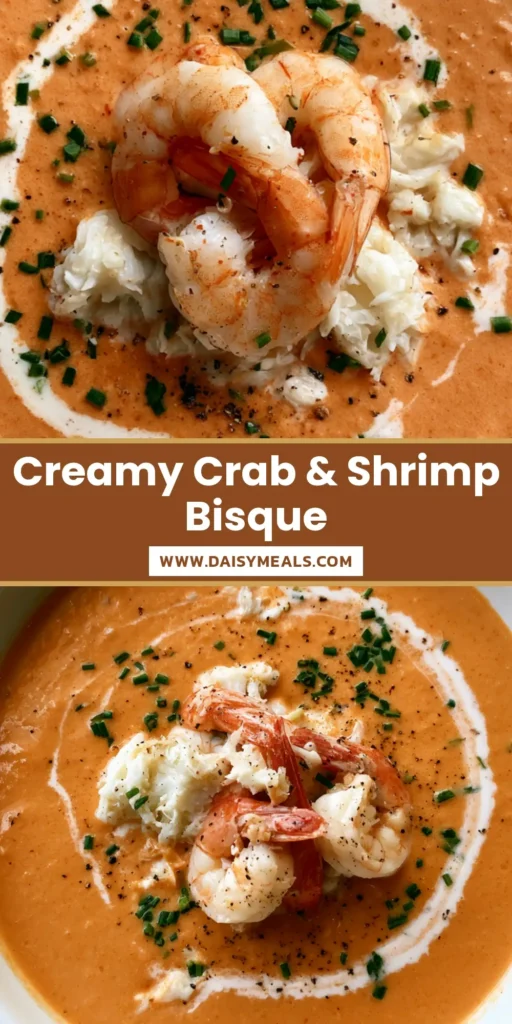
Crafting a restaurant-quality Seafood Bisque at home is a rewarding culinary journey. By focusing on the visual cues—the orange-pink hue, the swirl of cream, and the fresh chives—you create a meal that is as beautiful as it is delicious.
We invite you to share your results and tag us in your photos! If you enjoyed this recipe, please leave a comment below and follow us on Pinterest for more gourmet inspiration.