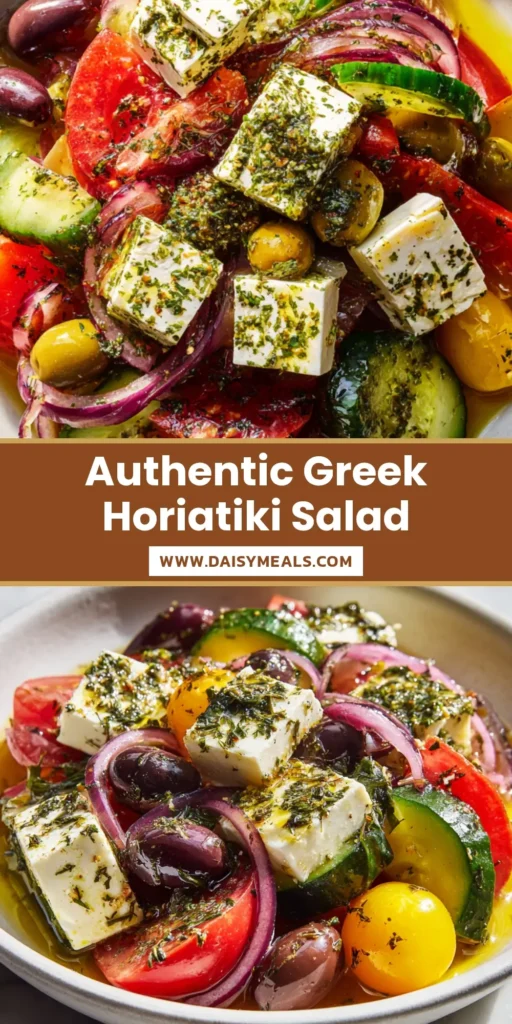
There is nothing quite like a true Greek Horiatiki Salad to transport your senses straight to a sun-drenched taverna on the Mediterranean coast. Unlike the “Greek salads” often found in Western supermarkets that are padded with leafy greens, an authentic Horiatiki is a robust, rustic celebration of peak-summer produce. This recipe focuses on the vibrant colors and structural integrity of the vegetables, ensuring every bite is a perfect balance of salty, tangy, and sweet.
The visual appeal of this dish is undeniable, featuring a striking contrast between deep red tomato wedges and bright yellow cherry tomato halves. These sit nestled against thick-cut, dark-skinned cucumbers and delicate rings of red onion. The crowning glory is the large, solid cubes of white feta cheese, all glistening under a generous pour of golden-green olive oil vinaigrette and a heavy dusting of fresh herbs.
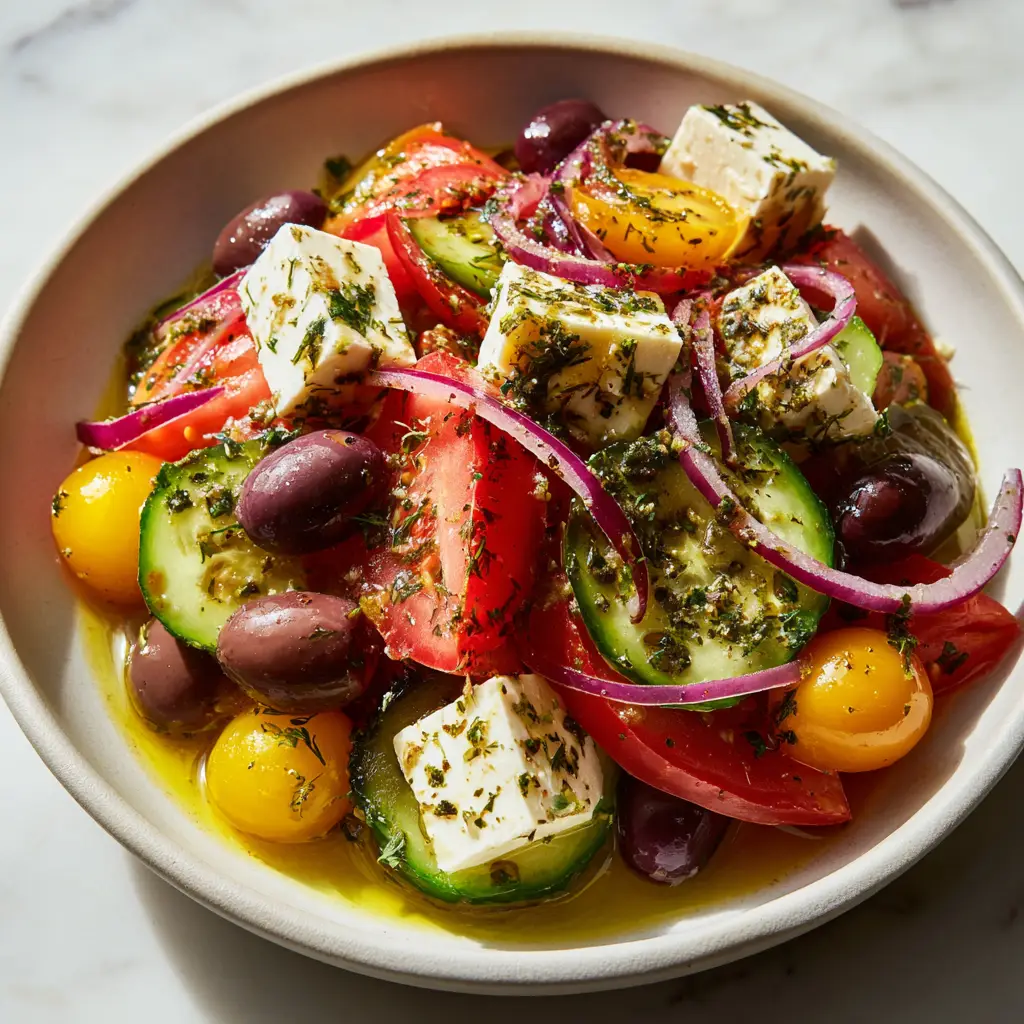
Why You Will Crave This Authentic Mediterranean Village Salad
- Unmatched Texture: The combination of crisp cucumbers, juicy tomatoes, and creamy feta creates a multidimensional mouthfeel.
- Visual Vibrancy: The use of both red and yellow tomatoes, along with two types of olives, makes this a stunning centerpiece for any table.
- Zero-Cook Efficiency: Perfect for hot summer days, this recipe requires absolutely no heat, just a sharp knife and quality ingredients.
- Nutrient Dense: Packed with heart-healthy monounsaturated fats from olive oil and a rainbow of antioxidant-rich vegetables.
The Anatomy of a Perfect Horiatiki: Ingredients and Substitutions
To achieve the specific visual and flavor profile described in our blueprint, the quality of your ingredients is paramount. Each component plays a specific role in the structural and sensory success of the salad.
Red Vine-Ripened Tomatoes: 3 large (approx. 450g) tomatoes provide the juicy, acidic base that creates the natural “juice” at the bottom of the bowl. Cut these into substantial wedges to ensure they don’t break down too quickly.
Yellow Cherry Tomatoes: 1 cup (150g) of yellow cherry tomato halves add a pop of bright color and a concentrated sweetness that balances the larger red wedges. Their firm skin helps maintain the salad’s height in the bowl.
English or Persian Cucumbers: 1 large (300g) cucumber, sliced into thick rounds. We keep the dark green skin on for both the nutritional value and the specific visual contrast required for an authentic look.
Red Onion: 1/2 small (50g) red onion, sliced into paper-thin translucent rings. These provide a sharp bite without overpowering the delicate flavors of the tomatoes; if they are too pungent, soak them in cold water for 5 minutes first.
Kalamata Olives: 1/2 cup (75g) whole Kalamata olives. These almond-shaped purple olives offer a deep, fruity, and slightly smoky saltiness that is essential for the traditional flavor profile.
Whole Green Olives: 1/2 cup (75g) whole green olives (such as Castelvetrano or Halkidiki). These add a buttery, mild contrast to the sharp Kalamata olives and enhance the visual “vibrancy” of the dish.
Block Feta Cheese: 7 oz (200g) of high-quality sheep’s milk feta. Instead of crumbling it, cut the feta into large, “imperfect” cubes to sit atop the vegetables, just as you would see in a Greek village.
Extra Virgin Olive Oil: 1/3 cup (80ml) of the highest quality yellow-green oil you can find. This is the “invisible” binder that carries the flavor of the herbs and creates that signature pool of dressing at the bottom.
Red Wine Vinegar: 2 tbsp (30ml) to provide the necessary tang. This acid helps soften the onions slightly and brightens the flavor of the heavy olive oil.
Fresh Herbs (Oregano & Parsley): 2 tbsp (10g) each of finely chopped fresh oregano and parsley. While dried oregano is common, using fresh herbs provides a dark green color and a floral note that elevates the entire dish.
Sea Salt & Black Pepper: 1/2 tsp (3g) of each to taste. The salt is crucial as it draws the moisture out of the tomatoes, mixing with the oil to create a natural sauce.
Essential Tools for Culinary Success
Achieving the precise cuts for this Greek Horiatiki Salad requires a few basic but high-quality tools. A sharp Chef’s knife is non-negotiable for slicing the tomatoes without crushing them and achieving those paper-thin onion rings.
You will also need a shallow white ceramic bowl. The shallow depth is important as it allows the dressing to pool visibly around the base of the vegetables rather than getting lost at the bottom of a deep bowl. Finally, a small glass jar is perfect for emulsifying your vinaigrette before pouring.
Step-by-Step Evolution of a Greek Horiatiki Salad
1. Prepare the Vegetable Foundation
Start by washing all your produce thoroughly in cold water. Cut the large red tomatoes into thick, rustic wedges and place them into your shallow ceramic bowl. Slice the yellow cherry tomatoes in half vertically and scatter them over the red wedges. The goal is to see a mixture of sizes and shades of red and gold immediately.
2. Add the Crisp Elements
Slice your cucumber into rounds approximately 1/2 inch (1.25cm) thick. If using a long English cucumber, you may want to half-moon the slices if they are exceptionally wide, but keep the dark green skin intact. Add these to the bowl along with the thin-sliced red onion rings. Use your fingers to gently separate the onion layers so they drape over the vegetables like delicate purple ribbons.
3. Incorporate the Briny Components
Drain your Kalamata and green olives from their brine. Scatter them whole throughout the salad. Leaving the olives whole is a hallmark of the authentic style and prevents the salad from becoming overly salty or stained by the olive juices. If you enjoyed this texture, you might also like our refreshing cucumber pepper salad.

4. Whisk the Yellow-Green Vinaigrette
In a small jar or bowl, combine the extra virgin olive oil, red wine vinegar, salt, and black pepper. Whisk vigorously until the oil and vinegar have temporarily emulsified. The dressing should have a distinct yellow-green hue. Pour the dressing generously over the salad, ensuring it coats every piece of vegetable and begins to pool at the base of the bowl.
5. The Feta and Herb Finale
Carefully cut your block of feta into large, solid cubes. They don’t need to be perfectly uniform; an “imperfect” look adds to the rustic charm. Place these cubes on top of the salad. Finally, take your finely chopped fresh oregano and parsley and sprinkle them heavily over the feta and the surrounding vegetables. The dark green herbs should be clearly visible against the white cheese.
Expert Tips for a Visual Masterpiece
- Temperature Matters: Serve the salad slightly below room temperature. Cold tomatoes lose their flavor, but a slight chill keeps the cucumbers extra crisp.
- The “Papara” Factor: In Greece, the best part is the “papara”—dipping crusty bread into the leftover oil and tomato juice. Always serve this with a side of bread using our flaky pastry tips or a rustic loaf.
- Herb Timing: Add the fresh herbs at the very last second. Fresh oregano can darken quickly once exposed to the acid in the vinegar.
- Quality of Oil: Use an oil that is peppery and fresh. Since the dressing pools at the bottom, it acts as a dipping sauce, so the flavor of the oil is very prominent.
Storage and Freshness Guidelines
A Greek Horiatiki Salad is best enjoyed within 30 minutes of assembly. The salt in the dressing will eventually draw too much water out of the tomatoes, leading to a soggy texture. If you must prepare it in advance, chop the vegetables but keep the dressing, feta, and herbs separate until the moment of serving.
Leftovers can be stored in an airtight container in the refrigerator for up to 24 hours. While the vegetables will soften, the flavors will marinate beautifully. This salad is not suitable for freezing.
Perfect Pairings for a Mediterranean Feast
This salad is substantial enough for a light lunch, but it truly shines when served alongside other Mediterranean-inspired dishes. For a full spread, consider serving it with our zesty pasta salad for a variety of grains, or perhaps some garlic parmesan roasted potatoes for a warm, starchy contrast.
If you are looking for a savory appetizer to start the meal, a savory onion tart provides a wonderful sweetness that complements the salty feta of the Horiatiki. For protein, this salad pairs exceptionally well with grilled chicken or a rich steak with peppercorn sauce.
Frequently Asked Questions
While dried oregano is common in Greece, this specific recipe uses fresh oregano for a brighter green color and a more floral, less bitter aroma that matches the visual blueprint.
For this recipe, we keep the skin on. The dark green skin provides a necessary visual contrast and maintains the cucumber’s structural integrity when tossed with the heavy dressing.
No, traditional Greek salads feature a large block or several large cubes of feta placed on top. This prevents the cheese from dissolving into the dressing and keeps the flavors distinct.
Use an Extra Virgin Olive Oil, preferably a Greek variety like Koroneiki. It should have a vibrant yellow-green color and a slightly peppery finish to stand up to the acidity of the vinegar.
An authentic ‘Horiatiki’ or village salad never contains lettuce. It relies on the juice of the tomatoes and the crunch of the cucumbers for its volume and texture.
Authentic Greek Horiatiki Salad Recipe Card
Greek Horiatiki Salad: The Ultimate Authentic Village Recipe
Ingredients
Equipment
Instructions
- Cut red tomatoes into wedges and halve the yellow cherry tomatoes. Slice the cucumber into thick rounds and the onion into thin rings.
- Place all vegetables and both types of whole olives into a shallow white ceramic bowl.
- Whisk olive oil, vinegar, salt, and pepper until emulsified. Pour over the salad until it pools at the bottom.
- Top with large feta cubes and a heavy sprinkle of finely chopped oregano and parsley.
Notes
Don't peel the cucumbers; the dark skin provides essential crunch and visual contrast.
Share This Taste of the Mediterranean!
We hope this Greek Horiatiki Salad brings a burst of Mediterranean sunshine to your kitchen! The secret lies in the simplicity and the quality of your produce. If you enjoyed this recipe, please leave a comment below and let us know how yours turned out. Don’t forget to follow us and pin these vibrant images to your boards on Pinterest so you can save this recipe for your next summer gathering!