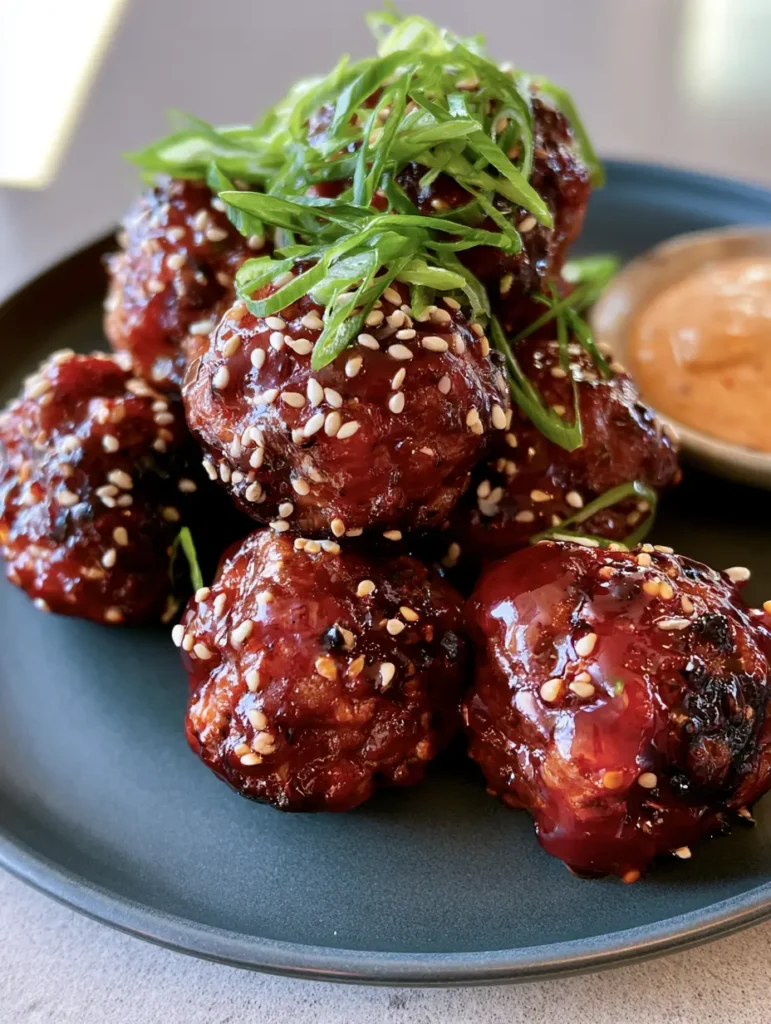
Korean BBQ Meatballs are the ultimate fusion of comfort food and bold, vibrant flavors. Imagine tender, juicy spheres of savory meat, seared to perfection and drenched in a thick, translucent, dark red-brown glossy glaze that strikes the perfect balance between sweet, spicy, and savory. These aren’t just your average appetizers; they are a sensory experience that brings the essence of a bustling Seoul street market right into your home kitchen.
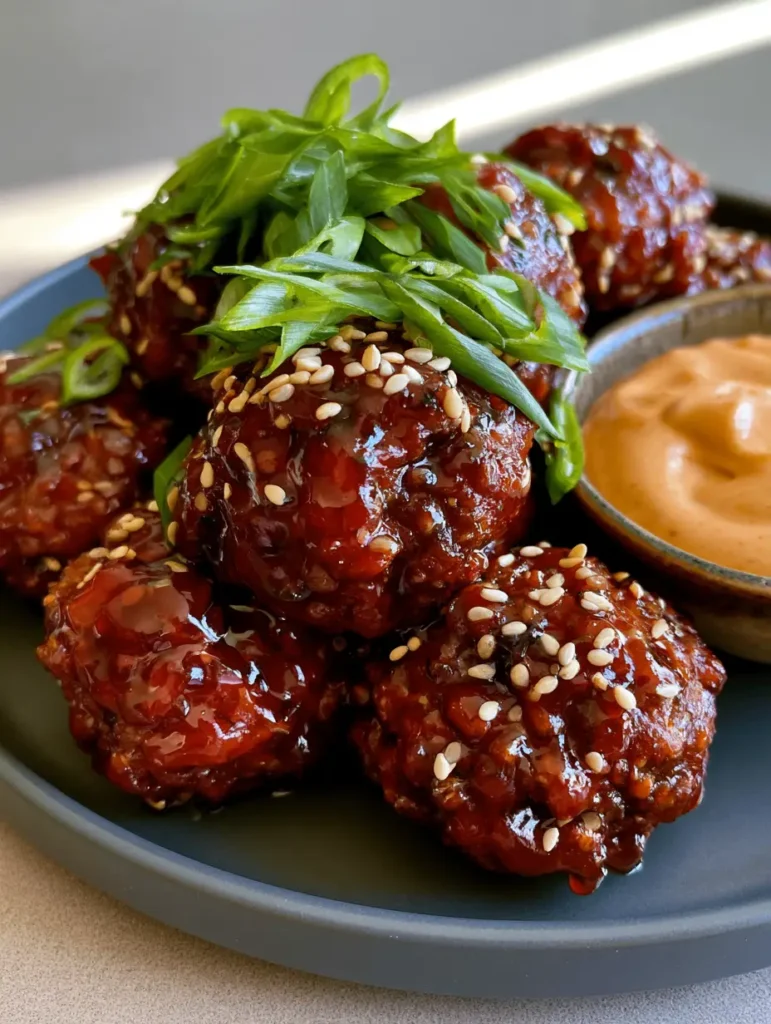
The visual appeal of these Korean BBQ Meatballs is undeniable. From the deep crimson hue of the gochujang-based sauce to the bright pop of fresh green scallions and the crunch of toasted white sesame seeds, every element is designed to entice. Served alongside a smooth, light-orange spicy mayo, this dish offers a complexity of textures and temperatures that will keep your guests coming back for “just one more.”
The Anatomy of the Perfect Umami Meatball
What makes these Korean BBQ Meatballs truly stand out is the meticulous layers of flavor built into every bite. By combining traditional meatball techniques with authentic Korean aromatics, we create a dish that is structurally sound yet incredibly tender. The high-heat sear locks in moisture, while the final reduction in the sauce ensures that every millimeter of the surface is coated in a sticky, mirror-like finish.
- The Sear: A deep golden-brown crust provides a structural contrast to the succulent interior.
- The Glaze: A dark red-brown, glossy reduction of gochujang and honey that clings to the meat.
- The Texture: A delicate balance of soft meat, crunchy sesame seeds, and crisp green onions.
- The Dip: A cool, creamy, light-orange spicy mayo that cuts through the heat of the gochujang.
Foundational Pantry Staples for Authentic Flavor
To achieve the specific visual and flavor profile required for authentic Korean BBQ Meatballs, you need a mix of fresh produce and specialty fermented pastes. Each ingredient serves a scientific purpose, from binding the proteins to creating that signature translucent sheen on the glaze.
Lean Ground Beef or Pork: 1 lb (450g) of meat provides the structural base. Using a 15-20% fat content ensures the meatballs remain juicy even after searing at high temperatures.
Gochujang (Korean Chili Paste): 1/4 cup (65g) is the heart of the glaze. This fermented paste provides the deep, dark red color and a complex, funky heat that cannot be replicated by standard chili sauces.
Panko Breadcrumbs: 1/2 cup (60g) acts as the panade base. When combined with liquid, these large-flake crumbs create a tender “lift” within the meatball, preventing them from becoming dense or rubbery.
Toasted Sesame Oil: 1 tbsp (15ml) adds an unmistakable nutty aroma. This oil has a low smoke point, so it is mixed into the meatballs rather than used for frying to preserve its delicate flavor.
Fresh Garlic and Ginger: 1 tbsp (15g) of each, finely minced. These aromatics provide the sharp, bright top notes that balance the heavy, fermented flavors of the gochujang glaze.
Honey or Brown Sugar: 3 tbsp (45ml) is essential for the glaze’s viscosity. The sugar caramelizes during the final toss, creating the glossy, translucent finish seen in professional culinary photography.
Kewpie Mayo and Sriracha: 1/2 cup (120ml) mayo and 1 tbsp (15ml) sriracha create the dipping sauce. Kewpie (Japanese mayo) is preferred for its extra-creamy texture and slightly sweet profile, resulting in that perfect light-orange hue.
Scallions and Sesame Seeds: 2 large green onions and 1 tsp (5g) white sesame seeds. These are not just garnishes; they provide the necessary visual contrast and fresh finish to the heavy, glazed meatballs.
Essential Culinary Tools for a Professional Sear
To recreate the exact visual from our recipe blueprint, you need tools that manage heat effectively. A heavy-bottomed cast-iron skillet or a high-quality stainless steel pan is vital for achieving the dark, seared crust on the Korean BBQ Meatballs without burning the delicate aromatics inside.
You will also need a wire whisk to emulsify the spicy mayo into a perfectly smooth, light-orange consistency. For the glaze, a silicone spatula is recommended to ensure you can toss the meatballs gently, coating them entirely in the thick sauce without breaking their structure.
The Multi-Stage Path to Glazed Perfection
Crafting the Meatball Base
In a large mixing bowl, combine your ground meat with the panko, egg, minced garlic, ginger, and soy sauce. Use your hands to mix gently until just combined; overworking the meat will result in a tough, dense texture. Roll the mixture into approximately 1.5-inch (4cm) spheres, ensuring they are smooth to promote an even sear.
The High-Heat Sear and Caramelization
Heat 2 tbsp (30ml) of neutral oil in your skillet over medium-high heat until it begins to shimmer. Carefully add the Korean BBQ Meatballs, leaving space between each one to avoid steaming. Sear for 2-3 minutes per side until a deep golden-brown crust forms. This “Maillard reaction” is what gives the meatballs their professional, dark-toned appearance.
Reducing the Glossy Gochujang Glaze
In a small bowl, whisk together the gochujang, honey, soy sauce, and a splash of water. Once the meatballs are nearly cooked through, pour the sauce into the hot skillet. The liquid will bubble and hiss immediately. Continuously toss the meatballs for 2-4 minutes as the sauce reduces into a thick, translucent, dark red-brown glossy glaze that clings to every curve of the meat.
Emulsifying the Signature Spicy Mayo Dip
While the meatballs rest, whisk together the mayo, sriracha, and a squeeze of lime juice in a small ramekin. Continue whisking until the color is a uniform, light-orange and the texture is completely smooth. This provides the creamy cooling element that balances the spicy intensity of the glaze.
Pro-Level Secrets for Culinary Success
- Wet Your Hands: When rolling the meatballs, lightly dampen your palms with water to prevent the meat from sticking and to create a perfectly smooth surface for the glaze.
- Don’t Crowd the Pan: Searing in batches ensures the pan temperature remains high, resulting in that critical dark-brown crust rather than a gray, boiled look.
- The Glaze “Nappe”: The sauce is ready when it reaches the ‘nappe’ stage—it should be thick enough to coat the back of a spoon and hold a line when you draw your finger through it.
- Freshness Matters: Only slice your scallions and toast your sesame seeds right before serving to maintain the vibrant green color and the maximum aromatic oils.
Preserving Flavor: Storage and Reheating
Korean BBQ Meatballs make for incredible leftovers, as the flavors in the gochujang glaze continue to develop over time. Store them in an airtight container in the refrigerator for up to 4 days. When reheating, avoid the microwave if possible, as it can make the glaze gummy.
For the best results, reheat the meatballs in a pan over low heat with a tablespoon of water. This thins the glaze slightly so it can recoat the meat without burning. The spicy mayo should be stored separately and can last up to a week in the fridge.
Incredible Pairings to Round Out Your Meal
These Korean BBQ Meatballs are versatile enough to serve as a main course or a standout appetizer. For a complete dinner, serve them over a bed of fluffy white rice or alongside some garlic parmesan roasted potatoes for a fusion twist. The creamy dip also pairs beautifully with crunchy textures, similar to the coating on korean baked cauliflower.
If you are hosting a party, consider creating a “BBQ spread” by pairing these with honey bbq chicken bites and prosciutto wrapped mozzarella for a variety of flavor profiles. For a light lunch option, these meatballs are fantastic when tucked into a wrap, much like the flavors found in a bbq bacon ranch blt (coming soon).
Common Questions About Korean-Style Meatballs
Yes! Cook them at 400°F (200°C) for 10-12 minutes, then toss them in the prepared glaze in a saucepan to achieve the glossy, sticky finish.
The secret is the sugar content (honey or brown sugar) and ensuring the sauce reduces in the hot pan until it bubbles vigorously and thickens into a syrup.
Gochujang has a medium heat level, but it is more famous for its deep, fermented umami and sweetness. In this glaze, the honey balances the spice beautifully.
A blend of 80/20 ground beef or a 50/50 mix of beef and pork is best. The fat content is necessary to maintain moisture during the high-heat searing process.
To achieve the light-orange hue, ensure you are using a 1:8 ratio of sriracha to mayonnaise. Using Kewpie mayo also provides a more vibrant, smooth appearance.
The Ultimate Korean BBQ Meatball Experience
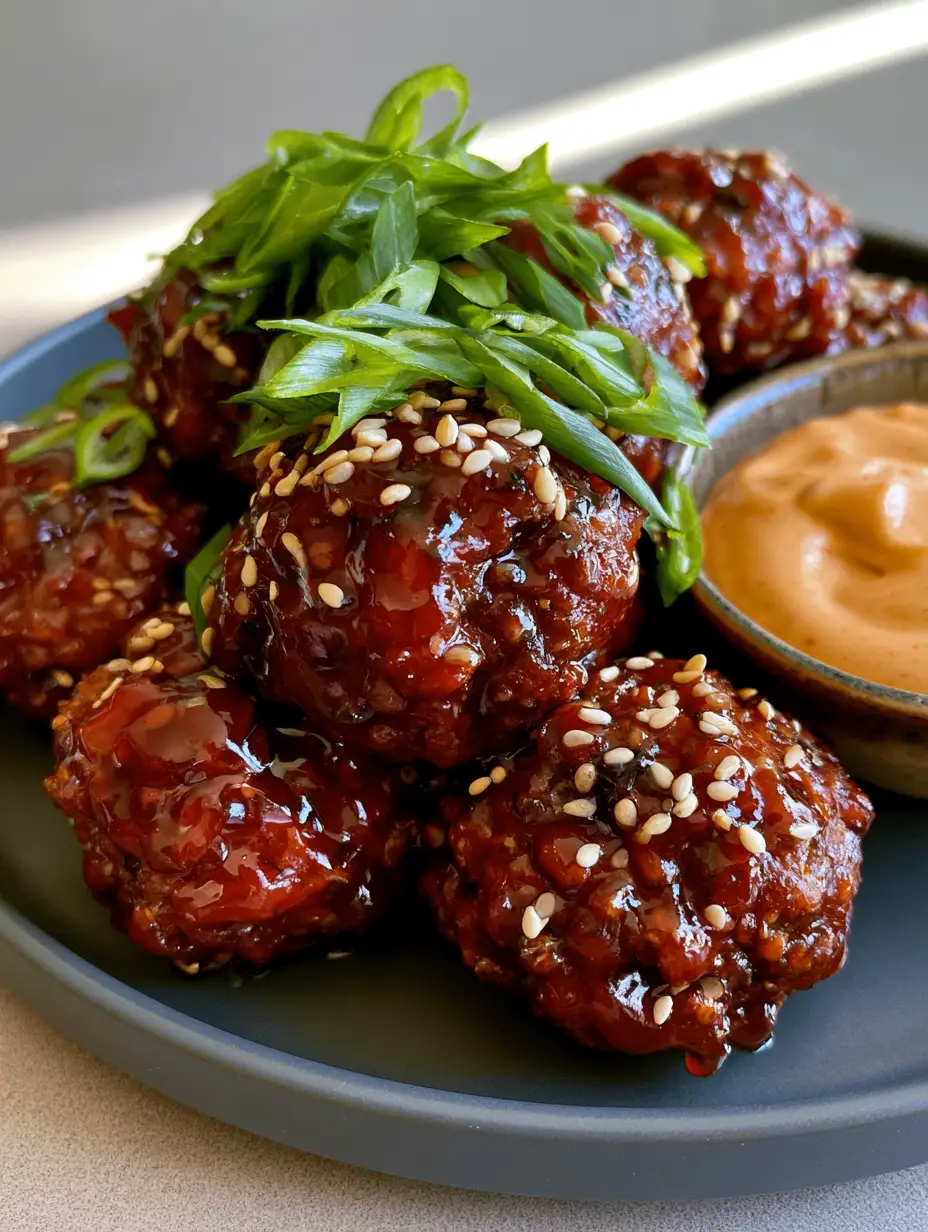
Korean BBQ Meatballs with Sticky Gochujang Glaze and Spicy Mayo
Ingredients
Equipment
Instructions
- In a large bowl, combine beef, panko, egg, garlic, and ginger until just incorporated.
- Shape into 1.5-inch balls and sear in a hot skillet until a deep golden-brown crust forms on all sides.
- Add gochujang and honey mixture to the pan. Toss meatballs until sauce becomes a thick, dark red-brown glossy glaze.
- Plate meatballs, sprinkle with sesame seeds and green onions, and serve with the light-orange spicy mayo on the side.
Notes
Use Kewpie mayo for the most authentic light-orange spicy mayo color.
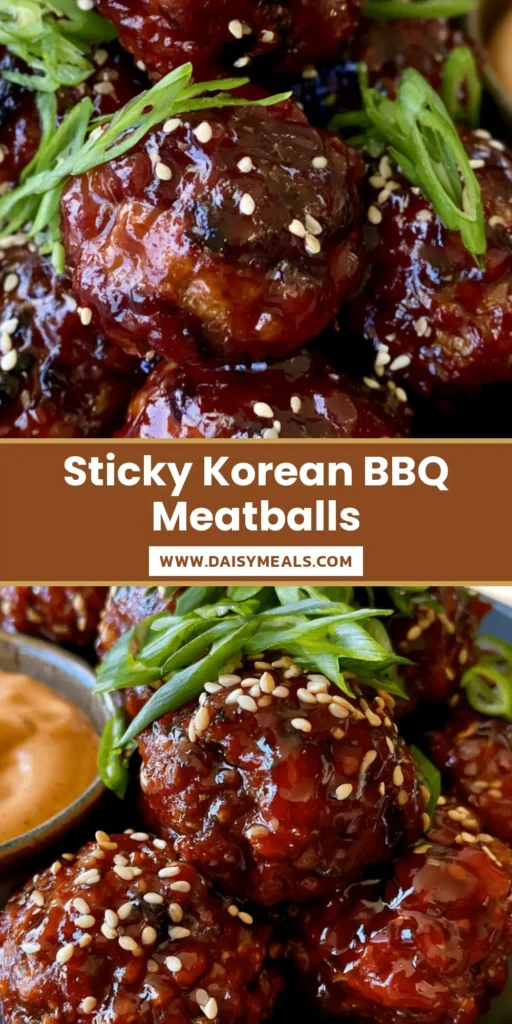
Whether you are looking for a new weeknight staple or a show-stopping party appetizer, these Korean BBQ Meatballs deliver on every front. The combination of the dark red-brown glossy glaze and the cooling spicy mayo creates a restaurant-quality dish that is surprisingly simple to master at home. Don’t forget to snap a photo of your glossy creation and share it with us!
For more delicious meal inspiration, follow us on Pinterest and sign up for our newsletter to get the latest recipes delivered straight to your inbox. Happy cooking!